Skip to content

Mold Polishing Environment Requirements and Surface Protection Methods
The mold polishing process should be divided into separate working areas to avoid contamination between rough grinding and fine polishing stages. Separating these processes helps maintain polishing quality and reduces the risk of scratches or surface defects caused by leftover abrasive particles.
Separate Rough Grinding and Fine Polishing Areas
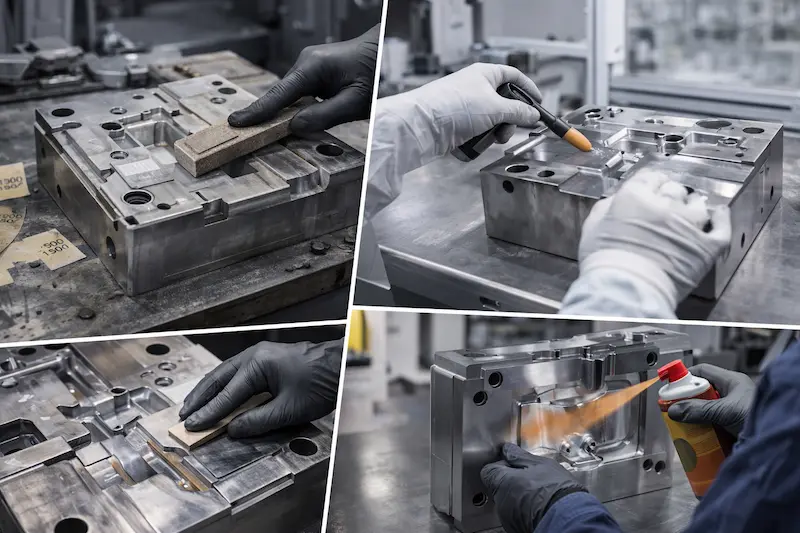
Rough grinding and fine polishing should be carried out in different workspaces. After rough polishing with oil stones and abrasive papers up to 1200 grit, the mold surface should be thoroughly cleaned before moving to the next polishing stage.
Any remaining abrasive particles, dust, or residue from the previous process can easily damage the polished surface during fine finishing. Even small particles trapped between the polishing tool and the mold surface can create scratches or reduce surface quality.
Clean Room Requirements for High-Precision Polishing
For polishing processes requiring a surface accuracy of 1 μm or better, the workpiece should be polished inside a clean and dust-free room. More demanding mirror polishing operations may require an even cleaner environment to prevent contamination.
Dust, smoke, hair, skin particles, and other airborne contaminants can easily damage high-precision polished mold surfaces. Maintaining a clean workspace is essential for achieving optical-grade or mirror-finish mold cavities.
Cleaning After Polishing
After the polishing process is completed, all abrasive particles, polishing compounds, lubricants, and cleaning residues should be carefully removed from the mold surface.
Proper cleaning helps prevent corrosion, staining, or contamination during mold storage and transportation. It also ensures that the mold is ready for assembly, testing, or production use.
Surface Protection After Polishing
Once the mold surface is fully cleaned, it should be protected from dust and moisture. If polishing work is paused or completed, a mold anti-rust coating should be applied to the polished surface.
Protective coatings help prevent oxidation, corrosion, and accidental surface damage before the mold enters production. Proper storage and handling are important to maintain the final polishing quality of the mold.