Fitmold helps customers turn product designs, drawings, reference samples, and individual components into complete assembled products. We coordinate plastic, metal, rubber, silicone, PCB and PCBA assemblies, wiring, electronic components, standard hardware, and customer-supplied parts, together with surface finishing, printing, labeling, functional testing, packaging, and shipment preparation.
Because we are involved in tooling, molding, machining, metal manufacturing, surface finishing, and component sourcing, we approach assembly with an understanding of how the complete product is made. From prototype builds and pilot assemblies to repeat manufacturing, our goal is to reduce the burden of managing multiple suppliers and deliver products that are assembled, inspected, packaged, and ready for the next stage of your supply chain.
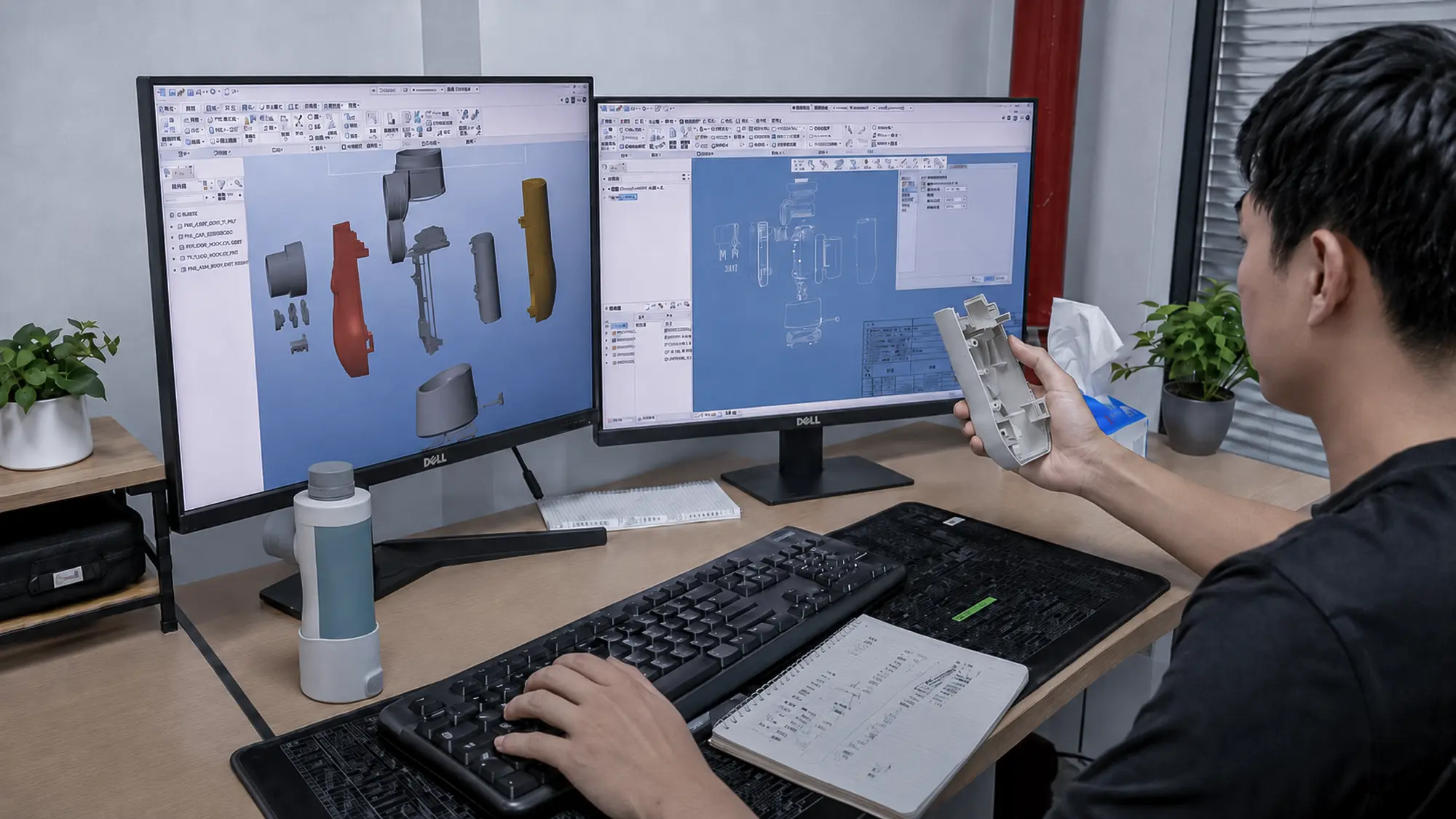
Many OEM assembly projects begin with a customer-developed design, an existing product, a reference sample, or a description of the required function. Fitmold can review 3D files, 2D drawings, samples, product requirements, and target performance before developing tooling, components, and the assembly process.
Assembly is often the stage where earlier decisions in product design, tooling, material selection, tolerance control, and component manufacturing are finally proven. During prototyping and pilot builds, we evaluate part fit, movement, fastening locations, assembly access, sealing areas, wiring space, component interference, and the sequence in which the product should be assembled.
When practical, we may recommend snap-fit features, fewer screws, combined components, improved locating features, or other Design for Manufacturing and Assembly improvements that simplify production without changing the intended function. Material selection, surface requirements, prototype samples, and assembly trials can then be coordinated as the product develops toward stable production.
Complete products often combine components made through different manufacturing processes. Depending on the project, Fitmold can coordinate injection-molded plastic parts, CNC-machined components, sheet metal parts, stamped parts, die castings, rubber and silicone parts, springs, shafts, fasteners, threaded inserts, magnets, bearings, foam, adhesive tape, seals, and other standard or custom components.
Surface and appearance requirements may involve painting, spray coating, electroplating, anodizing, hard anodizing, corrosion-resistant coatings, brushing, silk-screen printing, pad printing, hot stamping, laser marking, laser engraving, or decorative finishes such as carbon-fiber-look and concentric brushed patterns.
We can also work with customer-supplied parts, customer-nominated suppliers, and suitable specialist manufacturers. Component specifications, quantities, incoming condition, revision status, minimum order quantities, and production timing are reviewed together so that shortages, mismatched revisions, or incompatible parts do not interrupt final assembly.
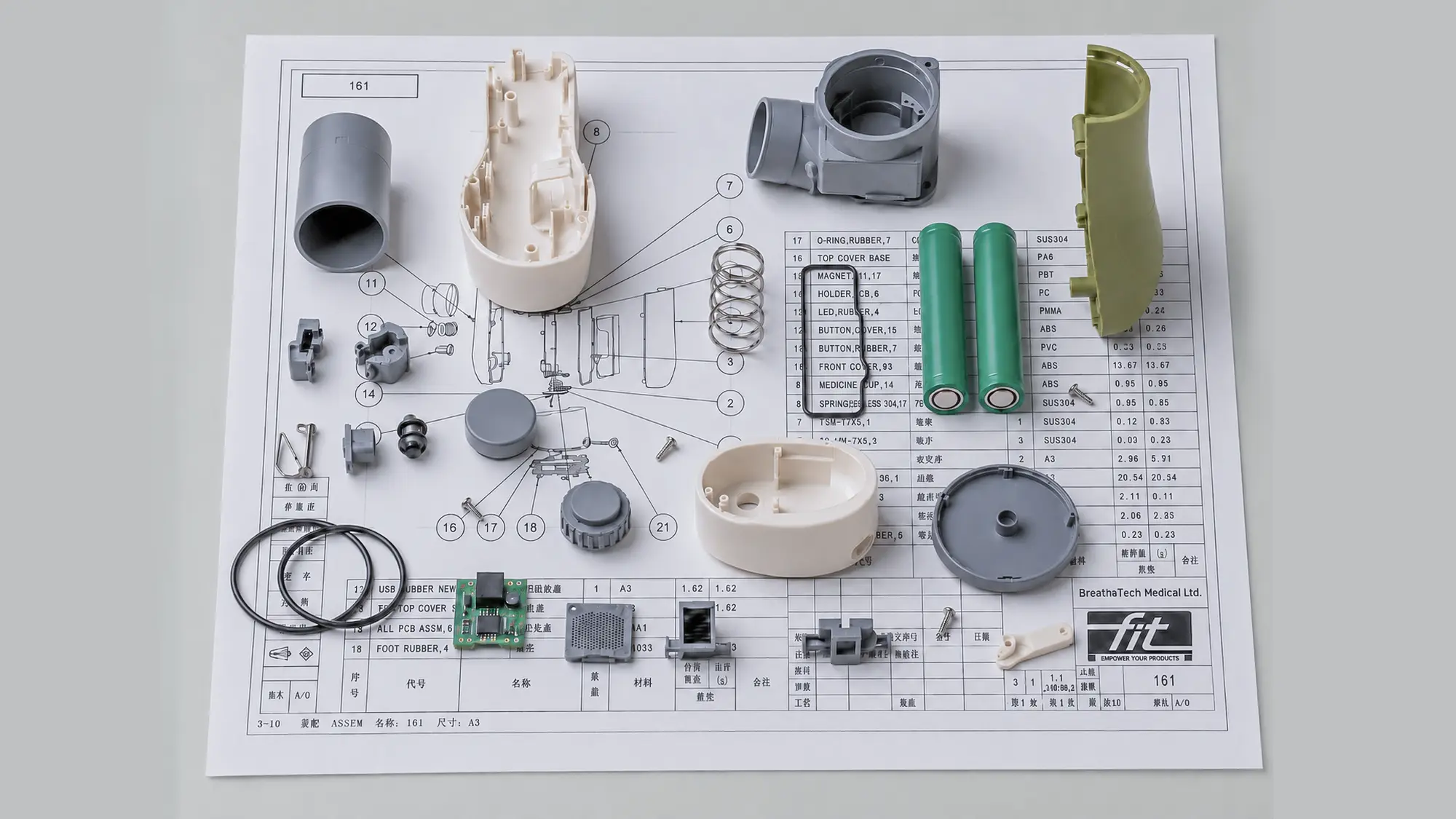
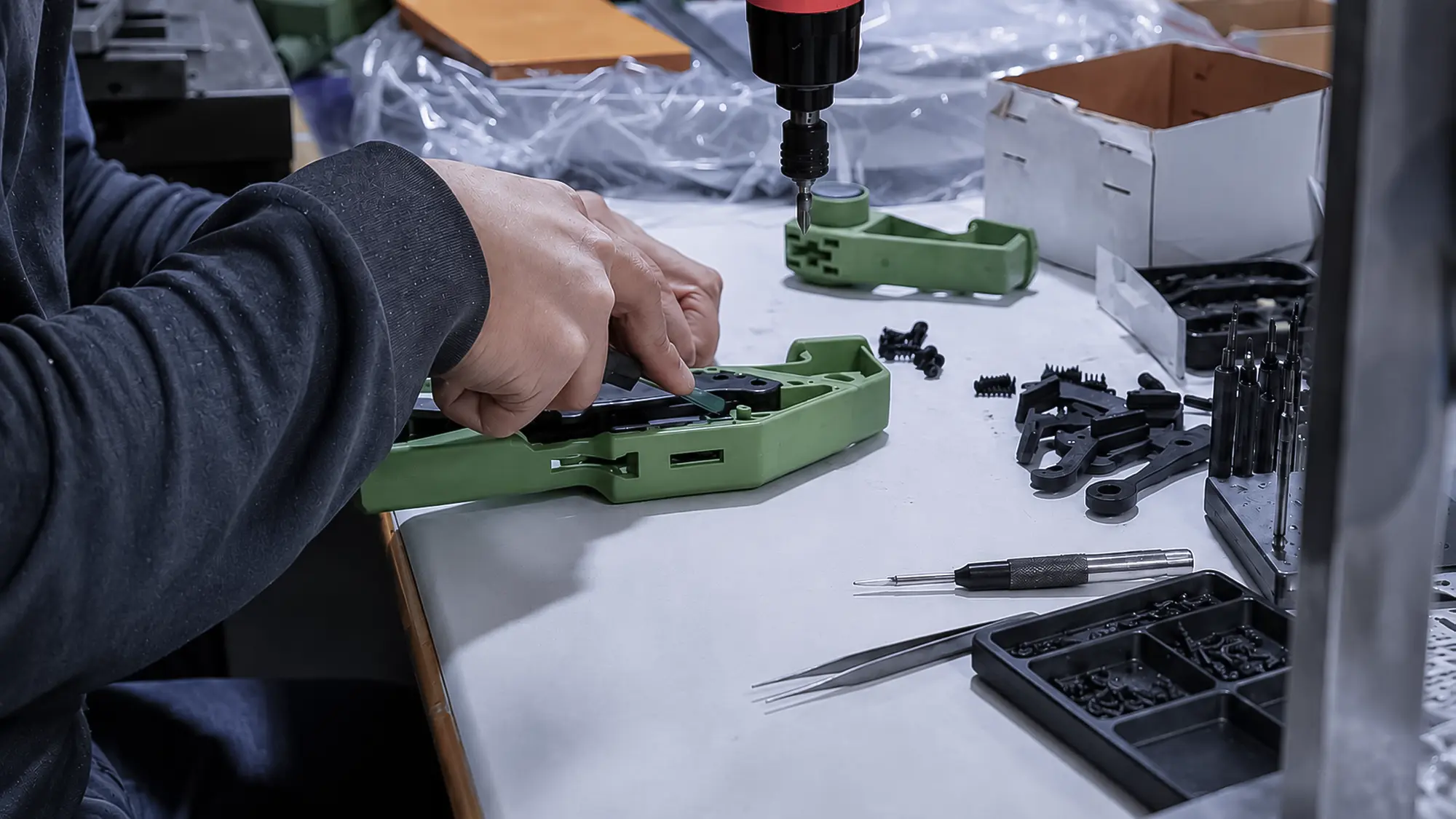
Assembly methods are selected according to the product structure and performance requirements. They may include screw fastening with torque control, snap-fit assembly, press fitting, riveting, threaded insert installation, ultrasonic welding, heat staking, adhesive bonding, gasket installation, cable routing, wire-harness connection, and the installation of purchased mechanical or electronic components.
For products containing electronics, Fitmold can coordinate PCB fabrication and PCBA production together with suitable electronics manufacturing partners. Depending on the project, electronic production information may include Gerber files, a Bill of Materials (BOM), Pick and Place or Centroid files, schematic diagrams, firmware, and other assembly specifications. Production may involve SMT assembly, through-hole component assembly, IC and component soldering, wire soldering, terminal and connector soldering, wire-harness assembly, and firmware programming where required.
Electronic assemblies can then be integrated with injection-molded housings, machined or sheet-metal components, batteries, speakers, motors, switches, sensors, charging contacts, connectors, displays, and other product hardware. We review connector locations, wiring routes, mounting points, insulation, component clearance, service access, and enclosure fit as part of the complete assembly.
Assembly fixtures, positioning jigs, work instructions, pilot builds, and error-prevention methods can be developed where required. Depending on the product, verification may include assembly-fit checks, actuation-force testing, push-and-pull testing, compression or load testing, movement and travel checks, leakage testing, electrical function testing, charging tests, power-on tests, sound testing, cycle testing, or other fixture-based tests developed around actual product use.
Fit, alignment, cosmetic condition after handling, electrical connections, and consistency between assembled units are also reviewed during pilot and repeat production.
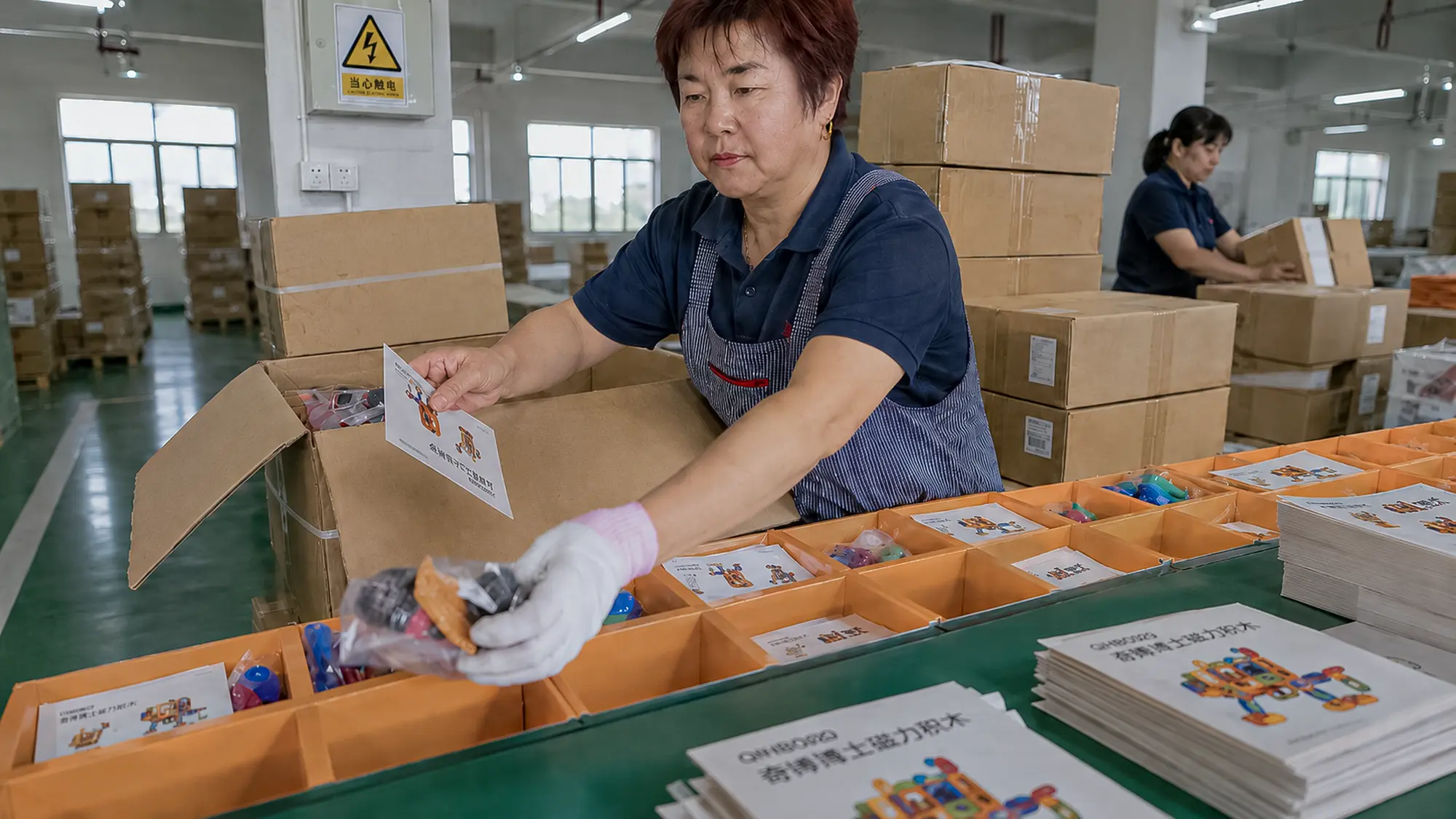
Product assembly is not complete until the finished goods can be protected, identified, stored, transported, and presented correctly. Fitmold can coordinate product labels, barcode labels, printed instruction manuals, color boxes, printed insert cards, header cards, blister packaging with printed backing cards, blister trays, foam inserts, molded pulp trays, accessory bags, inner cartons, and master cartons.
Packaging samples can be produced and reviewed for product fit, appearance, protection, packing efficiency, and transport requirements. We also evaluate how many products should be packed in each inner carton, how many inner cartons fit into a master carton, and how the final cartons should be arranged on pallets or loaded into a shipping container.
Carton size, product orientation, protective spacing, gross weight, pallet configuration, container utilization, and handling requirements can be adjusted to balance product protection, packaging cost, storage efficiency, and international freight. The objective is to deliver products in a format that is practical for the customer’s warehouse, distribution channel, retail presentation, or final shipment.
Many OEM assembly projects begin with a customer-developed design, an existing product, a reference sample, or a description of the required function. Fitmold can review 3D files, 2D drawings, samples, product requirements, and target performance before developing tooling, components, and the assembly process.
Assembly is often the stage where earlier decisions in product design, tooling, material selection, tolerance control, and component manufacturing are finally proven. During prototyping and pilot builds, we evaluate part fit, movement, fastening locations, assembly access, sealing areas, wiring space, component interference, and the sequence in which the product should be assembled.
When practical, we may recommend snap-fit features, fewer screws, combined components, improved locating features, or other Design for Manufacturing and Assembly improvements that simplify production without changing the intended function. Material selection, surface requirements, prototype samples, and assembly trials can then be coordinated as the product develops toward stable production.
Complete products often combine components made through different manufacturing processes. Depending on the project, Fitmold can coordinate injection-molded plastic parts, CNC-machined components, sheet metal parts, stamped parts, die castings, rubber and silicone parts, springs, shafts, fasteners, threaded inserts, magnets, bearings, foam, adhesive tape, seals, and other standard or custom components.
Surface and appearance requirements may involve painting, spray coating, electroplating, anodizing, hard anodizing, corrosion-resistant coatings, brushing, silk-screen printing, pad printing, hot stamping, laser marking, laser engraving, or decorative finishes such as carbon-fiber-look and concentric brushed patterns.
We can also work with customer-supplied parts, customer-nominated suppliers, and suitable specialist manufacturers. Component specifications, quantities, incoming condition, revision status, minimum order quantities, and production timing are reviewed together so that shortages, mismatched revisions, or incompatible parts do not interrupt final assembly.
Assembly methods are selected according to the product structure and performance requirements. They may include screw fastening with torque control, snap-fit assembly, press fitting, riveting, threaded insert installation, ultrasonic welding, heat staking, adhesive bonding, gasket installation, cable routing, wire-harness connection, and the installation of purchased mechanical or electronic components.
For products containing electronics, Fitmold can coordinate PCB fabrication and PCBA production together with suitable electronics manufacturing partners. Depending on the project, electronic production information may include Gerber files, a Bill of Materials (BOM), Pick and Place or Centroid files, schematic diagrams, firmware, and other assembly specifications. Production may involve SMT assembly, through-hole component assembly, IC and component soldering, wire soldering, terminal and connector soldering, wire-harness assembly, and firmware programming where required.
Electronic assemblies can then be integrated with injection-molded housings, machined or sheet-metal components, batteries, speakers, motors, switches, sensors, charging contacts, connectors, displays, and other product hardware. We review connector locations, wiring routes, mounting points, insulation, component clearance, service access, and enclosure fit as part of the complete assembly.
Assembly fixtures, positioning jigs, work instructions, pilot builds, and error-prevention methods can be developed where required. Depending on the product, verification may include assembly-fit checks, actuation-force testing, push-and-pull testing, compression or load testing, movement and travel checks, leakage testing, electrical function testing, charging tests, power-on tests, sound testing, cycle testing, or other fixture-based tests developed around actual product use.
Fit, alignment, cosmetic condition after handling, electrical connections, and consistency between assembled units are also reviewed during pilot and repeat production.
Product assembly is not complete until the finished goods can be protected, identified, stored, transported, and presented correctly. Fitmold can coordinate product labels, barcode labels, printed instruction manuals, color boxes, printed insert cards, header cards, blister packaging with printed backing cards, blister trays, foam inserts, molded pulp trays, accessory bags, inner cartons, and master cartons.
Packaging samples can be produced and reviewed for product fit, appearance, protection, packing efficiency, and transport requirements. We also evaluate how many products should be packed in each inner carton, how many inner cartons fit into a master carton, and how the final cartons should be arranged on pallets or loaded into a shipping container.
Carton size, product orientation, protective spacing, gross weight, pallet configuration, container utilization, and handling requirements can be adjusted to balance product protection, packaging cost, storage efficiency, and international freight. The objective is to deliver products in a format that is practical for the customer’s warehouse, distribution channel, retail presentation, or final shipment.
Send us your 3D files, 2D drawings, product BOM, reference samples, assembly requirements, functional expectations, packaging design, and estimated quantity. For electronic products, Gerber files, PCBA BOM, Pick and Place files, schematic diagrams, firmware requirements, and wiring information can also be provided where applicable.
We can review the product as a complete system and propose a practical workflow covering design improvement, tooling, component manufacturing, sourced parts, surface finishing, assembly, functional testing, packaging, and shipment preparation.