Skip to content
Fitmold manufactures custom aluminum and zinc die cast parts from tooling and casting through CNC machining, surface finishing, inspection, and assembly. We support lighting housings, heat sinks, industrial enclosures, motor and gearbox housings, door and window hardware, appliance components, power-tool parts, and other products that require integrated features, consistent dimensions, and efficient repeat production.
High-pressure die casting is widely used for products that need complex geometry, thin walls, integrated ribs, bosses, mounting features, and repeatable dimensions. Typical applications include LED lighting housings, heat sinks, industrial equipment enclosures, electronic control housings, motor and gearbox housings, appliance components, power-tool parts, telecommunication housings, door and window hardware, handles, lock components, and decorative model parts.
Die casting is particularly suitable when several separate features can be combined into one metal component, reducing machining and assembly work. Because production tooling is required, the process is normally most economical for repeat orders and medium- to high-volume production rather than very small quantities.
Stamping is especially effective when a project requires repeatable geometry, consistent hole and bend positions, good production efficiency, and competitive unit costs at medium or high volumes. However, tooling investment, material formability, part depth, bend radius, tolerance, and expected quantity must be considered before stamping is selected as the manufacturing process.
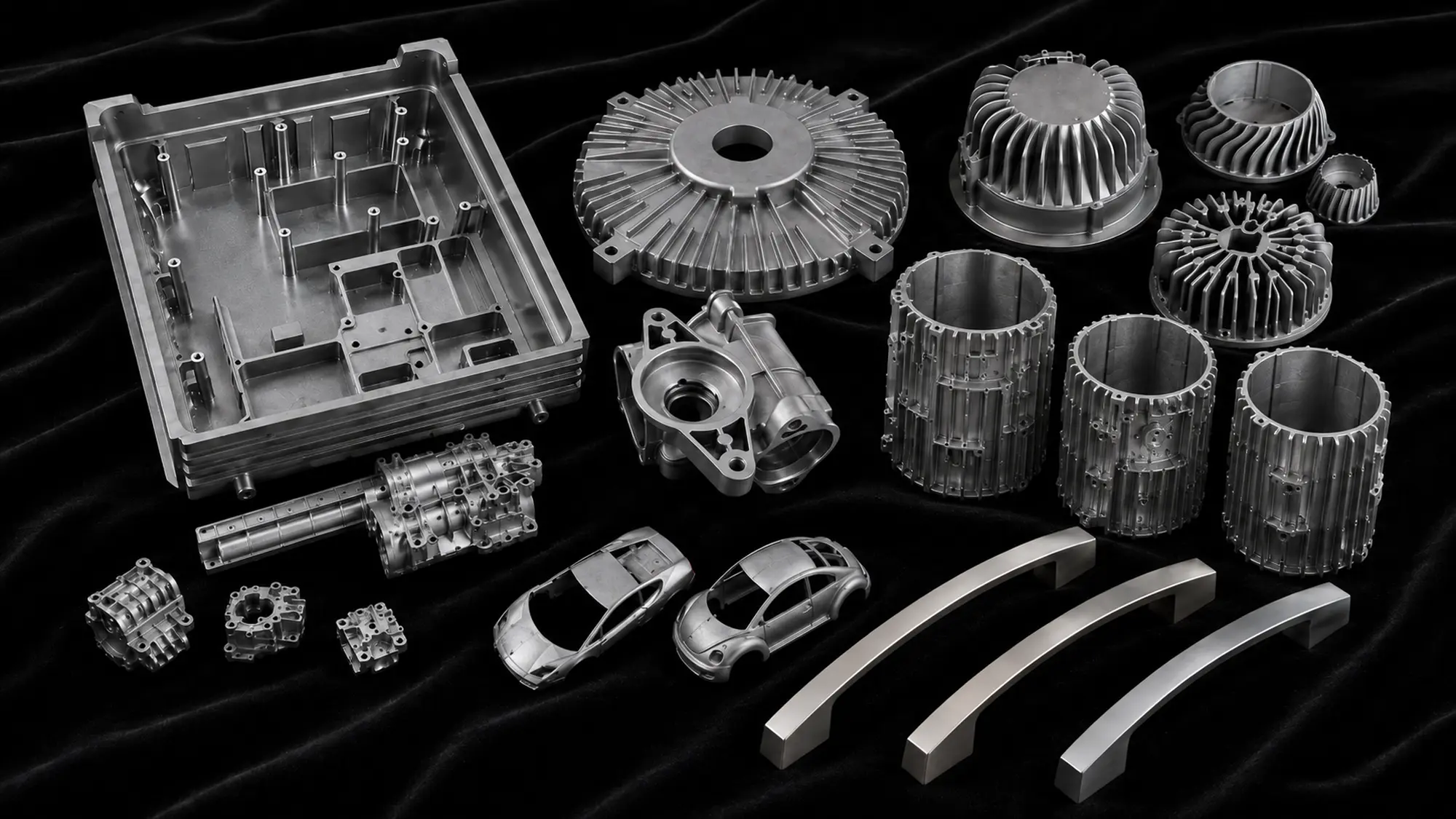
Aluminum and zinc die casting serve different product needs. Aluminum alloys are commonly selected for lightweight housings, heat-dissipation components, larger structural parts, motor housings, lighting products, and industrial enclosures. Zinc alloys are well suited to smaller precision parts, thin-wall features, detailed geometry, handles, locks, mechanisms, decorative hardware, and components requiring plated finishes.
Material selection is based on part size, weight, strength, heat transfer, dimensional stability, surface appearance, corrosion exposure, production quantity, and secondary-processing requirements. The alloy, part structure, and finishing method are reviewed together so the final component meets its functional and cosmetic targets.
When demand increases, the manufacturing process can be developed toward dedicated stamping dies and repeatable production. The most suitable route depends on part geometry, material thickness, forming difficulty, quantity, quality requirements, and whether the early samples must closely represent the final production process.
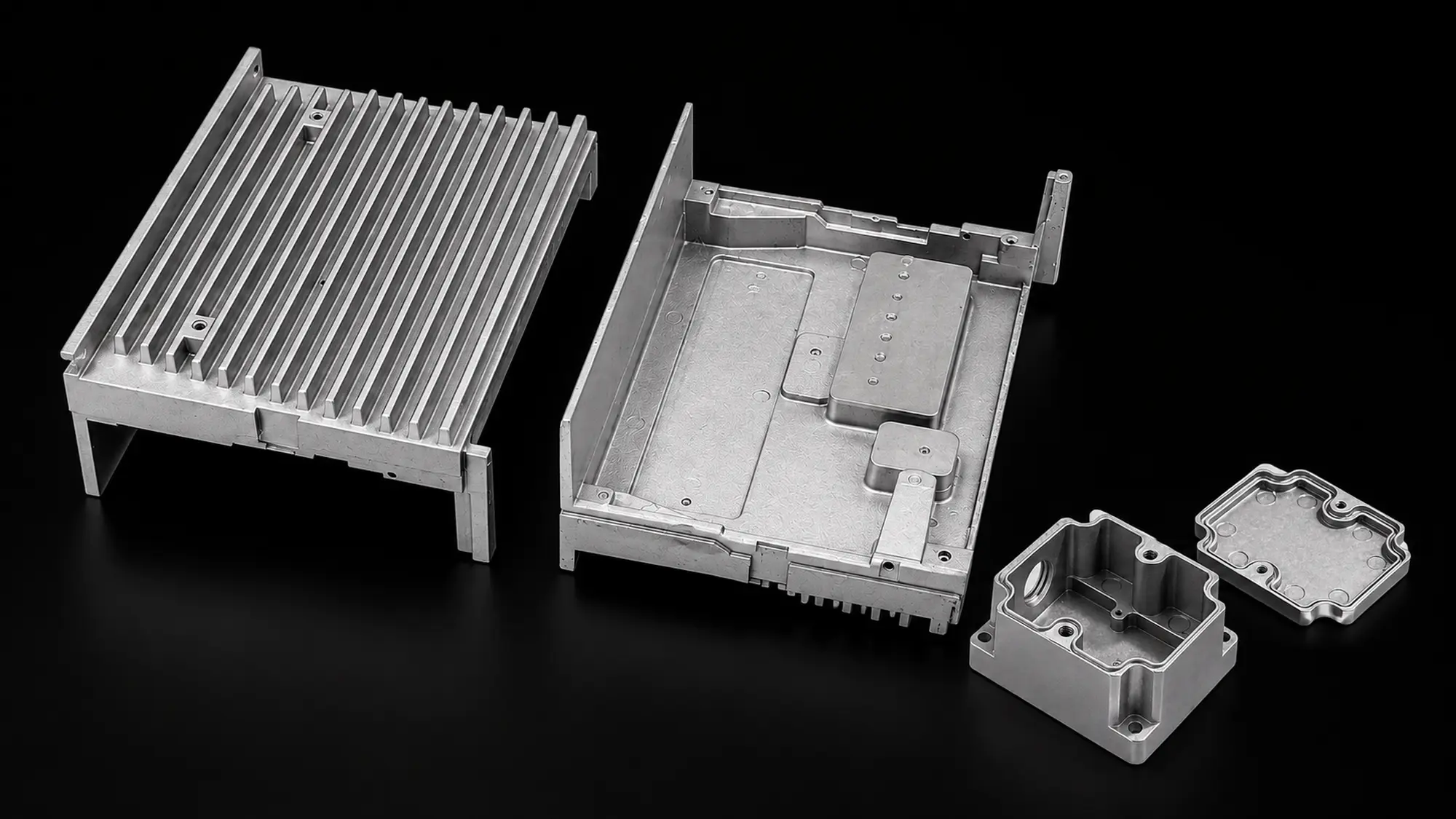
Stable die cast parts begin with the product design and tooling layout. We review wall thickness, draft angles, parting lines, gate and runner design, overflow locations, venting, cooling balance, ejection, machining allowances, and critical cosmetic areas before tooling begins.
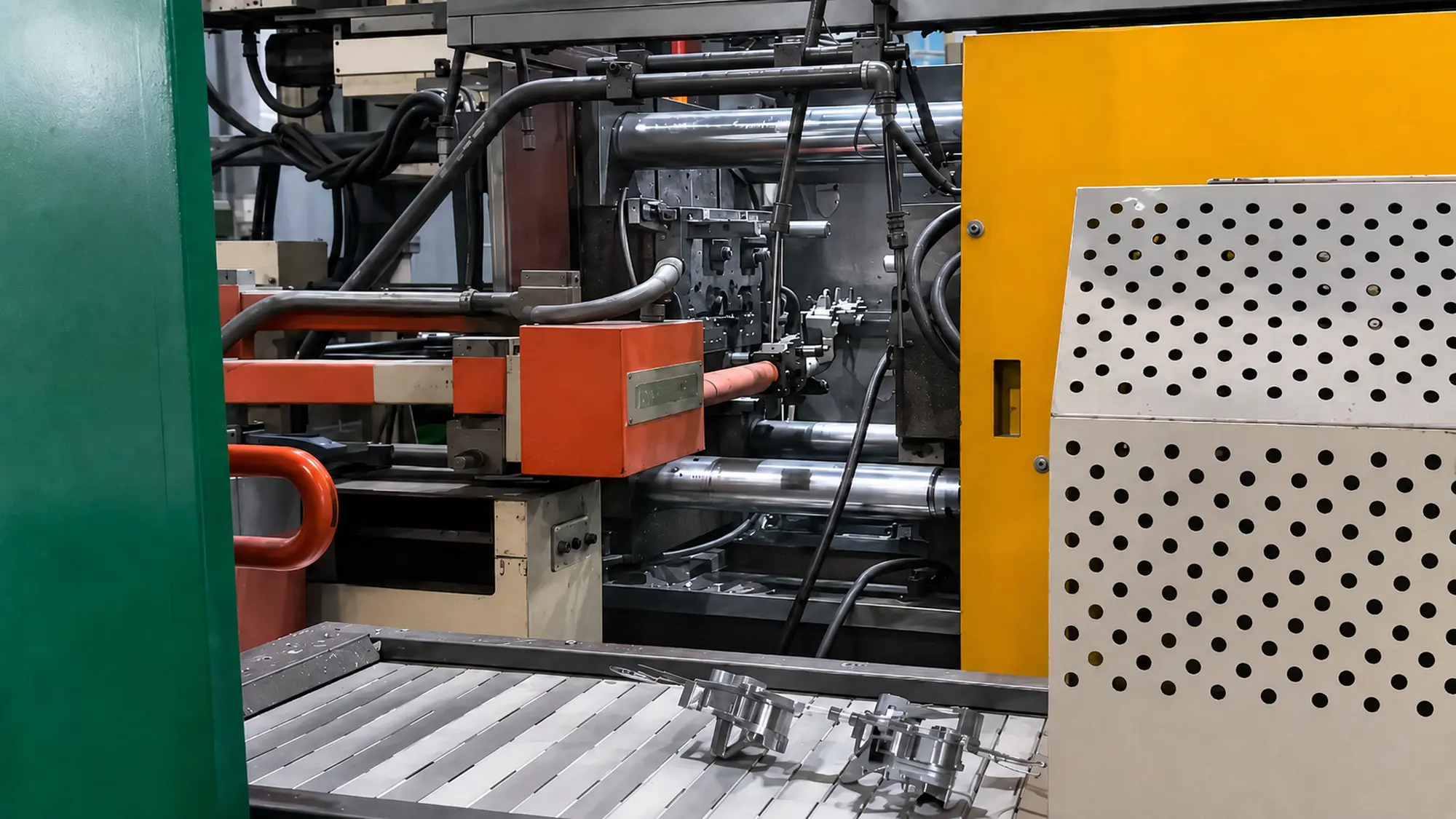
During casting trials and production, filling behavior, metal temperature, injection conditions, solidification, flash, shrinkage, cold shuts, flow marks, warpage, and porosity risks are evaluated. Parts requiring sealing or pressure resistance need additional attention to casting structure, porosity control, machining locations, and agreed inspection or testing requirements. The objective is not only to produce an acceptable first casting, but to maintain repeatable geometry and quality across production runs.
High-speed and long-life stamping depend on more than press speed. Die material, heat treatment, cutting clearance, strip layout, guidance, alignment, lubrication, replaceable wear inserts, scrap removal, sensor protection, and maintenance access all affect production reliability. We design the tooling around the required output, material, part complexity, tolerance, and expected tool life rather than making the die unnecessarily complicated.
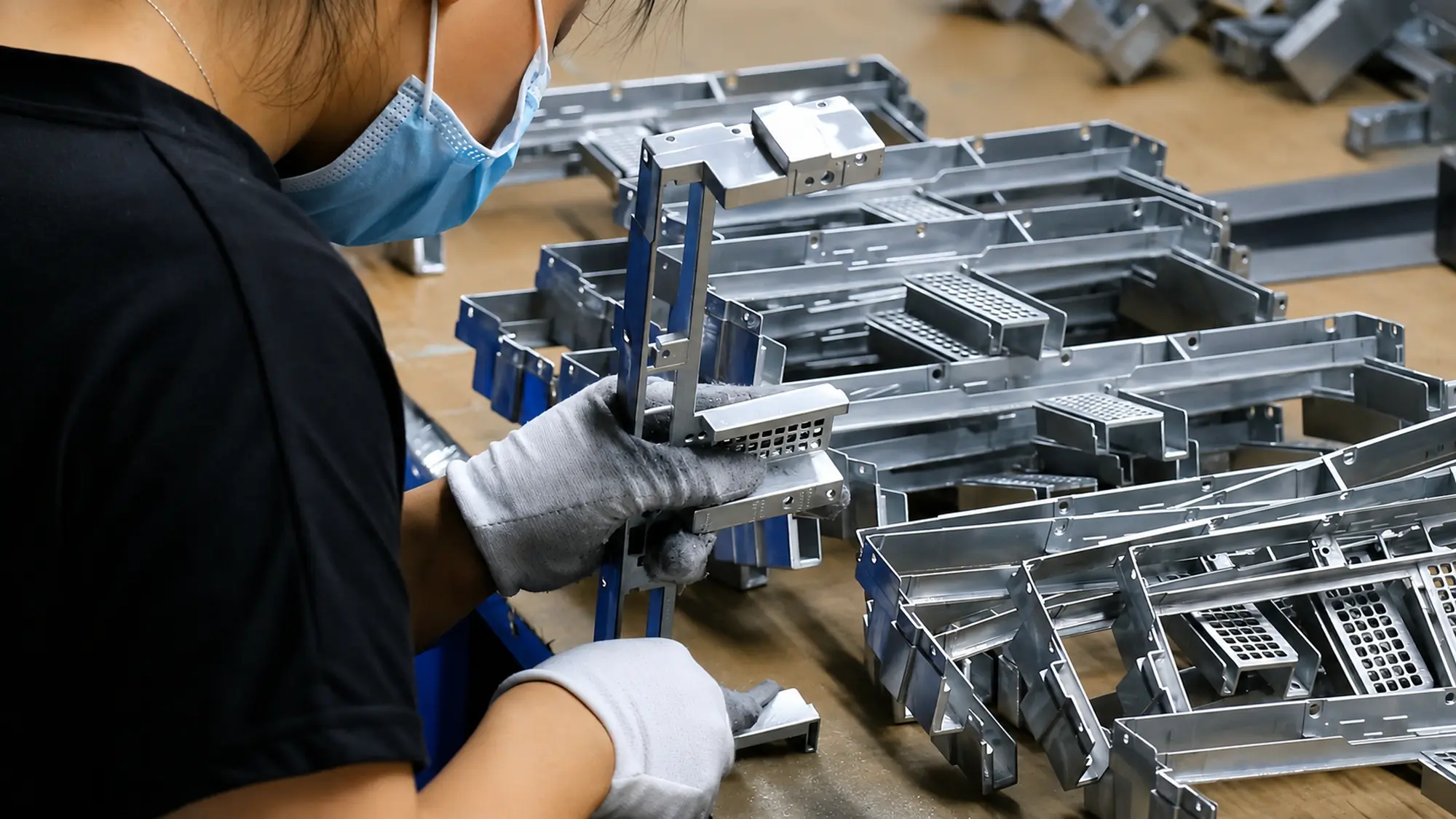
Most die cast parts require additional work before they are ready for assembly or final use. Fitmold can coordinate trimming, deburring, shot blasting, CNC machining, drilling, tapping, threaded inserts, polishing, painting, powder coating, conversion coating, and other finishing processes according to the alloy and product requirements.
For zinc die cast parts, decorative finishes may include nickel, chrome, or other plated surfaces. Aluminum parts may require powder coating, painting, blasting, polishing, or application-specific surface treatment. Dimensional inspection, appearance review, hardware installation, assembly, and customized packaging can also be included, allowing customers to receive finished components rather than unfinished castings.
Depending on the material and application, secondary finishing may include deburring, polishing, brushing, powder coating, painting, electroplating, zinc plating, nickel or chrome plating, e-coating, anodizing for aluminum parts, and passivation for stainless steel. Tapping, welding, riveting, hardware insertion, assembly, and customized packaging can also be coordinated where required.
High-pressure die casting is widely used for products that need complex geometry, thin walls, integrated ribs, bosses, mounting features, and repeatable dimensions. Typical applications include LED lighting housings, heat sinks, industrial equipment enclosures, electronic control housings, motor and gearbox housings, appliance components, power-tool parts, telecommunication housings, door and window hardware, handles, lock components, and decorative model parts.
Die casting is particularly suitable when several separate features can be combined into one metal component, reducing machining and assembly work. Because production tooling is required, the process is normally most economical for repeat orders and medium- to high-volume production rather than very small quantities.
Stamping is especially effective when a project requires repeatable geometry, consistent hole and bend positions, good production efficiency, and competitive unit costs at medium or high volumes. However, tooling investment, material formability, part depth, bend radius, tolerance, and expected quantity must be considered before stamping is selected as the manufacturing process.
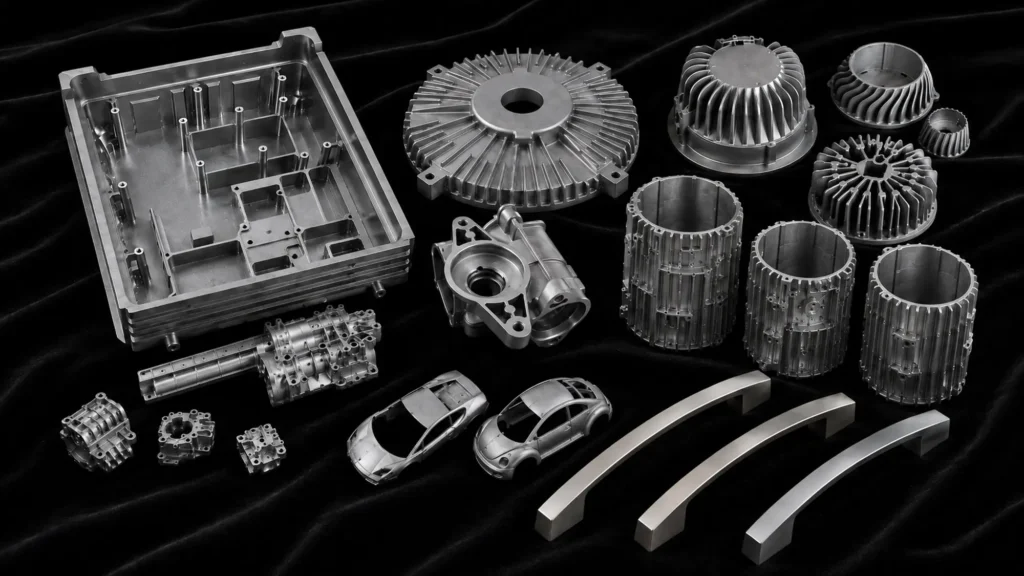
Aluminum and zinc die casting serve different product needs. Aluminum alloys are commonly selected for lightweight housings, heat-dissipation components, larger structural parts, motor housings, lighting products, and industrial enclosures. Zinc alloys are well suited to smaller precision parts, thin-wall features, detailed geometry, handles, locks, mechanisms, decorative hardware, and components requiring plated finishes.
Material selection is based on part size, weight, strength, heat transfer, dimensional stability, surface appearance, corrosion exposure, production quantity, and secondary-processing requirements. The alloy, part structure, and finishing method are reviewed together so the final component meets its functional and cosmetic targets.
When demand increases, the manufacturing process can be developed toward dedicated stamping dies and repeatable production. The most suitable route depends on part geometry, material thickness, forming difficulty, quantity, quality requirements, and whether the early samples must closely represent the final production process.
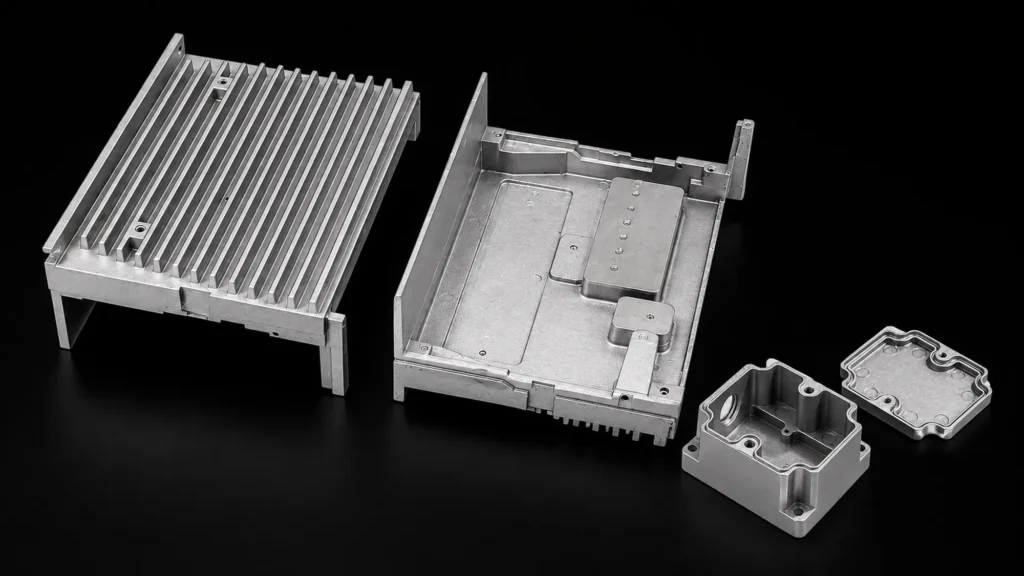
Stable die cast parts begin with the product design and tooling layout. We review wall thickness, draft angles, parting lines, gate and runner design, overflow locations, venting, cooling balance, ejection, machining allowances, and critical cosmetic areas before tooling begins.
During casting trials and production, filling behavior, metal temperature, injection conditions, solidification, flash, shrinkage, cold shuts, flow marks, warpage, and porosity risks are evaluated. Parts requiring sealing or pressure resistance need additional attention to casting structure, porosity control, machining locations, and agreed inspection or testing requirements. The objective is not only to produce an acceptable first casting, but to maintain repeatable geometry and quality across production runs.
High-speed and long-life stamping depend on more than press speed. Die material, heat treatment, cutting clearance, strip layout, guidance, alignment, lubrication, replaceable wear inserts, scrap removal, sensor protection, and maintenance access all affect production reliability. We design the tooling around the required output, material, part complexity, tolerance, and expected tool life rather than making the die unnecessarily complicated.
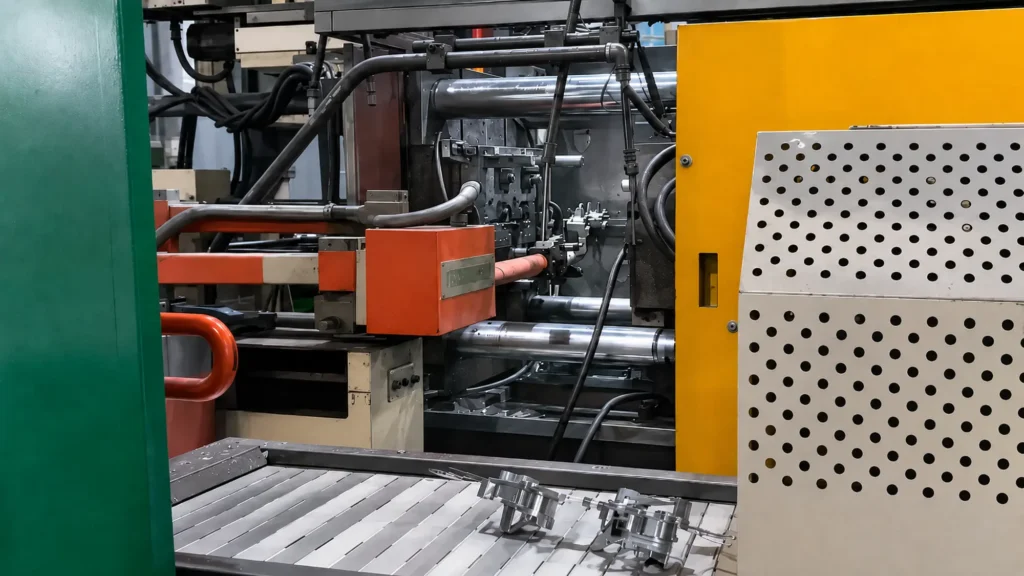
Most die cast parts require additional work before they are ready for assembly or final use. Fitmold can coordinate trimming, deburring, shot blasting, CNC machining, drilling, tapping, threaded inserts, polishing, painting, powder coating, conversion coating, and other finishing processes according to the alloy and product requirements.
For zinc die cast parts, decorative finishes may include nickel, chrome, or other plated surfaces. Aluminum parts may require powder coating, painting, blasting, polishing, or application-specific surface treatment. Dimensional inspection, appearance review, hardware installation, assembly, and customized packaging can also be included, allowing customers to receive finished components rather than unfinished castings.
Depending on the material and application, secondary finishing may include deburring, polishing, brushing, powder coating, painting, electroplating, zinc plating, nickel or chrome plating, e-coating, anodizing for aluminum parts, and passivation for stainless steel. Tapping, welding, riveting, hardware insertion, assembly, and customized packaging can also be coordinated where required.
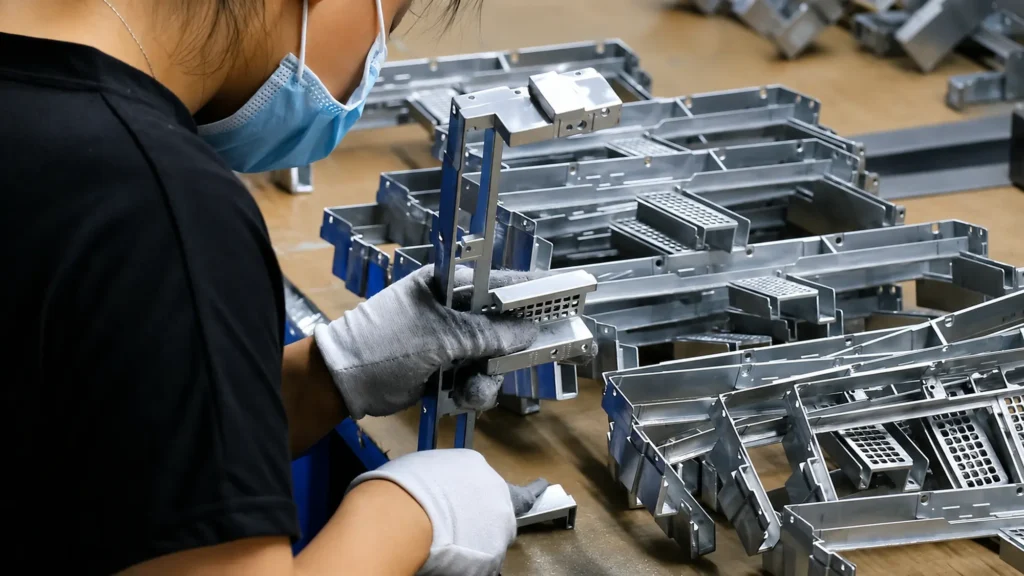
Send us your 3D files, 2D drawings, preferred alloy, surface requirements, critical dimensions, expected quantity, and intended application. We can review the part design, tooling requirements, casting risks, secondary machining, finishing, and assembly needs, then recommend a practical route from die casting to finished components.