Skip to content
What Is Design for Manufacturing (DFM) in Injection Molding?
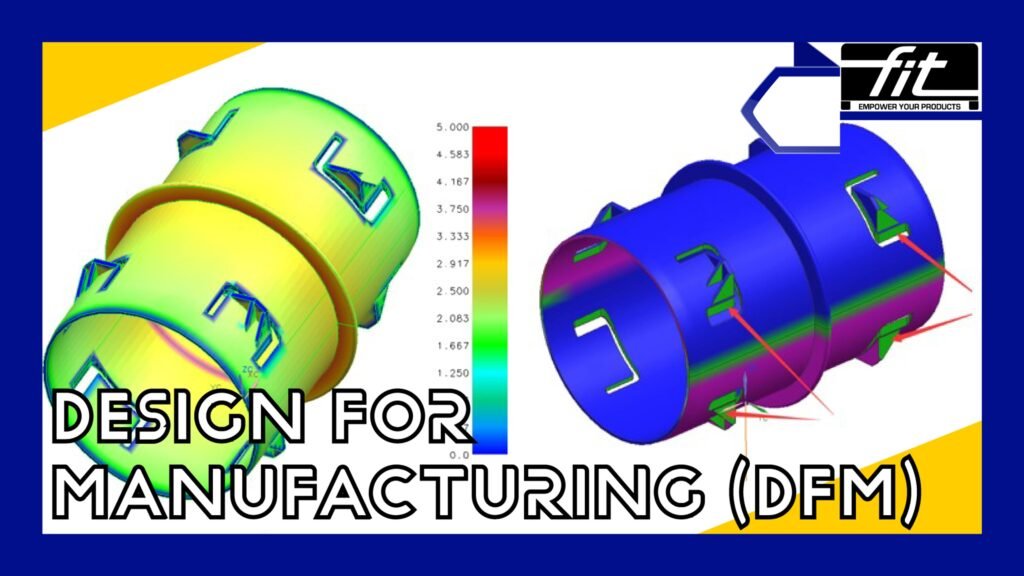
Design for Manufacturing, or DFM, in injection molding means designing a product in a way that makes it easier, more efficient, and more cost-effective to manufacture. A good DFM review helps ensure that the product can be produced with practical tooling, stable molding performance, controlled cost, and consistent quality.
In injection molding, DFM is not only about whether a part can be molded, but also whether it can be molded efficiently and reliably in mass production. The purpose of DFM analysis is to evaluate the manufacturability of the part design, identify potential production risks, and suggest improvements before mold making begins.
Why DFM Matters in Injection Molding
A proper DFM review can help reduce mold complexity, shorten development time, lower production cost, and improve part quality. By identifying structural and process-related issues early in the project, manufacturers can avoid unnecessary tooling changes, production instability, and repeated trial-and-error after the mold is built.
For custom plastic parts, DFM is one of the most important steps between product design and mold manufacturing. It helps align product design with actual molding conditions and supports a smoother path toward sampling and mass production.
Key DFM Considerations in Injection Molding
- Material Selection
Different plastic materials have different shrinkage, flow characteristics, strength, and surface behavior. Material choice affects both part performance and mold design. - Parting Line
A proper parting line helps support mold structure, product appearance, and demolding performance. It should be selected according to the part geometry and molding requirements. - Sliders and Undercuts
If the part contains undercuts or side features, sliders or other side-action mechanisms may be needed. These features increase mold complexity and should be evaluated carefully during DFM. - Injection Gate Design
Gate location and gate type directly affect filling performance, appearance, weld lines, deformation, and production stability. The gate design should match the product structure and mold requirements. - Ejection Method
The ejection system must allow the part to be released safely and consistently without damaging the product surface or structure. - Draft Angles
Proper draft angles help the part release from the mold more smoothly and reduce friction, surface damage, and demolding difficulty. - Wall Thickness
Uniform wall thickness helps improve material flow, reduce sink marks and warpage, and support more stable molding results. - Other Structural Details
Features such as ribs, bosses, holes, snap fits, surface texture, and tolerance requirements should also be reviewed during DFM to improve manufacturability and reduce production risk.
DFM Helps Improve Mold Design and Production Results
In actual projects, DFM analysis provides a practical basis for improving both product design and mold planning. It helps determine whether the part structure is suitable for molding, whether the tooling solution is reasonable, and where optimization may be needed before moving into mold manufacturing.
For injection molded parts, good DFM support can help balance product design intent, mold complexity, cycle time, and production cost. This is especially important for projects that require stable quality and efficient mass production.
Injection Molding DFM Support from FITMOLD
FITMOLD provides DFM support for custom injection molding projects to help customers improve product manufacturability before tooling begins. Based on part design, material selection, and production requirements, we help evaluate mold feasibility, identify risk points, and suggest practical improvements for tooling and molding efficiency.
If you have questions about DFM, injection gate design, or custom injection mold development, FITMOLD can support your project from design review to mold manufacturing and production.
Contact us: sales@fitmold.com