
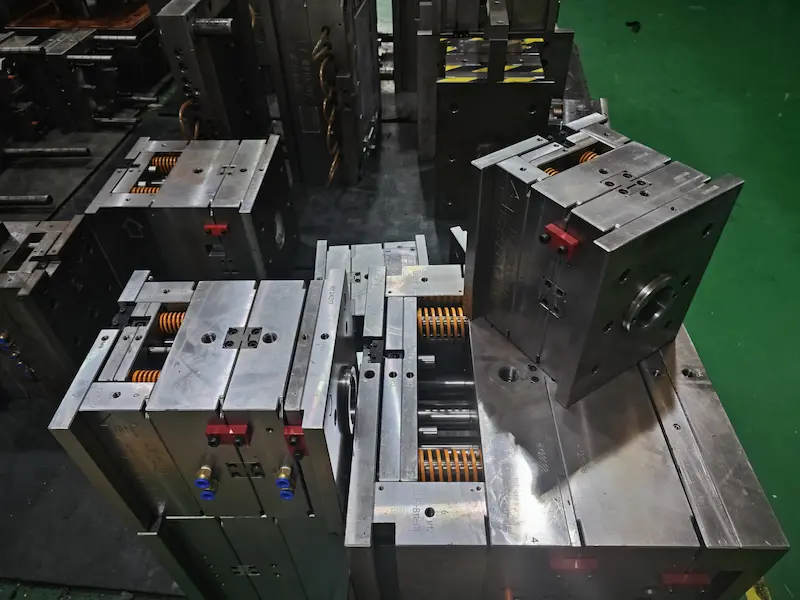
6 Key Performance Requirements for Mold Materials
Mold performance depends heavily on the properties of the mold material. During production, molds may be exposed to friction, impact, cyclic stress, high temperature, thermal shock, and corrosive gases. If the material does not provide the required mechanical and thermal properties, premature wear, cracking, deformation, or surface damage can occur.
To ensure stable production and long mold life, mold materials should meet several essential performance requirements.
1. Wear Resistance
When a workpiece undergoes plastic deformation inside the mold cavity, it flows and slides along the cavity surface, creating continuous friction between the material and the mold. This friction can gradually wear the mold surface and lead to failure.
Wear resistance is therefore one of the most basic and important properties of mold materials. Hardness is a major factor affecting wear resistance. In general, the higher the hardness of the mold part, the lower the wear rate and the better the wear resistance. Wear resistance is also influenced by the type, quantity, shape, size, and distribution of carbides in the material.
2. Strength and Toughness
Many molds work under severe conditions and may be subjected to significant impact loads. If the material lacks sufficient toughness, brittle fracture may occur during operation.
To prevent sudden breakage, mold materials must provide both high strength and high toughness. Mold toughness is mainly affected by carbon content, grain size, and microstructure.
3. Fatigue Fracture Resistance
During repeated production cycles, molds are often exposed to cyclic stresses over a long period of time. These repeated stresses can cause fatigue fracture, even when the stress level in each cycle is lower than the material’s ultimate strength.
Common forms of fatigue failure include impact fatigue fracture, tensile fatigue fracture, contact fatigue fracture, and bending fatigue fracture. The fatigue resistance of the mold depends mainly on strength, toughness, hardness, and the level of inclusions in the material.
4. High-Temperature Performance
When molds operate at elevated temperatures, their hardness and strength may decrease. This can result in early wear, plastic deformation, or premature failure.
For this reason, mold materials should have good tempering resistance and high thermal stability, so they can maintain sufficient hardness and strength at working temperature.
5. Resistance to Thermal Fatigue
Some molds are repeatedly heated and cooled during operation. This thermal cycling creates alternating tensile and compressive stress on the mold surface, which may cause cracking, surface spalling, and increased friction.
Thermal fatigue can reduce dimensional accuracy and eventually lead to mold failure. For hot work molds, strong resistance to thermal fatigue is one of the most important material requirements.
6. Corrosion Resistance
In certain mold applications, especially plastic molds, some resins may release corrosive gases during heating. Materials containing chlorine or fluorine can decompose and generate aggressive gases such as HCl and HF, which attack the cavity surface.
This corrosion increases surface roughness, accelerates wear, and shortens mold life. Therefore, mold materials used in these environments should provide adequate corrosion resistance.
Conclusion
Wear resistance, toughness, fatigue resistance, high-temperature stability, thermal fatigue resistance, and corrosion resistance are all critical properties for mold materials. Selecting a mold steel with the right balance of these characteristics is essential for improving mold life, reducing maintenance, and maintaining consistent production quality.