
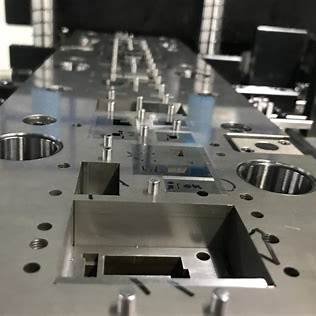
How to Improve Standard Punch Selection in Stamping Die Design
Standard punch selection is an important part of stamping die design. Different punch cutting-edge shapes require different dimensional parameters, and the designer must also consider blanking clearance, sheet thickness, and standard specification coding. If the selection process is not handled efficiently, it can increase design time and lead to errors in the bill of materials.
1. Standard Punch Cross-Section Shapes
Standard stamping die punches usually include several common cutting-edge cross-section shapes. Circular punches are relatively simple because they mainly require only one diameter parameter. Other punch shapes require multiple dimensions such as length, width, and corner radius, which makes selection more complicated.
Because each parameter has a selectable range, mold designers often need to spend a large amount of time checking catalogs, dimensional data, and edge-shape specifications during design.
2. Blanking Clearance Must Be Considered
The punch size is closely related to sheet thickness and the required clearance between the punch and die. In standard punch design, the clearance value is often selected as a percentage of the material thickness, and this directly affects the final cutting-edge dimensions.
Because the punch edge size often needs to be controlled to two decimal places, the standard specification code can become very long and difficult to manage in actual mold design work.
3. Use Database Logic to Simplify Punch Selection
To improve design efficiency, punch selection can be simplified by using logic functions, databases, and parameter filtering tools. Creating a component family table with lookup and selection rules can help designers quickly identify the correct standard punch based on the required section shape and dimensions.
This method can reduce manual data checking, improve specification consistency, and make standard punch selection much easier during stamping die development.
4. Reduce Errors in the Parts List
When punch specification codes become too long, the workload of filling out the parts list increases significantly. Long codes also increase the chance of errors in documentation, purchasing, and assembly communication.
By standardizing punch selection through a structured database or component library, designers can improve accuracy and reduce repetitive work during mold design and documentation.
Conclusion
Standard punch selection in stamping die design depends on punch geometry, blanking clearance, sheet thickness, and specification management. By using a more structured selection method with database support and logical filtering, mold designers can save time, reduce documentation errors, and improve overall design efficiency. Because apparently making a tiny hole in sheet metal still needs a specification code long enough to look like airport luggage tracking.