
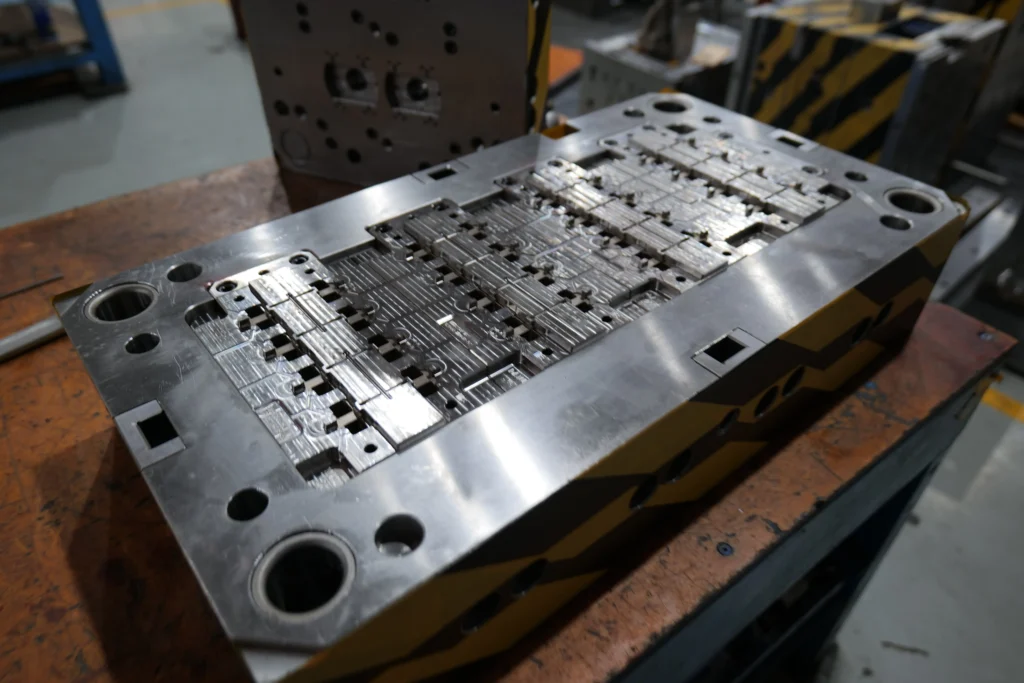
How to Reduce Mold Deformation During Heat Treatment
Mold deformation during heat treatment is a common problem in mold manufacturing, especially for precision molds, large molds, and complex mold structures. Excessive deformation can affect dimensional accuracy, assembly quality, mold life, and final product performance. To reduce deformation, manufacturers must consider material selection, mold structure, heating method, quenching process, and repair techniques.
1. Select Suitable Mold Materials
Choosing the right mold steel is one of the most effective ways to reduce deformation during heat treatment. For precision and complex molds, low-deformation die steels with stable material quality should be selected.
Air-hardening steels are often preferred because they produce less distortion than oil-quenched or water-quenched steels. For mold steels with severe carbide segregation, forging and proper refinement treatment should be carried out before machining and heat treatment.
For some high-precision molds, double refinement treatment and solution heat treatment may also be used to improve material stability and reduce distortion risk.
2. Optimize Mold Structure Design
Mold structure has a major influence on heat treatment deformation. Large differences in wall thickness, asymmetrical shapes, and uneven material distribution can all increase distortion during quenching and cooling.
To reduce deformation, mold designs should be as symmetrical as possible, with balanced wall thickness and reasonable material distribution. For large and complex molds, designers should reserve machining allowance to compensate for expected deformation after heat treatment.
In some cases, a combined structure or modular design can also help reduce overall distortion and improve manufacturability.
3. Eliminate Residual Stress Before Final Heat Treatment
Residual stress generated during machining can contribute significantly to mold deformation during heat treatment. Precision molds and complex mold inserts should undergo stress-relief treatment before final hardening.
By removing internal stress before quenching, the risk of distortion, cracking, and dimensional instability can be reduced.
4. Control Heating Temperature and Heating Speed
Rapid heating can create uneven temperature distribution inside the mold, especially in large or complex components. This uneven expansion often causes distortion.
For precision molds, slow heating, multi-stage heating, and preheating are recommended to ensure more uniform temperature distribution throughout the mold. Controlled heating helps reduce thermal shock and minimizes deformation during heat treatment.
5. Use Suitable Quenching Methods
Quenching is one of the most critical stages in heat treatment because rapid cooling often creates internal stress and distortion. Under the condition that the required hardness can still be achieved, manufacturers should choose cooling methods that minimize deformation.
Common methods include pre-cooling before quenching, staged quenching, interrupted quenching, and warm oil quenching. These methods reduce cooling stress and improve dimensional stability compared with direct rapid quenching.
6. Use Vacuum Heat Treatment and Cryogenic Treatment
For precision molds with high dimensional requirements, vacuum hardening is often recommended. Vacuum heat treatment reduces oxidation, decarburization, and uneven heating, which helps improve dimensional accuracy.
In some cases, cryogenic treatment after quenching can further stabilize the material structure, reduce retained austenite, and improve wear resistance and dimensional stability.
7. Apply Secondary Heat Treatment Processes
For high-precision molds, additional heat treatment processes may be used to improve stability and reduce distortion. These may include pre-heat treatment, aging treatment, tempering, nitriding, or multiple-stage heat treatment cycles.
These processes help reduce internal stress, improve hardness distribution, and stabilize the mold structure before final machining or production use.
8. Use Low-Heat Repair Methods
When repairing defects such as pores, sand holes, or wear damage, repair methods with low heat input should be used whenever possible. Traditional welding may introduce significant heat and cause further deformation.
Cold welding machines and other low-heat repair methods are often preferred because they minimize thermal influence on the surrounding material and help maintain mold accuracy.
Additional Methods to Reduce Mold Deformation
- Use plugs or support blocks during heat treatment
- Apply mechanical fixing methods when necessary
- Select the correct cooling direction and cooling medium flow
- Control mold movement direction during quenching
- Use proper tempering procedures after hardening
Conclusion
Mold deformation during heat treatment can be minimized through proper material selection, balanced mold design, controlled heating and cooling, stress relief, and suitable repair methods. For precision molds, careful heat treatment planning is essential to maintain dimensional accuracy, reduce scrap, and extend mold life.