
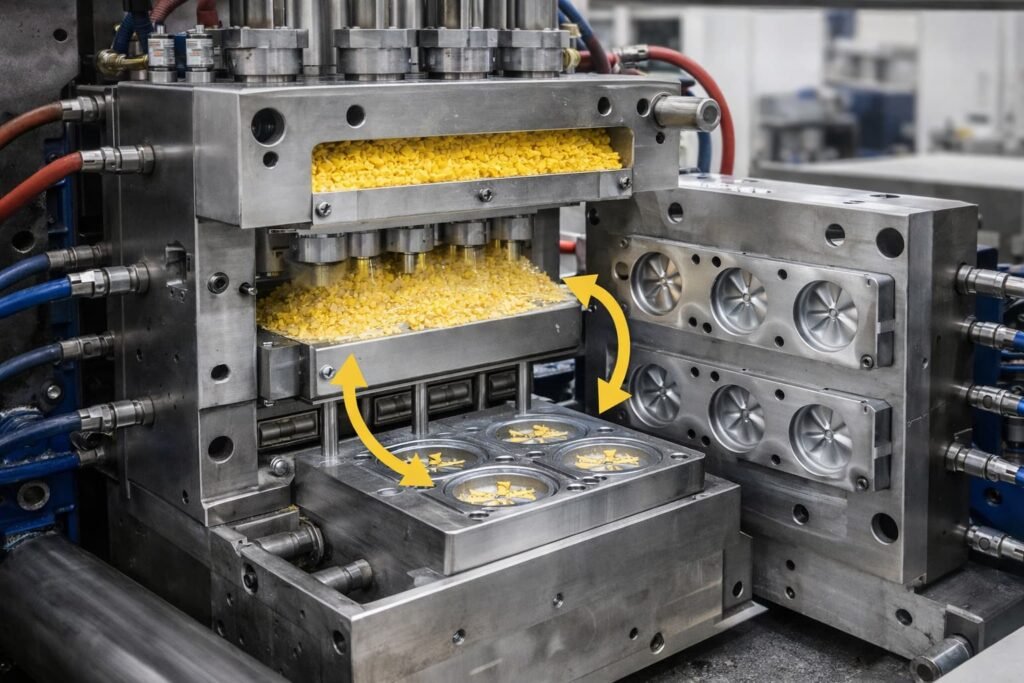
Plastic Compression Molding Mold Structure and Working Principle
Plastic compression molding molds are mainly used for processing thermoset plastics and can generally be divided into compression molds and transfer molds. These molds are commonly used in applications that require high dimensional stability, heat resistance, and good mechanical performance. The corresponding molding equipment is usually a compression molding press.
What Is Compression Molding?
Compression molding is a process in which a measured amount of plastic material is placed directly into the heated mold cavity. The mold is then closed, and pressure is applied so that the plastic softens, flows, fills the cavity, and cures into the final product shape.
Depending on the type of thermoset material being used, the mold temperature is typically maintained between 103°C and 108°C. Under high temperature and pressure, the material gradually changes from a powder or preform into a viscous state before fully curing.
Difference Between Compression Molding and Transfer Molding
Although both processes are used for thermoset materials, transfer molding differs from compression molding because it includes a separate feeding chamber.
In transfer molding, the mold is first closed before the plastic material is heated in the transfer chamber. Once the material reaches a viscous flow state, it is forced into the mold cavity through channels under pressure. The material then hardens inside the cavity to form the final product.
This method is often preferred for more complex parts, products with inserts, or components requiring better dimensional accuracy and surface finish.
Applications of Compression Molding Molds
Compression molds are widely used for manufacturing thermoset plastic components, including electrical housings, automotive parts, handles, knobs, and insulated components.
They can also be used for some special thermoplastic materials, especially those that are difficult to process by standard injection molding. Examples include polytetrafluoroethylene (PTFE) blanks, optical lenses with high clarity requirements, and lightly foamed steering wheel components.
Main Components of a Compression Mold
A typical compression molding die usually includes several key structural components:
- Mold cavity
- Feeding chamber
- Guide mechanism
- Ejection system
- Heating system
The mold cavity forms the product shape, while the guide mechanism ensures accurate mold alignment during operation. The heating system keeps the mold at the required processing temperature, and the ejection system helps remove the finished part after molding.
Compression Mold Materials
The materials used to manufacture compression molds are generally similar to those used for injection molds. Common mold materials include carbon steel, alloy tool steel, and hardened mold steels selected according to the expected production volume, product complexity, and material abrasiveness.
Conclusion
Compression molding molds are an important solution for manufacturing thermoset plastic parts and certain special thermoplastic products. Their relatively simple process, combined with strong mechanical performance and dimensional stability, makes them widely used in electrical, automotive, and industrial applications. Proper mold design, heating control, and material selection are essential for achieving stable and efficient production.