
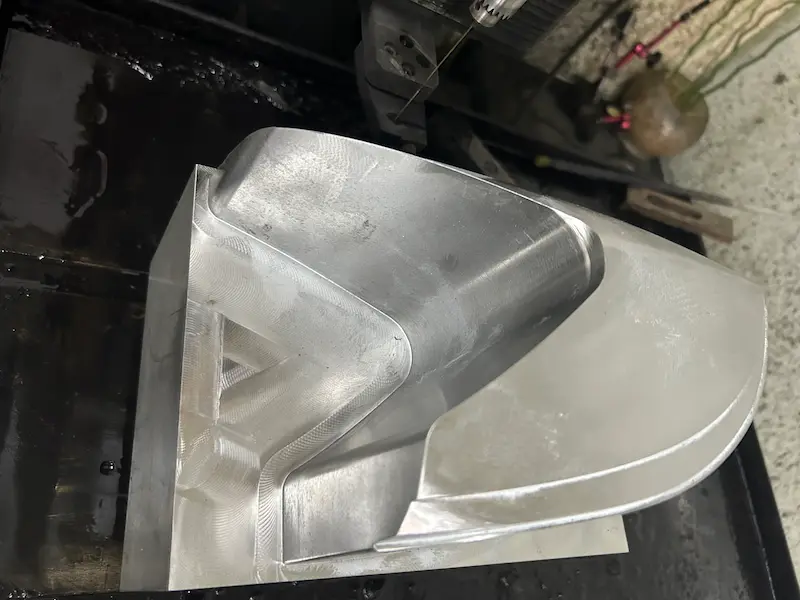
How to Prevent Over-Polishing, Orange Peel, and Pitting in Mold Polishing
Over-polishing is one of the most common problems in mold finishing. Instead of improving the mold surface, excessive polishing can reduce surface quality and create visible defects that affect part appearance and mold performance.
1. What Is Over-Polishing?
Over-polishing happens when the mold surface is polished for too long or under too much pressure. In these cases, the polished surface may become worse rather than better.
The two most common signs of over-polishing are orange peel and pitting. These defects are most often seen during mechanical polishing processes.
2. Why Orange Peel Appears on Mold Surfaces
Orange peel refers to an irregular, rough, uneven surface texture that looks similar to the skin of an orange. This defect can be caused by several factors, but the most common reasons are overheating of the mold surface, excessive carburization, too much polishing pressure, and overly long polishing time.
For example, polishing with a wheel can easily generate excess heat, which increases the risk of orange peel. Harder mold steels can usually tolerate higher polishing pressure, while softer steels are more likely to develop over-polishing defects.
3. How to Remove Orange Peel Defects
When orange peel appears, increasing polishing pressure or extending polishing time usually makes the problem worse. A better solution is to remove the damaged surface and restart the finishing process with the correct polishing sequence.
The following corrective methods are commonly used:
- Remove the defective surface by re-grinding with a slightly coarser grit than the previous polishing step, then continue polishing with lighter pressure.
- Carry out stress relief treatment at a temperature about 25°C below the tempering temperature, then use a fine abrasive for polishing before completing the final finish with reduced force.
4. Why Pitting Appears During Polishing
Pitting refers to small pits or micro-holes that appear on the mold surface during polishing. These defects are often caused by hard and brittle non-metallic inclusions inside the steel, such as oxides, which are pulled out during polishing.
The main causes of pitting include:
- Excessive polishing pressure
- Polishing time that is too long
- Insufficient steel purity and high impurity content
- Rust on the mold surface
- Oxide scale or black skin not fully removed before polishing
5. How to Prevent or Correct Pitting
To correct pitting, the damaged surface should be re-ground carefully before polishing again. The grinding grit should be slightly coarser than the previous abrasive sequence to fully remove the defective layer.
The following practices can help reduce the risk of pitting:
- Re-grind the surface carefully and finish the last grinding step with a soft, sharp oil stone before polishing
- Avoid very soft polishing tools when using abrasives finer than 1 μm
- Use the shortest possible polishing time and the lowest effective polishing pressure
6. Best Practices for Stable Mold Polishing Quality
To achieve a stable mirror finish, mold polishing should be carried out with controlled pressure, suitable abrasive progression, clean working conditions, and proper steel selection. Over-polishing should always be avoided, especially on softer steels or surfaces with existing heat damage.
Careful polishing control helps prevent surface defects, improves mold appearance, and supports better molded part quality in mass production. Because naturally the final polishing stage, which is supposed to make everything look beautiful, is also the stage most likely to wreck the surface if someone gets ambitious for five extra minutes.