
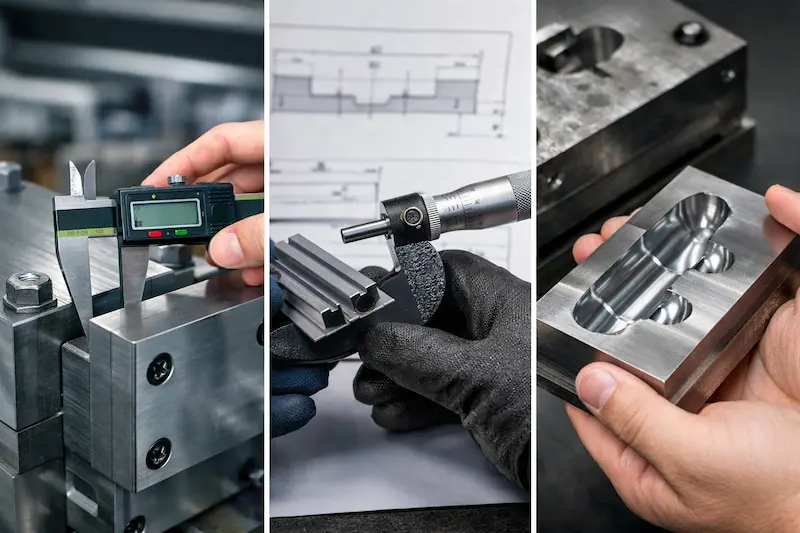
How to Judge the Quality of Extrusion Dies
Extrusion dies are widely used in manufacturing, and their quality has a direct impact on the performance, dimensional accuracy, and service life of the final products. Poor-quality dies are more likely to wear, deform, or produce inconsistent parts during long-term use. To ensure stable production, it is important to evaluate the quality of an extrusion die before use.
1. Check the Thickness of the Die
Die thickness is one of the easiest ways to judge quality. Although extrusion dies are not always exposed to extremely harsh environments, they still experience continuous friction, pressure, and repeated release during production.
A thicker die generally offers better durability, greater structural strength, and improved resistance to wear and deformation. Thin dies may wear out quickly, crack, or lose dimensional accuracy after repeated use.
2. Verify Dimensional Accuracy
A high-quality extrusion die should meet standard specifications and maintain tight dimensional tolerances. Good dies can control the size of extruded plastic products within a very small margin of error.
Inferior dies often result in products with noticeable dimensional deviations, ranging from several millimeters to even centimeters. Poor dimensional control can create assembly issues, increase material waste, and reduce production efficiency.
3. Inspect Material and Surface Finish
The material and workmanship of the extrusion die are also important indicators of quality. A good die should have a smooth, polished surface with clean edges and no visible burrs, pits, or rough machining marks.
High-quality dies usually feel solid, uniform, and well-finished. In contrast, low-grade dies may show poor machining quality, uneven surfaces, or visible defects that can affect both die performance and product appearance.
4. Consider Long-Term Performance
Beyond the initial appearance, a good extrusion die should also maintain stable performance over time. Durable materials, precise machining, and accurate dimensions all contribute to longer service life and more consistent production results.
Choosing a high-quality extrusion die can reduce maintenance costs, minimize downtime, and improve overall production efficiency.