
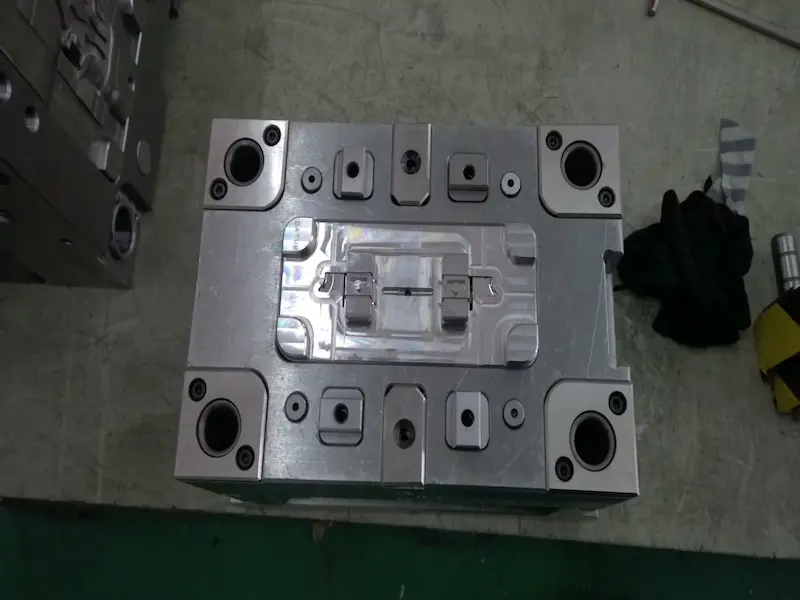
High-Gloss Injection Mold Design Guidelines
High-gloss injection molds are widely used in products that require mirror-like surface finishes, such as consumer electronics housings and appliance panels. Achieving high surface quality requires strict control over product structure, mold design, material selection, and process parameters.
1. Product Structure Requirements
High-gloss products are highly sensitive to surface defects due to light reflection. Even minor imperfections such as shrink marks or sink marks become highly visible.
- Rib thickness should not exceed 0.4× the nominal wall thickness for high-gloss parts.
- Screw bosses and thick sections require special structural optimization to prevent shrinkage.
- Uniform wall thickness is critical to maintaining consistent surface quality.
2. Hot Runner System Design
The hot runner system plays a decisive role in eliminating weld lines and ensuring uniform filling.
- Each nozzle should be equipped with a valve gate (needle shut-off).
- Independent air passages must be used for each nozzle.
- Injection timing and flow should be controlled individually via solenoid valves and time relays.
3. Heating and Cooling System
Surface quality improves significantly with higher mold cavity temperatures within a controlled range.
- Use mold temperature controllers to maintain elevated cavity temperatures.
- High temperature reduces flow marks, weld lines, and internal stress.
- Cooling channels must be evenly distributed and sufficiently dense.
- High-temperature-resistant tubing should be used to prevent failure under pressure.
Proper cooling system design also improves cycle time while maintaining surface quality.
4. Inclined Ejector (Lifter) Mechanism
Inclined lifters are commonly used in high-gloss mold designs, especially for complex parts like LCD front housings.
- Used to release undercuts such as screw bosses without damaging surface quality.
- Requires careful design to avoid part whitening or deformation.
- For large travel distances, special guiding structures are needed to reduce friction and torque.
5. Material Selection
(1) Mold Steel Selection
High-gloss molds require premium steels with excellent polishing performance and wear resistance.
- Key requirements: high hardness, good machinability, EDM performance, and weldability
- Common materials: POLMAX, NAK80, STAVAX S136, S-STAR, LKM838H, OPTIMAX
(2) Plastic Material Selection
Material choice directly impacts surface finish and mechanical performance.
- ABS: Preferred for high-gloss applications due to better surface quality and impact resistance
- HIPS: Lower cost but inferior gloss and strength
ABS processing considerations:
- Processing temperature: typically 160°C – 270°C
- Good thermal stability and moderate viscosity
- Drying required: moisture content should be below 0.1% to prevent defects
6. Mold Venting System
Effective venting is essential to prevent defects such as burn marks, bubbles, and incomplete filling.
- Vent grooves should be placed at the end of melt flow
- Typical dimensions: width 3–5 mm, depth 0.02–0.05 mm (final depth up to 0.8–1.5 mm)
- Spacing between vents: approximately 50 mm
Additional venting methods include:
- Parting line gaps
- Ejector pin clearance
- Gating system venting
7. Thermocouple Temperature Control System
Thermocouples are widely used for precise mold temperature monitoring and control.
- Provide real-time temperature feedback
- Enable automatic heating control through mold temperature machines
- Ensure the mold operates within a stable temperature range
Installation considerations:
- Place sensors close to the cavity surface when possible
- Ensure correct polarity wiring to avoid measurement errors
Conclusion
High-gloss mold design requires a comprehensive approach that integrates product design, tooling precision, material selection, and process control. By optimizing these key factors, manufacturers can achieve superior surface finishes, reduce defects, and ensure stable mass production of high-quality plastic parts.