Skip to content

5 Basic Systems of a Plastic Injection Mold Explained
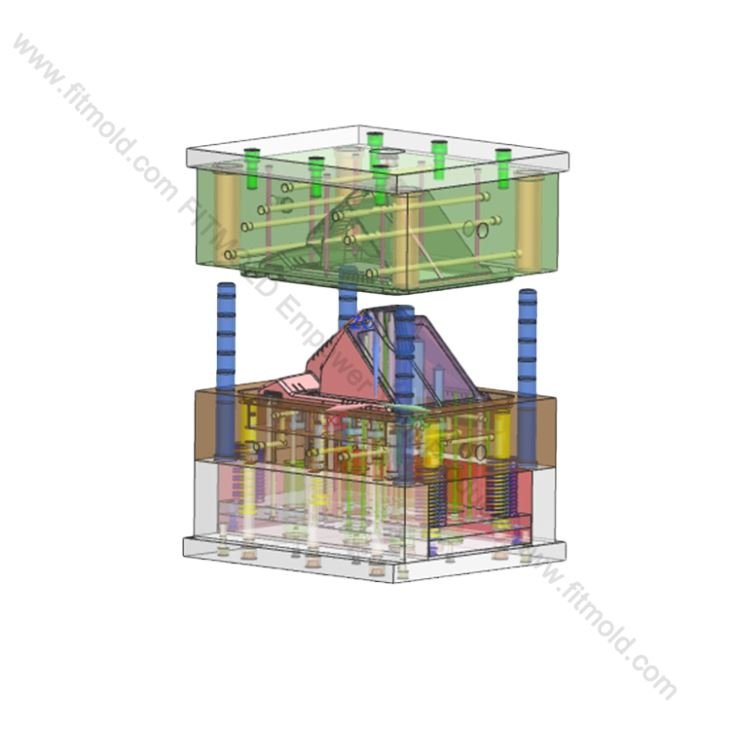
A plastic injection mold is made up of several core systems that work together to shape molten plastic into finished parts efficiently and consistently. Understanding these basic mold systems is important for improving part quality, cycle time, mold reliability, and long-term production stability.
1. Gating System
The gating system is responsible for guiding molten plastic from the injection molding machine nozzle into the mold cavity. It usually includes the sprue, runners, and gates. A well-designed gating system helps achieve balanced filling, stable flow, and reduced molding defects such as short shots, weld lines, or excessive pressure loss.
2. Ejection System
The ejection system is used to remove the molded part from the mold after cooling. Common ejection components include ejector pins, ejector sleeves, stripper plates, and other release mechanisms. Proper ejection system design is important to prevent part deformation, surface damage, or sticking during demolding.
3. Cooling System
The cooling system controls mold temperature and removes heat from the molded part during the production cycle. Cooling channels are typically built into the mold to circulate water or other temperature-control media. An effective cooling system helps shorten cycle time, improve dimensional stability, and reduce warpage or sink marks.
4. Forming System
The forming system creates the actual shape of the plastic product. It includes the cavity, core, sliders, lifters, inserts, and other mold components that define part geometry. The accuracy of the forming system directly affects part dimensions, surface finish, structural detail, and overall mold performance.
5. Venting System
The venting system allows trapped air and gases to escape from the mold cavity during filling. Without proper venting, problems such as burn marks, incomplete filling, gas traps, and weak weld lines may occur. Good venting design improves melt flow and helps achieve better part appearance and molding consistency.
Conclusion
The five basic systems of a plastic injection mold are the gating system, ejection system, cooling system, forming system, and venting system. Each system plays a critical role in mold function, product quality, and production efficiency. A well-engineered mold depends on the proper coordination of all five systems to deliver stable and reliable manufacturing results.