Skip to content

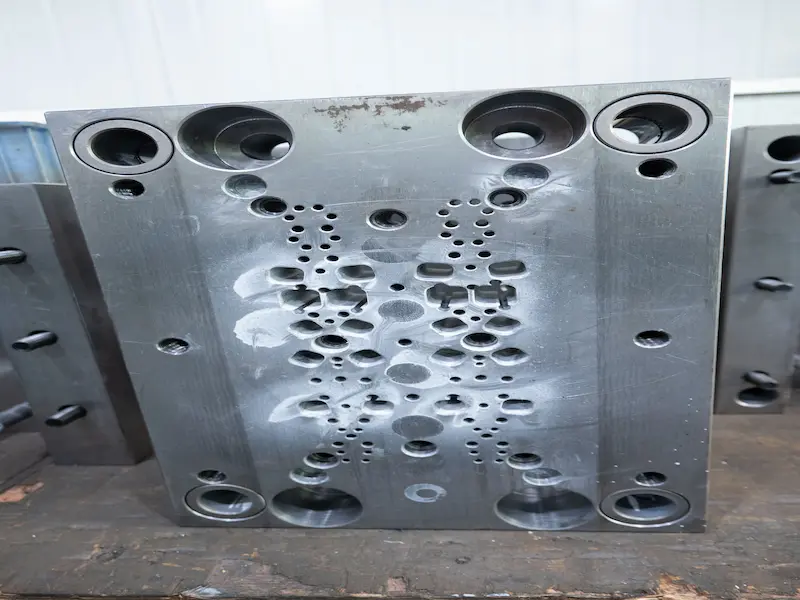
Tips for Selecting the Best Injection Mold Gate Location
Gate location is one of the most important factors in injection mold design because it directly affects filling balance, injection pressure, warpage, weld lines, residual stress, and product appearance. A well-designed gate position can improve molding stability, reduce defects, and make the mold easier to manufacture and maintain.
Key Requirements for Gate Location
When selecting a gate location, designers should consider the following factors:
- Appearance requirements such as gate marks and weld lines
- Functional requirements of the product
- Mold manufacturing and machining requirements
- Product warpage and deformation risks
- Ease of gate trimming and removal
How Gate Location Affects Production
The gate position influences the overall flow length inside the cavity, which determines the required injection pressure and clamping force. A shorter flow length generally reduces molding pressure and improves filling performance.
The gate location also affects holding pressure distribution and residual stress. Designers should avoid placing the gate near load-bearing areas or future force concentration points because residual stress in these areas may weaken the product during use.
Gate position should also consider venting conditions to avoid trapped air, gas marks, and short shots. Gates should not be placed in weak structural areas or near core inserts where misalignment could occur.
Best Practices for Choosing Gate Location
- Place the gate in the thickest section of the part whenever possible
- Avoid placing the gate near sudden wall thickness changes
- Use central gating when possible to balance flow length in all directions
- Position the gate to promote uniform shrinkage and reduce warpage
- Design the gate to support easy trimming and automatic degating if possible
When the gate is placed in the thickest section, molten material can flow from thick areas into thinner sections more effectively. This improves packing performance and reduces the risk of short shots or sink marks.
Gate Design Principles
The gate is the narrow section connecting the runner to the cavity. Its cross-sectional area is intentionally small so that it can perform several important functions:
- Freeze quickly after cavity filling
- Reduce backflow of molten plastic
- Make gate removal easier
- Leave minimal gate marks on the finished part
- Help control filling balance in multi-cavity molds
In general, larger gate cross-sections reduce pressure loss, while shorter gate lengths improve flow efficiency. However, the gate must still be narrow enough to cool quickly and prevent excessive backflow.
Factors That Influence Gate Size
The optimal gate size depends on several factors:
- Material flow characteristics
- Wall thickness of the part
- Total shot volume
- Melt temperature
- Mold temperature
Gate Location Design Guidelines
- Ensure molten material reaches all areas of the cavity evenly
- Maintain a stable and uniform flow front during filling
- Reduce the risk of weld lines, trapped air, bubbles, short shots, and flash
- Make degating as simple and automatic as possible
- Ensure the gate position supports both appearance and functionality requirements
Balancing Gates in Multi-Cavity Molds
For molds with multiple cavities, balanced filling is essential. If a naturally balanced runner system is not available, gate balancing can be achieved by adjusting gate length or gate cross-sectional area.
When cavities have different projected areas or part volumes, designers should size each gate according to the relative cavity volume. After initial calculations, actual mold testing is usually required to fine-tune gate balance and achieve uniform filling.
Gate Position Within the Runner
Ideally, the gate should be located near the center of the runner cross-section to maximize flow efficiency. As molten plastic moves through the runner, material near the runner wall cools and solidifies first, while the center remains hotter and more fluid.
Round and hexagonal runners provide better flow conditions because the gate can be positioned near the center flow layer. Trapezoidal runners are less effective because the gate cannot be positioned in the center as easily.
Direct Gates and Sprue Gates
In some molds, the sprue feeds molten plastic directly into the finished part. This is called a direct gate or sprue gate. Direct gates are commonly used in two-plate molds and can also be applied in three-plate molds or hot runner systems.
The disadvantage of a direct gate is that it leaves a visible gate mark on the product surface, which may affect appearance quality.
Conclusion
Gate design is closely related to part geometry, wall thickness, mold structure, plastic material properties, and molding conditions. The best gate design uses a small gate section and short gate length to improve flow, reduce pressure loss, simplify degating, and minimize visible gate marks.
Proper gate location selection is essential for improving part quality, reducing molding defects, and achieving stable production in injection molding.