Skip to content

Key Factors That Affect Mold Polishing Quality
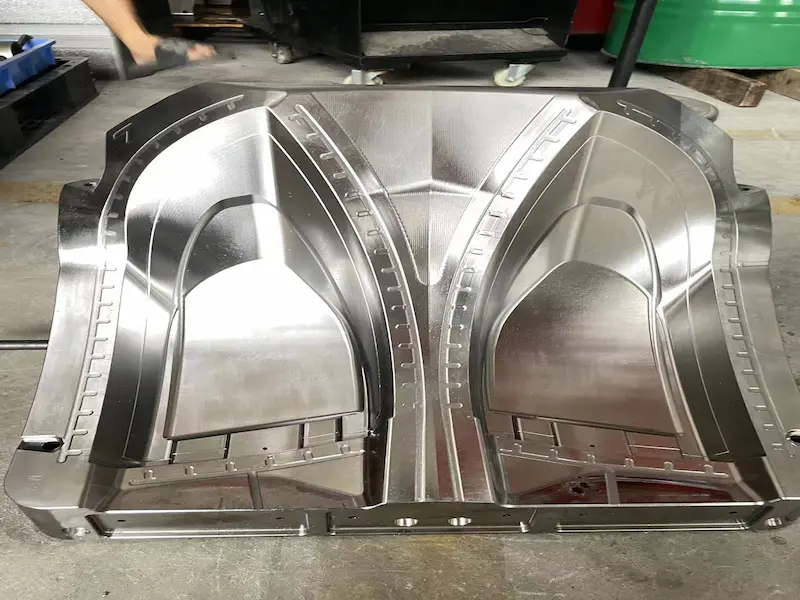
Mold polishing quality depends on several critical factors, including the condition of the workpiece surface, the quality of the steel, the heat treatment process, and the polishing technique itself. To achieve a smooth or mirror-finish mold surface, each of these factors must be controlled carefully throughout machining and finishing.
1. Surface Condition of the Workpiece
During machining, the mold surface may be affected by heat, internal stress, or unsuitable cutting parameters. These issues can reduce polishing performance and make it more difficult to achieve a fine surface finish.
Surfaces processed by EDM are generally harder to polish than surfaces produced by machining or proper heat treatment. If EDM is not finished correctly, a hardened recast layer can remain on the surface. In some cases, the heat-affected layer may reach up to 0.4 mm in depth.
This hardened surface layer is often harder than the base material and must be removed before fine polishing begins. For this reason, a rough grinding process is usually recommended after EDM to create a better foundation for polishing.
2. Steel Quality
High-quality mold steel is essential for good polishing results. Inclusions, pores, and internal defects in the steel can negatively affect the final surface finish and make mirror polishing more difficult.
If a mold component requires a high-gloss or mirror-finish surface, the steel grade should be selected with polishing performance in mind from the beginning of the project. The required polishing standard should also be considered during machining and process planning.
3. Heat Treatment Process
Proper heat treatment is another important factor in mold polishing quality. If heat treatment is not performed correctly, the steel may develop uneven hardness or inconsistent surface characteristics.
This can make polishing more difficult and may lead to uneven results across the mold surface. Stable and appropriate heat treatment helps create a more uniform material structure for consistent polishing performance.
4. Polishing Technique
Polishing is still a skill-dependent process in many mold shops, and operator technique has a major influence on the final result. Tool control, abrasive selection, polishing sequence, and surface inspection all affect the achievable finish.
Good polishing technique alone is not enough without suitable steel quality and proper heat treatment. In the same way, even high-quality steel cannot deliver a true mirror finish if the polishing process is poorly controlled. The best results come from the combination of proper material selection, correct heat treatment, and skilled polishing methods.