Double Material Injection Mold Design for Two-Shot Molding
Double material injection molding is widely used to produce parts that combine rigid plastics with soft-touch materials, improve appearance, or add sealing and functional features. Although some two-material products can be produced using a standard single-color injection molding machine with secondary assembly or post-processing, this approach is usually time-consuming, labor-intensive, and less cost-effective.
For higher efficiency and better product consistency, manufacturers often use dedicated two-shot injection molding machines and specially designed molds. In two-material molding, the mold design is one of the most important factors because it controls how the two materials are injected, transferred, and bonded together.
Two Main Types of Double Material Mold Design
1. Dual-Cavity Rotating Mold Design
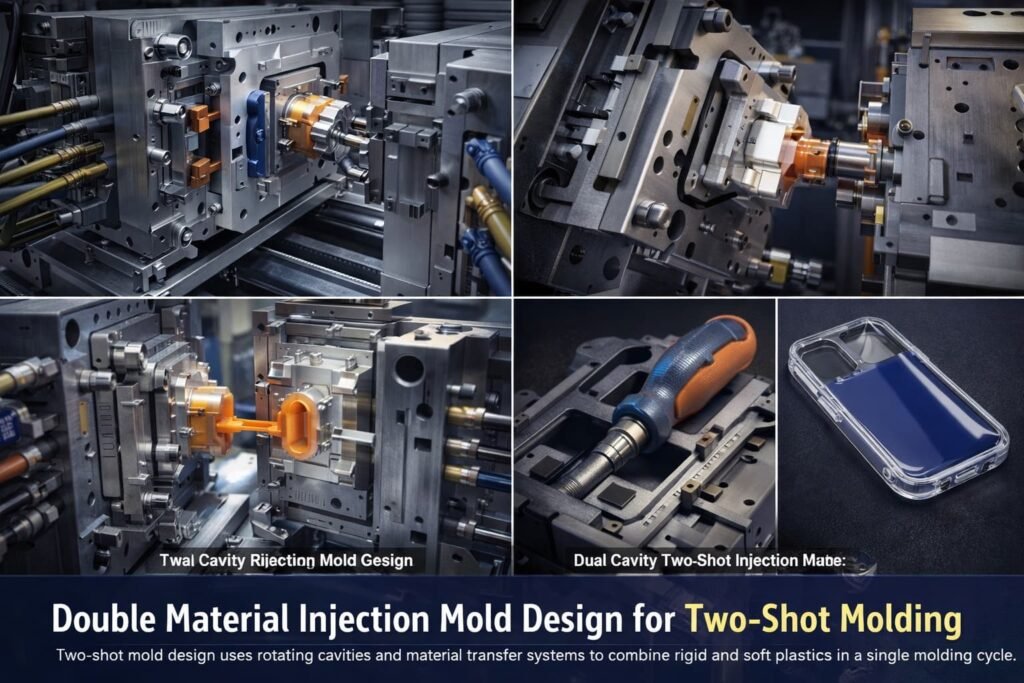
The first type of double material mold uses two separate cavities. After the first material is injected and partially molded, the semi-finished part is rotated 180 degrees into the second cavity for the second injection process.
This design allows the first and second injection stages to run simultaneously, which improves production efficiency and reduces cycle time.
2. Single-Cavity Rotating Mold Design
The second type uses a single cavity where the semi-finished part rotates 180 degrees together with the mold before the second material is injected.
This mold structure is generally simpler, but because the process is more sequential, the overall production efficiency is lower than that of a dual-cavity design.
Challenges in Double Material Mold Design
Because the mold or semi-finished product must rotate during the molding cycle, two-shot mold design requires higher precision in both mold construction and injection machine performance.
In addition, the wide variety of material combinations used in double material molding means that engineers must carefully consider product design, mold structure, and machine compatibility at the same time.
Different brands and models of two-shot injection molding machines may use different platen sizes, rotating systems, injection sequences, and clamping structures. As a result, mold designers often need to adapt the mold design to match the specific machine that will be used for production.
Common Material Combinations
Double material molded products are often made by combining rigid plastics such as ABS or PC with soft materials such as TPE.
These material combinations are commonly used for:
- Tool handles
- Kitchen utensils and tableware
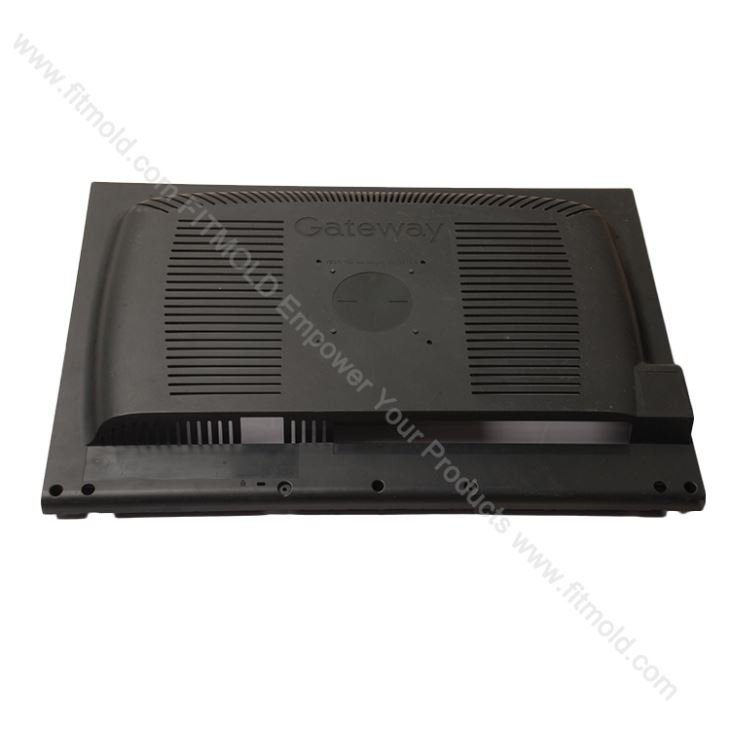
- Consumer electronics housings
- Phone cases and buttons
- Automotive interior parts
- Sealing and grip components
Important Factors for Successful Two-Shot Molding
To achieve reliable production quality, manufacturers must focus on three key areas:
- Material compatibility and bonding performance
- Product structure and mold complexity
- Injection machine setup and process adjustment
In some cases, two materials may not bond well because of cost limitations, surface conditions, or differences in material properties. This means that double material injection molding often requires additional testing, mold trials, and process optimization before stable mass production can be achieved.
Why Mold Design Is Critical in Double Material Injection Molding
Double material mold design is not only about creating the cavity shape. It also involves managing material flow, rotation mechanisms, bonding performance, cooling, and machine compatibility.
A well-designed two-shot mold can improve production efficiency, reduce secondary operations, improve part quality, and support more stable long-term manufacturing.