
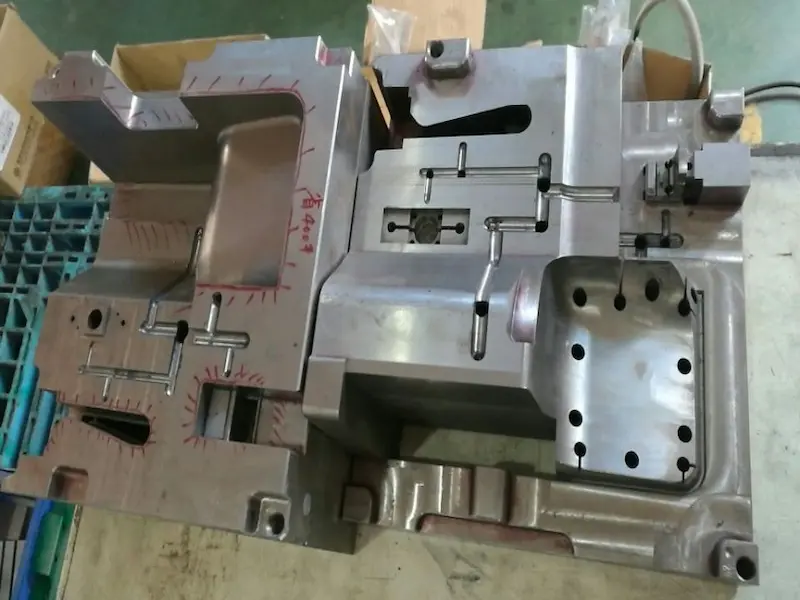
Vacuum Heat Treatment for Forging and Stamping Dies: Benefits and Process Overview
Vacuum heat treatment is becoming an increasingly important process in die manufacturing because it can improve mold quality, reduce deformation, and extend service life. In forging dies, stamping dies, and die-casting molds, proper heat treatment has a direct effect on hardness, toughness, dimensional stability, crack resistance, and overall production durability.
In many die forging applications, the forging temperature is around 850°C. After the final forging stage, the workpiece is not always cooled slowly. Instead, it may be cold quenched and then followed by high-temperature tempering or spheroidizing annealing, depending on the mold material and performance requirements. These heat treatment methods help improve mold structure and increase operational life.
Three Main Stages of Mold Heat Treatment
Mold heat treatment is generally divided into three major stages:
- Preliminary heat treatment
- Final heat treatment
- Surface strengthening treatment
Each stage plays a different role in preparing the mold material, achieving final hardness and toughness, and improving wear resistance or surface durability.
Advantages of Vacuum Heat Treatment
Compared with conventional heat treatment, vacuum heat treatment offers several important advantages in mold manufacturing. It is widely recognized as one of the more advanced heat treatment methods used for dies and molds.
Its main advantages include:
- High heat treatment quality
- Low energy consumption
- No oxidation on the mold surface
- No decarburization-related surface damage in normal controlled processing
- Cleaner production with less environmental pollution
- Reduced deformation after heat treatment
- Improved crack resistance
When combined with suitable surface strengthening technology, vacuum heat treatment can help release more of the material’s performance potential.
Benefits for Cold Stamping Dies and Die-Casting Molds
Cold stamping dies processed by vacuum heat treatment generally show smaller deformation and are less likely to develop cracking, including cracking associated with wire cutting operations after hardening.
For die-casting molds, advanced heat treatment processes can reduce cracking risk and help lower the tendency for sticking or soldering during production use. This contributes to better mold durability and more stable die-casting performance.
Because of these benefits, both domestic and international mold manufacturers continue to adopt more advanced vacuum heat treatment methods to improve mold performance and extend service life.
Importance of Equipment and Process Control
The quality of vacuum heat treatment does not depend only on the process concept itself. It also depends heavily on the condition of the equipment, the heat treatment cycle design, and the control of the production process.
Advanced vacuum heat treatment equipment is the foundation for achieving reliable and repeatable processing results. Proper control of temperature, vacuum level, holding time, cooling rate, and production discipline is essential to ensure that the expected mold properties are achieved.
Conclusion
Vacuum heat treatment is an advanced and highly effective method for improving the quality of forging dies, stamping dies, and die-casting molds. By reducing oxidation, limiting deformation, improving structural stability, and supporting surface strengthening, it helps manufacturers achieve longer mold life and more reliable production performance.
For modern mold manufacturing, vacuum heat treatment is an important process route for improving both tooling quality and long-term economic efficiency.