
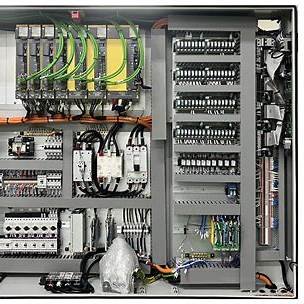
Electrical CNC Control Systems in Modern Machine Tools
Electrical CNC control technology combines hardware operation and software control to improve machining accuracy, production consistency, and automation in modern machine tools. With the rapid development of numerical control technology, CNC systems have become widely used in the electromechanical industry, helping manufacturers improve product quality, production efficiency, and operational safety.
Compared with conventional machine tool control methods, CNC electrical systems provide more precise control over machining parameters and support more stable production performance. They also contribute to better productivity and lower operating cost in modern manufacturing environments.
1. CNC Electrical Control Improves Accuracy and Efficiency
The CNC control system can greatly reduce production errors through accurate digital control. It allows the machine tool to select suitable machining parameters according to actual processing needs, which helps improve machining precision and maintain consistent product quality.
In many applications, CNC machine tools can achieve much higher productivity than conventional machine tools because of their higher degree of automation and better process control.
2. CNC Technology Supports Safer and More Modern Machine Tools
Modern CNC electrical systems also improve machine safety and monitoring capability. Through advanced control systems, the machine can achieve more reliable operation and better process supervision during production.
In many cases, traditional electromagnetic control equipment has been replaced by computerized control devices, optical fiber communication, or cable-based digital signal systems. This shift supports more efficient machine monitoring and more advanced control functions.
3. Common Types of CNC Machine Tools
CNC machine tools can be classified in several ways. Based on process type, they are commonly divided into standard CNC machine tools, machining centers, and CNC special processing machines.
Based on movement mode, CNC machine tools can be grouped into point control systems, linear control systems, and contour control systems. Based on servo control mode, they may also be divided into open-loop, closed-loop, and semi-closed-loop systems.
From the perspective of CNC system capability, machine tools are often categorized as economical CNC machines, mid-range CNC machines, and high-grade CNC machines.
4. Main Components of the CNC Electrical Control System
The high level of automation achieved by CNC machine tools depends largely on their electrical control system. In general, the electrical control system of a CNC machine tool includes three main parts: the PLC system, the peripheral electrical control system, and the actuator system.
These parts work together to control machine operations, signal transmission, and motion execution. In practical factory use, the relationship between these systems is usually described in the machine electrical manual or electrical documentation.
Conclusion
Electrical CNC control technology is a key foundation of modern machine tools. By combining software-based control, electrical automation, and precise motion systems, CNC machine tools can achieve better accuracy, higher efficiency, stronger consistency, and improved safety. As manufacturing continues to develop, CNC electrical systems will remain essential for high-performance industrial production.