
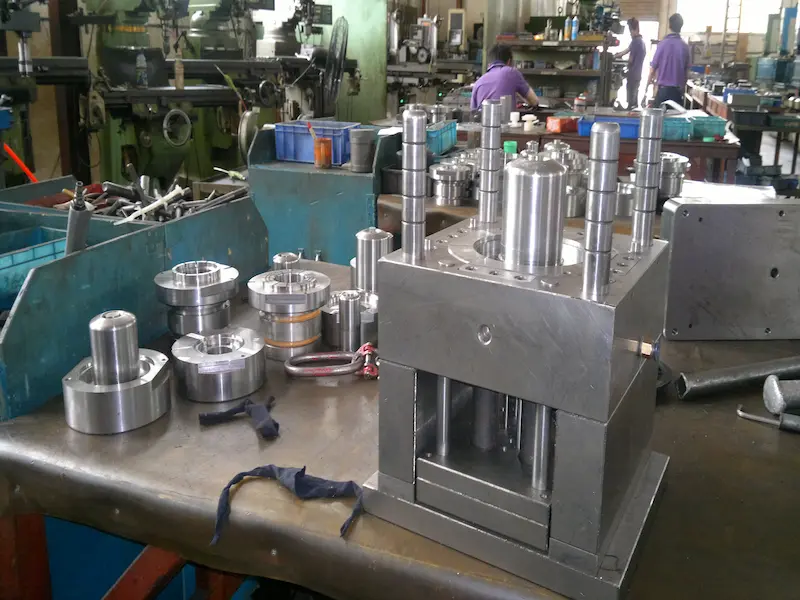
Causes of Color and Gloss Defects in Injection Molded Parts
The surface gloss of an injection molded part is mainly affected by the plastic material, colorant, and mold surface finish. However, color inconsistency, poor gloss, dark spots, and dull surface appearance can still occur during production due to mold, material, and process-related problems.
1. Poor Mold Surface Finish or Venting
If the mold cavity surface has low finish, rust, contamination, or poor venting, the molded part may show uneven color, low gloss, or dark surface areas. A clean and well-polished cavity surface is essential for achieving stable appearance quality.
2. Defects in the Gating and Runner System
If the mold gating system is poorly designed, melt flow can become unstable and affect the final surface appearance of the part. The cold slug well may be too small, and the runner, sprue, or gate may have insufficient size or poor surface finish.
Enlarging the cold slug well, optimizing runner dimensions, and polishing the sprue, runner, and gate can help improve flow behavior and surface gloss.
3. Low Material Temperature or Mold Temperature
If the plastic melt temperature or mold temperature is too low, the material may not fully fill and replicate the mold surface properly. This can result in poor gloss, dull areas, and inconsistent surface color.
Increasing the melt temperature and mold temperature, or applying local gate heating when necessary, can improve surface finish and color consistency.
4. Improper Injection Pressure or Speed
Low injection pressure, slow injection speed, short injection time, or insufficient back pressure can all reduce melt compactness inside the cavity. This may lead to darkened surfaces, poor gloss, or unstable part appearance.
Stable filling pressure, proper injection speed, and adequate back pressure are important for achieving a dense and visually consistent molded surface.
5. Poor Plasticizing or Material Degradation
The plastic should be fully plasticized before injection, but overheating or poor thermal control can cause material degradation. Both under-plasticizing and degradation can negatively affect color uniformity and gloss.
Stable barrel temperature control and sufficient cooling are especially important for thick-wall molded parts.
6. Cold Material Entering the Cavity
If cold material enters the mold cavity during injection, the molded part may show dull patches, flow marks, or dark surface defects. This is especially common when nozzle temperature control is poor.
Using a self-locking spring or reducing nozzle temperature appropriately can help prevent cold slug defects.
7. Poor Material or Excessive Regrind Use
Excessive recycled material, low-quality resin, poor-quality colorant, moisture contamination, or impurities in the material can all lead to poor color consistency and reduced gloss.
Low-quality lubricants may also affect the final surface appearance. Using clean, stable raw materials with controlled regrind ratios is essential for better cosmetic results.
8. Insufficient Clamping Force
If clamping force is not sufficient during molding, mold separation may occur slightly during filling or packing. This can affect cavity pressure and lead to unstable surface gloss or appearance defects.
Proper clamping force helps maintain part density, surface consistency, and dimensional stability during production.
How to Improve Surface Color and Gloss Stability
To reduce color and gloss defects in injection molded parts, manufacturers should maintain good mold surface quality, optimize venting and gating design, control melt and mold temperature, use stable molding parameters, and ensure raw material consistency.
Stable process control and clean materials are essential for producing injection molded parts with consistent color, gloss, and overall appearance quality.