
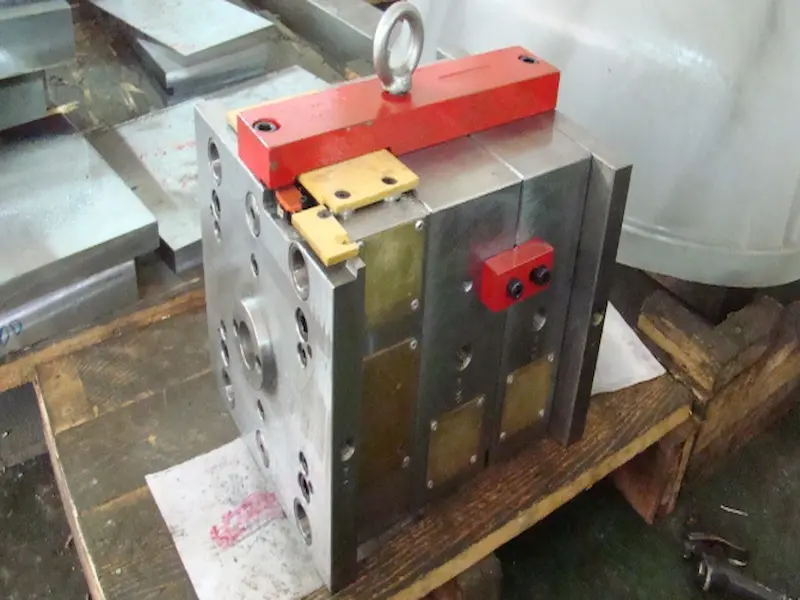
Mold Finishing and Assembly Practices to Improve Service Life and Dimensional Accuracy
Surface quality and final assembly have a major influence on mold performance, dimensional accuracy, and service life. Tool marks, wear marks, hardened layers from electrical machining, residual stress, and assembly errors can all become sources of cracking, premature wear, or tolerance problems if not controlled properly.
1. Remove Surface Defects After Machining
After machining, the surface of a mold component may retain tool marks and wear traces. These areas often become stress concentration points and can act as the starting source for crack growth during production.
For this reason, mold parts should undergo surface strengthening and polishing after machining is completed. Skilled manual finishing helps remove processing defects and reduce hidden risks left by machining operations. Edges, sharp corners, and hole openings should also be rounded or dulled appropriately, and critical areas should be given suitable radius transitions to reduce stress concentration.
2. Remove the Hardened Layer from EDM Processing
Electrical discharge machining can leave a transformed hardened layer on the mold surface, usually around 6 to 10 μm thick. This layer is typically gray-white in color, brittle in structure, and contains residual stress.
Before the mold is put into service, this hardened layer should be removed completely by polishing or grinding. Eliminating the EDM-affected layer helps improve surface reliability and reduces the risk of cracking or early surface failure during mold use.
3. Demagnetize and Clean Before Assembly
During grinding and electrical machining, mold components may become magnetized. Even weak magnetic force can attract fine metal particles or debris, which may affect assembly accuracy and mold cleanliness.
Before assembly, the workpiece should be demagnetized and the surface should be cleaned thoroughly. A suitable cleaning agent such as ethyl acetate can be used to remove residual contamination and ensure a clean assembly condition.
4. Follow a Structured Mold Assembly Process
Before assembly begins, the assembly drawing should be reviewed carefully and all parts should be identified. The assembly sequence between components should be listed clearly, along with important inspection points and precautions.
In general, mold assembly should begin with guide columns and guide bushings, followed by the mold frame and then the male and female mold components. After installation, all critical gaps should be adjusted carefully, especially the clearance between the core and cavity or between the male and female mold sections.
After assembly is completed, mold testing should be carried out and an overall assembly and trial report should be prepared.
5. Use Reverse Analysis to Solve Mold Problems
If problems are found during mold trial or inspection, a reverse analysis method can be effective. This means tracing the issue backward from the final process to the earlier process, from finishing operations to rough machining, and checking each stage step by step until the root cause is found and corrected.
This method helps identify hidden processing or assembly errors more efficiently and supports faster problem resolution.
Conclusion
Good control of finishing and assembly processes can significantly reduce out-of-tolerance parts, lower scrap rates, improve mold assembly success, and extend mold service life. Careful polishing, hardened layer removal, demagnetizing, cleaning, and systematic assembly are all essential steps in achieving reliable mold performance.