
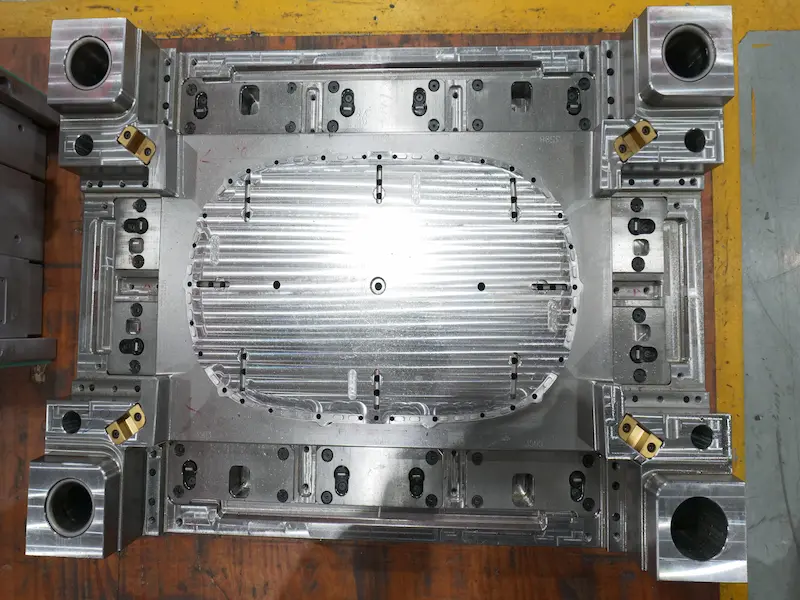
Modular Mold Design Methods for Faster Development and Better Design Quality
Shortening the mold design cycle while improving design quality is one of the most effective ways to accelerate the entire mold development process. Modular mold design is based on the similarity of product structures and functions, allowing mold components to be standardized, reused, and combined more efficiently. In practice, modular design can significantly reduce design time, improve consistency, and support more reliable mold development.
What Is Modular Mold Design?
Modular design is a design method that divides mold structures into reusable functional and structural units. These modules can be stored in a module library and reused in future mold projects. By calling predefined modules instead of rebuilding common structures from scratch, mold designers can improve both speed and accuracy.
This approach is especially valuable in mold engineering, where many design features repeat across different projects, such as inserts, sliders, ejector structures, standard support elements, and gating-related components.
1. Creating a Mold Module Library
The module library is the foundation of modular mold design. In general, it is built in three main steps: module partitioning, feature model construction, and generation of user-defined features.
The first step is module partitioning. This is one of the most important parts of the system because the way modules are divided directly affects functionality, performance, flexibility, and cost. Each mold type should go through technical review and repeated evaluation before the module boundaries are finalized.
In mold design, functional modules and structural modules are often interconnected. Structural modules may include large local structural variations and can therefore contain functional modules. At the same time, some functional modules may have relatively fixed structures and can include structural elements within them.
After the module design is completed, the feature model of each required module can be manually built in the Pro/E Part or Assembly environment. Using the user-defined feature function in Pro/E, the module can then be defined with variable parameters such as size and assembly relationship. These become user-defined features, or UDFs.
The generated UDF files can then be classified and stored in the module library. Standard parts can also be included as a special category of modules. In this way, the module library becomes a reusable design resource for future mold projects.
2. Developing a Module Library Management System
Once the module library is created, a management system is needed to select, drive, and assemble the correct modules. This system typically works through two levels of reasoning: structure selection reasoning and automatic modeling reasoning.
In structure selection reasoning, the system accepts the module name, functional requirements, and structural parameters entered by the user. Based on this information, it identifies the most suitable module from the module library. If the automatically suggested result is not suitable, the user can manually specify the module name.
However, the selected module at this stage may still be incomplete because dimensional parameters, tolerance requirements, material characteristics, and assembly relationships have not yet been fully defined.
In the second stage, automatic modeling reasoning is used. Here, the system applies size parameters, precision requirements, material properties, and assembly constraints to drive the user-defined feature model. The selected module is then automatically generated and assembled inside the design environment.
3. Advantages of Modular Design in Mold Development
Modular mold design offers several important advantages in practical engineering work.
- Shorter mold design cycle through reuse of proven modules
- Improved design quality by reducing repeated manual design work
- Better standardization of mold structures and design logic
- Higher design efficiency for similar or repeat mold projects
- Improved scalability when new modules are added to the library
Because the modules are carefully designed and validated before being stored in the library, the final mold quality can also be more consistent. Designers spend less time on repetitive geometry creation and more time on project-specific engineering decisions.
4. Application of Pro/E and Pro/TOOLKIT in Modular Mold Design
In a Pro/E-based workflow, the module feature model can be created in the Part or Assembly space and defined as a user-defined feature. The automatic modeling function can then be developed using Pro/TOOLKIT, which supports secondary development based on C and Pro/E.
With this setup, the system can automatically call the required module, generate the correct feature model, and complete assembly operations. This allows mold design tasks to be completed more quickly and with greater consistency.
Because the module library contains independent UDF files, the system is also extensible. New modules can be added over time without changing the entire design framework.
Conclusion
Modular mold design is an effective method for reducing mold development time and improving design quality. By building a structured module library, defining reusable user-defined features, and combining them with an intelligent module management system, manufacturers can standardize mold development and improve engineering efficiency. For companies seeking faster turnaround and more reliable mold design, modular design offers clear long-term advantages.