
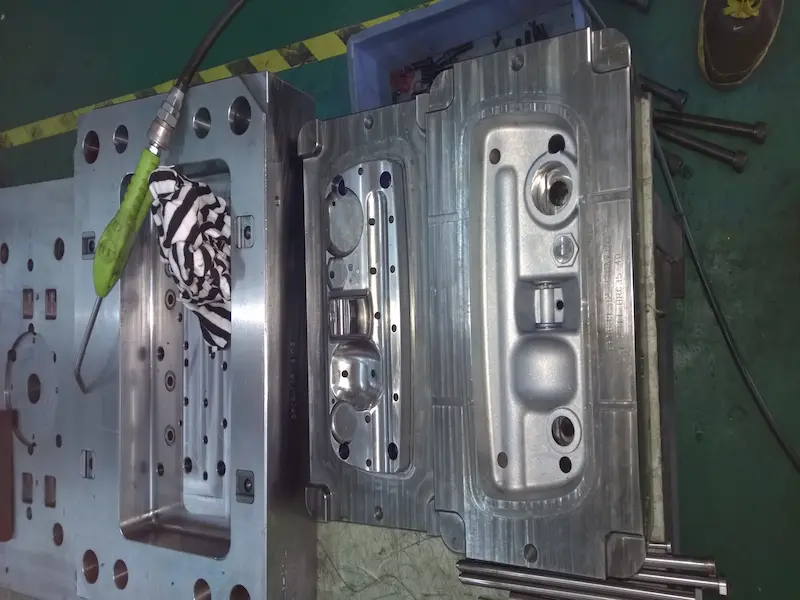
Key Features of High-Gloss Injection Molds for Premium Plastic Parts
High-gloss injection molds are designed to produce premium plastic parts with excellent surface appearance and reduced visible defects. By combining mold temperature control, hot runner technology, and time-sequenced valve gate feeding, high-gloss molds can help achieve bright surfaces, lower shrinkage risk, and fewer weld marks.
These molds are widely used for products that require a high-quality cosmetic finish and that need to be assembled directly without secondary surface treatment.
1. High Mold Temperature During Molding
One of the main features of a high-gloss mold is its relatively high mold temperature during production, typically around 80°C to 90°C depending on the material and product design.
Maintaining a higher mold temperature during filling and packing helps improve surface replication and can reduce visible defects such as weld lines, flow marks, and internal stress. For this reason, high-gloss molds are usually equipped with a mold temperature control system.
To reduce heat loss during operation, an insulation board is often installed on the fixed mold side. Stable temperature control is essential because a high-gloss surface is not achieved by wishful thinking and shiny brochures alone.
2. Extremely High Cavity Surface Finish
The cavity surface of a high-gloss mold must have a very high polish level, often reaching mirror-grade finish requirements. This allows molded parts to achieve an attractive glossy appearance directly out of the mold.
Because the product surface quality depends heavily on cavity finish, high-gloss molds require high-quality mold steel, careful polishing, and suitable plastic materials with good surface reproduction capability.
In many applications, the molded part can be used directly for assembly without additional painting or surface treatment.
3. Advanced Hot Runner System
High-gloss molds often use a hot runner system with multiple hot nozzles. In many cases, the system may include six to eight nozzles or even more, depending on the part size and geometry.
Each hot nozzle is usually equipped with a valve gate or sealing needle and has an independent control path. These nozzles are controlled separately through solenoid valves and timing systems so that the melt can be injected in a time-sequenced manner.
This staged filling approach helps control the melt flow front and can reduce or even eliminate weld marks in visible areas of the product.
4. Better Surface Quality for Premium Products
By combining high mold temperature, mirror-finish cavities, and controlled hot runner feeding, high-gloss molds are able to produce high-end plastic parts with improved cosmetic quality.
Typical benefits include:
- High surface gloss
- Reduced weld marks
- Lower risk of shrinkage marks
- Fewer flow marks
- Reduced internal stress
These advantages make high-gloss molds suitable for premium housings, appliance parts, automotive interior components, and consumer products with high visual requirements.
Conclusion
High-gloss injection molds are specialized tooling systems built for superior surface quality and better cosmetic control. Their main characteristics include elevated mold temperature, highly polished cavity surfaces, and multi-nozzle hot runner systems with time-sequenced valve gate control.
With proper mold design, temperature management, and runner control, manufacturers can produce glossy plastic parts with fewer appearance defects and better overall product quality.