
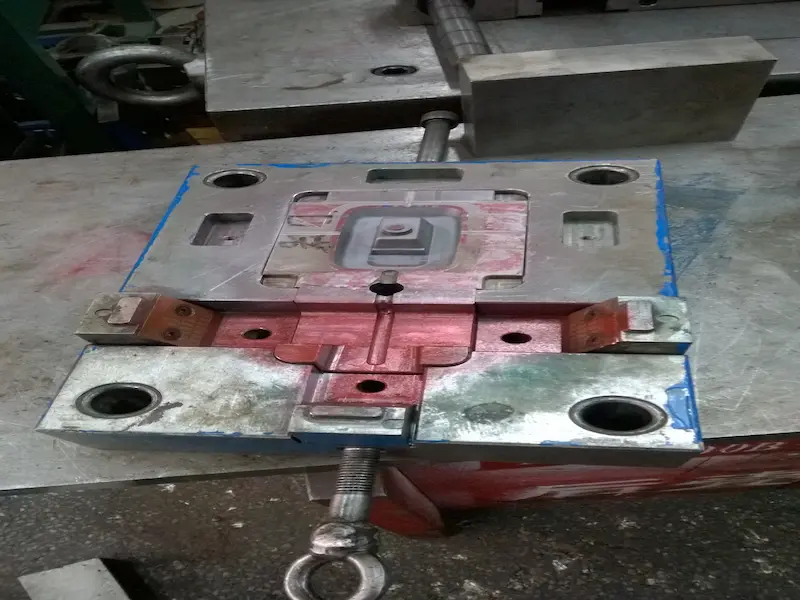
Electric Servo-Driven Unscrewing Systems for Injection Molds
In injection molding applications for threaded plastic parts, mold design often requires more than a simple conical connection at the nozzle area. In many cases, the molded part includes an internal thread, which means the mold must use a rotating screw core with a matching external thread to release the part correctly during demolding.
To achieve this movement, the injection mold needs a reliable rotary drive system. Electric servo motors are one of the most effective solutions for this type of unscrewing mechanism, although hydraulic cylinders can also be used in some applications.
1. How Rotating Screw Core Systems Work
When a molded part contains an internal screw sleeve or threaded feature, the mold must rotate the threaded core during ejection so the plastic part can be released without damage.
This rotational movement is usually transmitted from the drive unit to the rotary core through mechanical elements such as gears and racks. The system must operate with high precision to ensure stable demolding and protect both the molded thread and the mold components.
2. Why Electric Servo Motors Are Ideal for Unscrewing Molds
Electric servo motors are especially suitable for unscrewing core systems because they provide reliable rotational output with low energy consumption. Compared with other drive methods, servo-driven systems offer excellent motion control, high positioning accuracy, and stable torque output across different operating speeds.
These advantages help improve demolding consistency, reduce stress on mold parts, and lower the risk of premature wear in the unscrewing mechanism.
3. Benefits of Servo-Driven Rotary Core Systems
Using electric servo motors in injection molds with rotating screw cores offers several practical benefits:
- High precision rotation control
- Low energy consumption
- Reliable output during continuous production
- Reduced wear on mold components
- Easy maintenance
- Better product quality and longer mold running time
Because the motion can be controlled precisely at different speeds and power levels, the molded thread can be released more smoothly, which helps improve the quality of injection molded threaded parts.
4. Multi-Cavity Mold Applications
Today, servo-driven unscrewing concepts can be applied not only to single-cavity molds, but also to high-cavity production tools. In some applications, this concept can be used on multi-cavity molds with up to 128 cavities.
For even higher cavity counts, the mold design and drive arrangement must be evaluated case by case according to the customer’s product requirements, cavity layout, and production target.
5. Advantages Over Hydraulic Systems
Hydraulic cylinders can also be used to generate the rotation required for screw cores, but electric servo systems provide important advantages in many molding environments. Unlike hydraulic systems, electric drives do not create oil leakage risks, which makes them especially suitable for clean production environments and clean room applications.
In addition, servo drives are generally easier to maintain and offer more precise control than hydraulic systems, supporting longer mold life and more stable molding performance.
6. A Better Solution for Threaded Injection Molded Parts
For injection molded products with internal threaded features, electric servo-driven unscrewing systems provide a high-precision and efficient solution. By combining rotary screw cores with gears, racks, and servo control, manufacturers can improve molded part quality, reduce mold wear, and achieve stable performance even in high-cavity production.