Skip to content
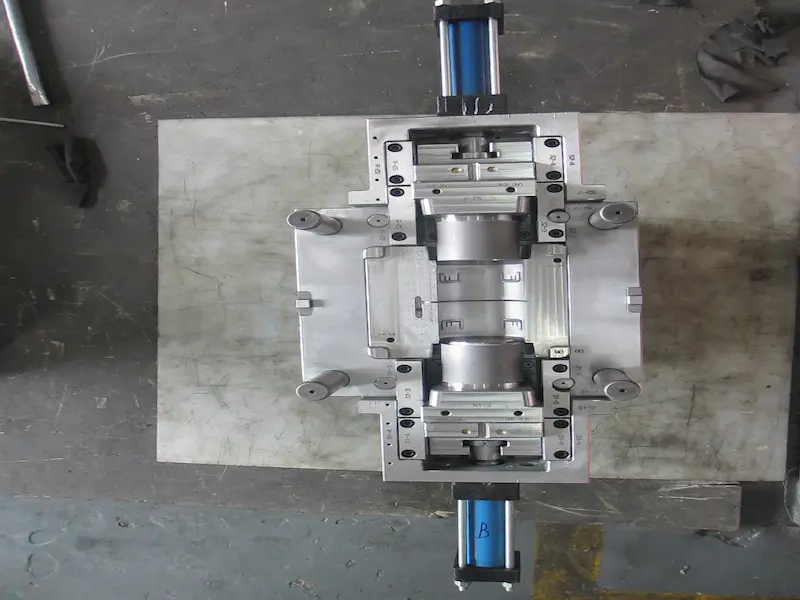
Main Structural Components of a Die Casting Mold
A die casting mold is made up of several structural systems that work together to shape molten metal, control filling, guide mold movement, and remove the finished casting. Each part of the mold plays a specific role in maintaining dimensional accuracy, production efficiency, and casting quality.
1. Forming Components
The forming components are the parts of the mold that create the cavity shape of the casting. These mainly include fixed inserts, movable inserts, cores, and cavity blocks.
The shape, size, and surface finish of these components directly determine the final geometry and appearance of the die cast part.
2. Mold Base and Support Structure
The mold base includes the mold plates, support frames, and structural components that hold the mold together. These parts secure all mold elements in the correct position and allow the mold to be mounted on the die casting machine.
A strong mold base is important for maintaining alignment, reducing deformation, and supporting the high clamping force used during die casting.
3. Guide Components
Guide components ensure accurate alignment between the fixed half and moving half of the mold during opening and closing.
These guide parts usually include guide pins, guide bushings, and locating blocks. Proper guidance helps prevent mold wear, flashing, and cavity mismatch.
4. Ejection System
The ejection system is used to remove the finished casting from the mold after solidification. It typically includes ejector pins, ejector plates, return pins, and guide components for positioning.
A properly designed ejection system helps prevent part deformation, sticking, and surface damage during demolding.
5. Gating System
The gating system controls how molten metal enters the mold cavity. It directly affects filling speed, pressure distribution, and casting quality.
The gating system generally includes the sprue, runner, and ingate. Proper gating design helps reduce turbulence, porosity, cold shuts, and incomplete filling defects.
6. Venting and Overflow System
The venting system removes trapped air and gas from the cavity during filling. It usually includes vent grooves, overflow wells, and exhaust channels.
Good venting design is essential for reducing gas porosity, burn marks, incomplete filling, and other casting defects.
7. Fasteners and Positioning Parts
Bolts, pins, locating blocks, and other fastening components are used to assemble and secure the mold structure.
These parts help maintain dimensional stability and ensure that the mold components stay in the correct position during repeated production cycles.
8. Core Pulling and Temperature Control Systems
For complex castings with undercuts or side features, a core pulling mechanism may be required. These systems allow movable cores or sliders to release the casting from the mold.
Many die casting molds also include cooling or heating systems to control mold temperature. Stable mold temperature helps improve filling, reduce cycle time, and maintain consistent casting quality.
By understanding the structural units of a die casting mold, manufacturers can improve mold design, optimize production efficiency, and achieve better casting performance.