Skip to content

Moldless Casting Technology for Complex Metal Parts
Traditional casting usually requires a wood or metal pattern before mold production can begin. This approach often involves a complicated process, high tooling cost, long lead time, significant material waste, and limited dimensional consistency. Moldless casting technology offers a more advanced solution by combining digital design and CNC machining to produce precision sand molds without making a physical pattern first.
In this process, a three-dimensional CAD model is created digitally, and the sand mold is then machined directly by CNC equipment. After machining, the sand sections are assembled into a complete mold for casting. This method simplifies the conventional workflow and supports the production of complex metal castings with better flexibility and faster turnaround.
1. What Is Moldless Casting?
Moldless casting is a digital casting process that removes the need for traditional wood or metal patterns. Instead of making a separate pattern, manufacturers use CAD data and CNC machining to directly create the sand mold required for casting.
This digital approach helps shorten product development time, improve mold accuracy, and reduce the labor involved in traditional pattern making.
2. Advantages of Moldless Casting Technology
One of the main advantages of moldless casting is process simplification. Since there is no need to produce a physical pattern, the entire casting workflow becomes faster and more efficient. This helps reduce material consumption, tooling preparation time, and overall production complexity.
Moldless casting also supports greater flexibility in manufacturing. Design data can be adjusted directly in the CAD model, making it easier to respond to design changes or produce customized cast components without reworking traditional patterns.
Another key benefit is improved dimensional consistency. Because the sand mold is generated from digital data and machined directly, the final mold geometry can be controlled more accurately than in many conventional manual pattern-based methods.
3. Suitable for Complex Metal Parts
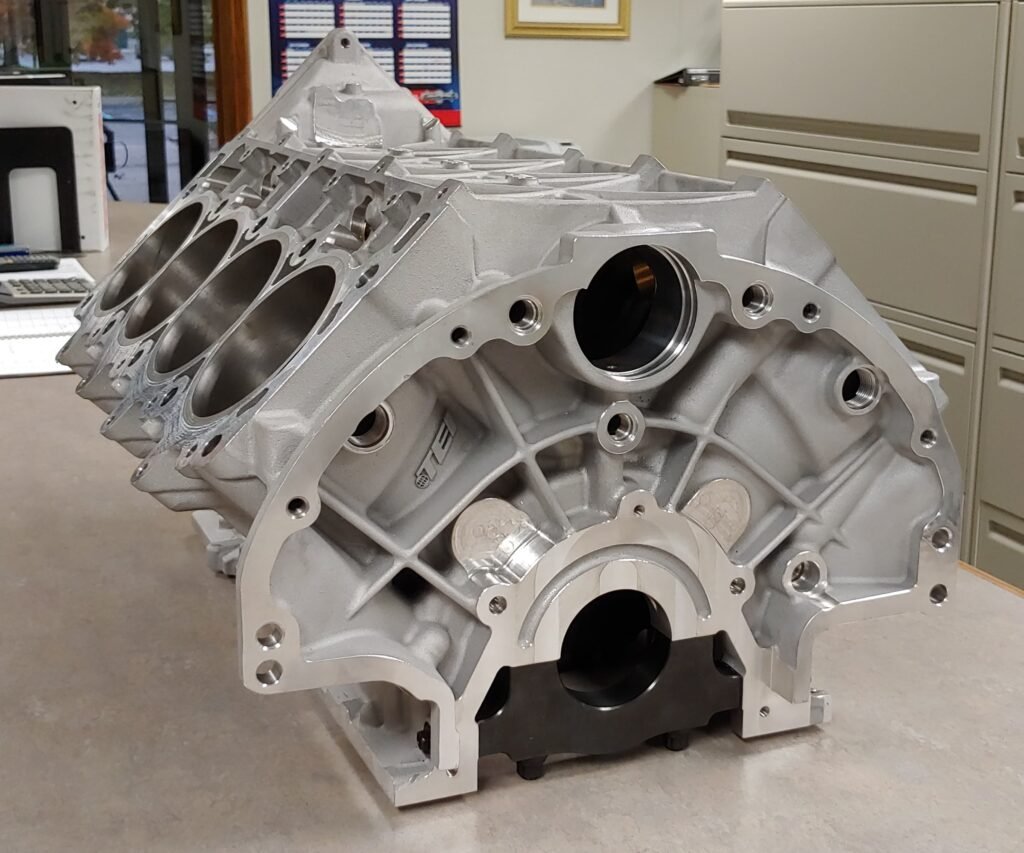
Moldless casting is especially suitable for large and complex metal components that are difficult or expensive to produce using traditional casting methods. It has already been used in the development of parts such as gearboxes, crankcases, and cylinder heads.
For these types of parts, traditional casting often requires a long preparation cycle and a large amount of consumable material. Moldless casting helps improve responsiveness during product development and supports more efficient production of complex geometries.
4. A More Digital and Sustainable Casting Process
Moldless casting is often considered a more intelligent and environmentally friendly manufacturing method. By eliminating the pattern-making stage, it reduces the use of wood, metal, and other related materials. It also helps decrease process waste and supports a more streamlined production flow.
Although the equipment investment can be relatively high at the beginning, the long-term economic benefits can be significant for manufacturers producing large or complex castings. Reduced lead time, lower consumable use, and improved flexibility all contribute to better production efficiency.
Conclusion
Moldless casting technology combines digital modeling and CNC machining to create a faster, more flexible, and more precise casting process. For complex metal parts, it can reduce traditional pattern costs, shorten development cycles, and improve manufacturing efficiency. As digital manufacturing continues to advance, moldless casting is becoming an increasingly practical solution for modern foundry production.