Skip to content

Advantages of CNC Special Processing Technology in Mold Manufacturing
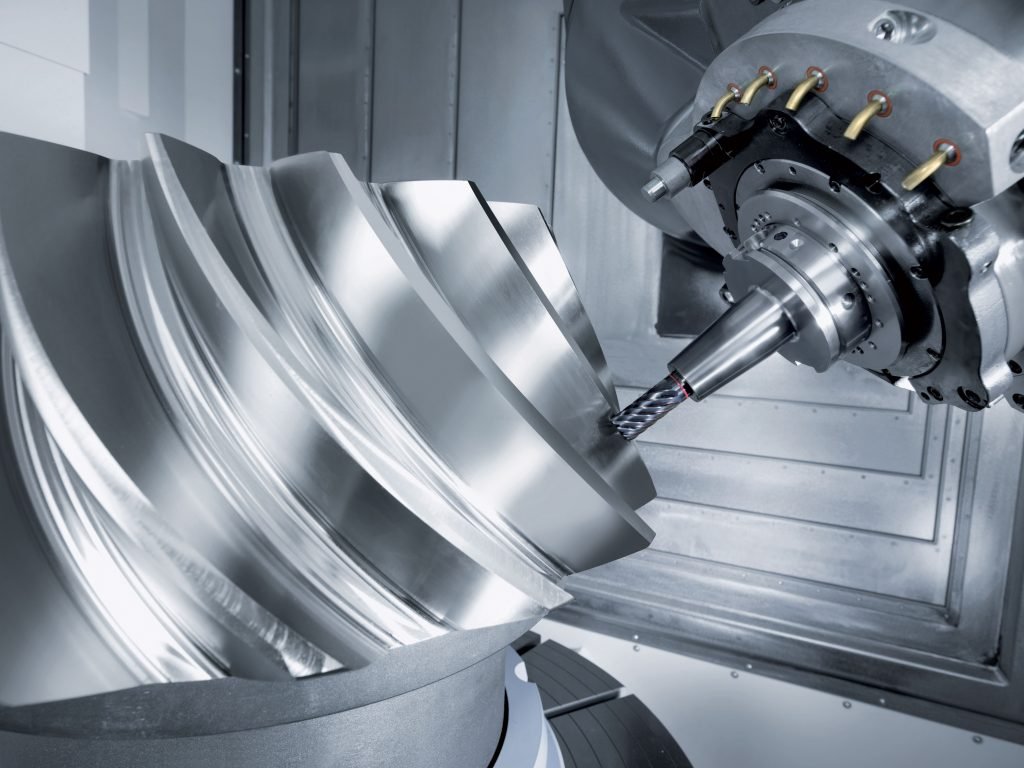
With the rapid development of digital technology and CNC machine tools, various types of CNC special processing equipment are now widely used in mold manufacturing. These technologies have significantly improved the ability to machine complex curved surfaces, high-hardness materials, and precision mold components that were difficult to produce using traditional manual machining methods.
CNC special processing technology not only improves machining accuracy, but also expands the range of materials and structures that can be manufactured in modern mold production.
1. Suitable for Difficult-to-Machine Materials
CNC special processing technology can effectively process materials with high hardness, soft texture, high melting point, or other difficult machining characteristics. Unlike traditional machining methods, CNC equipment is less affected by material hardness and cutting resistance.
In addition, software-based compensation and correction functions can be used during machining to improve dimensional accuracy and reduce manual intervention.
2. High Flexibility for Complex Mold Parts
Modern CNC machine tools provide excellent flexibility for manufacturing mold components with complicated shapes, curved surfaces, and tight tolerance requirements. CNC machining can be adapted to a wide range of materials and part geometries, making it suitable for many different mold manufacturing applications.
Because of this flexibility, CNC special processing technology is widely used for injection molds, die-casting molds, automotive molds, and precision tooling components.
3. Excellent Precision for Small Features
For very small holes, narrow slots, fine grooves, and other micro-scale features, CNC special processing technology can still maintain excellent dimensional accuracy and repeatability.
This high precision is especially important in mold manufacturing, where even a small dimensional error can affect the final product quality, assembly performance, or mold life.
For complex mold structures, CNC machining can improve production efficiency significantly. In some applications, machining efficiency may be several times higher than traditional processing methods.
4. One Machine Can Complete Multiple Processes
Many advanced CNC machines are equipped with automatic tool changers and multi-process capabilities. A single machine can complete milling, drilling, boring, tapping, grinding, and other operations without moving the workpiece between multiple machines.
This reduces machine investment cost, saves workshop space, improves machining efficiency, and lowers labor requirements. It also helps maintain better dimensional consistency because the workpiece remains clamped in the same position throughout multiple machining stages.
5. Better Thermal Stability and Dimensional Consistency
During CNC machining, the remaining thermal stress in the workpiece can often be controlled more effectively through cooling, optimized cutting conditions, and proper process planning.
As a result, CNC special processing technology helps maintain better dimensional stability and reduces deformation problems during mold manufacturing. This is especially important for high-precision molds that require stable dimensions across all cavity and core components.
Conclusion
CNC special processing technology has become an important part of modern mold manufacturing. Its advantages include high precision, strong flexibility, compatibility with difficult materials, improved production efficiency, and the ability to complete multiple operations on a single machine. These benefits make CNC machining an essential technology for producing precision molds and complex tooling components.