Types of Two-Shot Injection Molding Machines and Multi-Color Molding Technologies
Two-shot injection molding and multi-color molding technologies are widely used to combine multiple materials, colors, or functional layers into a single plastic part. As automation and product complexity continue to increase, the range of available multi-shot molding solutions has expanded far beyond the traditional rotary table machine.
Today, manufacturers can choose from vertical turntable machines, in-mold rotation systems, horizontal turntable machines, dual-machine robot transfer systems, sandwich injection molding, and cube mold technology, depending on product size, production volume, tooling budget, and automation requirements.
1. Vertical Turntable Injection Molding Machine
The vertical turntable, also known as a parallel-shot injection molding machine, is one of the most widely used two-shot molding systems. It is suitable for a large number of small and medium-sized products and is commonly used on machines below 1500 tons.
This type of machine has certain limitations on mold size and geometry because the mold must fit within the platen loading area. Even so, it remains a practical and efficient solution for many standard two-color and two-material products.
2. In-Mold Rotation
In-mold rotation systems transfer the first-shot preform to the next molding position by rotating an internal mold section after the first injection cycle is completed. This method improves cycle efficiency because the part remains inside the mold during transfer.
In-mold rotation has shown strong advantages in products such as toothbrushes, where it can significantly improve productivity and support multi-color and integrated packaging requirements.
3. Horizontal Turntable Injection Molding Machine
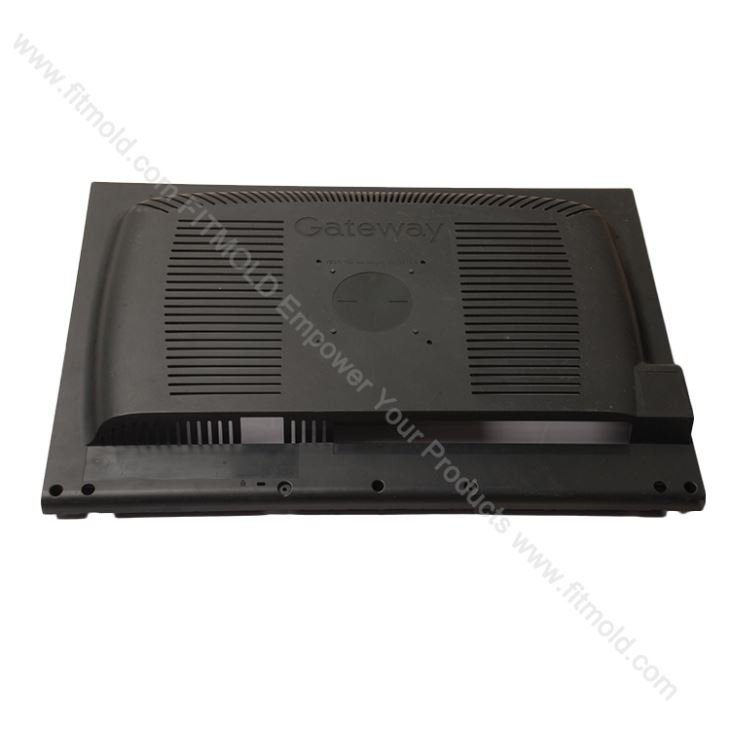
The horizontal rotating, or opposite-shot, injection molding machine is designed for larger two-color parts such as TV frames, automotive sunroof components, and lampshades. Machine tonnage can reach up to 1900 tons, making it suitable for larger and heavier products.
The biggest advantage of the horizontal turntable system is its ability to produce large tonnage two-shot products, especially in automotive manufacturing where larger plastic components are common.
4. Producing Two-Color Products with Standard Single-Color Machines
Before dedicated multi-shot systems became more common, many manufacturers used standard single-color injection molding machines to produce two-color products in multiple steps. In this method, the first semi-finished part is molded first and then placed into a second mold for overmolding.
This approach offers greater production flexibility and lower machine investment. However, it also increases semi-finished inventory and depends more heavily on manual or semi-automatic handling. As automation levels continue to rise, this method is gradually becoming less competitive for high-volume manufacturing.
5. Linked Robot Transfer Between Two Machines
In a linked robot system, two injection molding machines are connected by an automation robot. The first machine produces the first-shot part, and the robot transfers it directly into the second machine for the second molding step.
This process follows the same basic principle as manual transfer, but with much higher efficiency, more stable dimensional consistency, and no need to store semi-finished inventory. It has shown particular advantages in sanitary product applications such as shower components, although it requires two matched machines and offers less production flexibility.
6. Sandwich Injection Molding
Sandwich injection molding, also called surface-core molding, allows one material to be enclosed inside another material. This structure can be used to improve product toughness, adjust hardness, optimize center of gravity, or reduce the use of expensive surface materials.
One of the major advantages of sandwich molding is that recycled or secondary material can sometimes be used in the core layer while maintaining a high-quality outer appearance. This can reduce material cost and improve resource utilization in mass production.
7. Cube Mold Technology
Cube mold technology is one of the highest-efficiency solutions in multi-color molding. It makes full use of mold opening time for cooling and combines multiple molding stages into a highly optimized cycle. This significantly increases equipment output and is especially suitable for thin-wall, high-volume products.
The main limitation of cube mold technology is its high tooling cost and the need for machine customization. However, for large-scale mass production, its efficiency advantages are extremely strong and often unmatched by conventional multi-shot molding systems.
Conclusion
Two-shot injection molding technology now includes a wide range of machine structures and transfer methods, from vertical and horizontal turntable systems to robot-linked machines, sandwich molding, and cube molds. Each solution has its own advantages in terms of productivity, flexibility, part size, automation level, and material efficiency. Choosing the right technology depends on the product structure, production target, budget, and long-term manufacturing strategy.