Skip to content

Push-Pull Injection Molding for Defect Reduction and Fiber Orientation Control
Push-pull injection molding is a specialized molding process designed to reduce common defects in plastic parts while improving the internal orientation of reinforcing fibers. Compared with conventional injection molding, this method can help minimize weld lines, voids, cracks, and microscopic porosity, making it especially valuable for high-performance engineering materials.
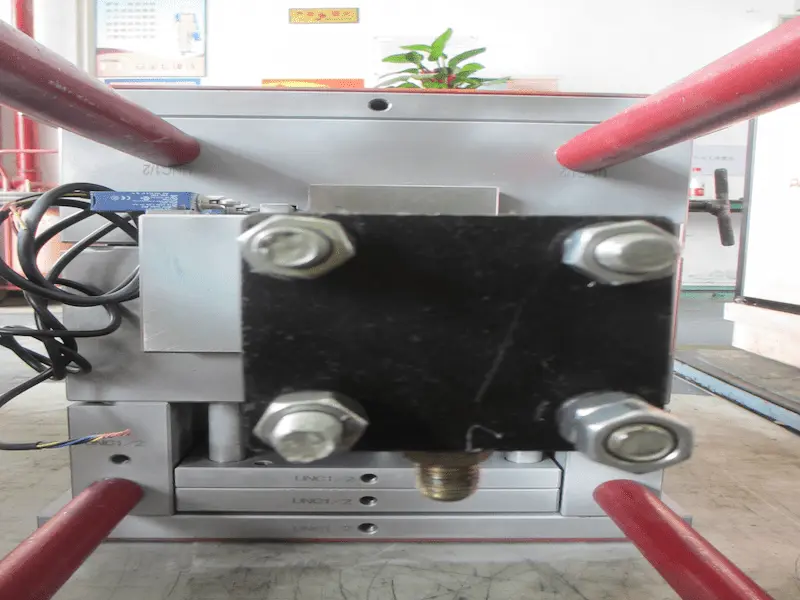
The process uses two main injection units and one auxiliary double injection unit connected to a specially designed mold system. During molding, the main injection unit pushes melt into the cavity through a bypass, creating an overfilled condition. The excess melt then flows into the auxiliary injection unit through a separate gate, where the auxiliary screw retreats to receive the extra material.
How Push-Pull Injection Molding Works
After receiving the excess melt, the auxiliary injection screw moves forward and pushes the material back into the cavity, while the main injection unit receives excess melt in return. This repeated push-pull action creates a vibration shear flow inside the cavity.
As the melt near the mold wall begins to solidify, the molten core continues to flow under repeated vibration and shear. During this stage, the material inside the core becomes progressively oriented before final solidification. This helps produce a molded part with a much higher degree of internal orientation compared with standard injection molding.
Effect on Fiber-Reinforced Plastics
One of the key advantages of push-pull injection molding is its ability to control the arrangement of reinforcing fibers. In fiber-reinforced materials, the repeated shear flow improves fiber alignment, which can significantly enhance mechanical performance.
Although the molding cycle is longer than a conventional injection molding cycle, the packing phase becomes less critical for shrinkage and warpage control because the material is already cooling and solidifying during the push-pull motion. In this process, the injection phase and the pressure holding phase are effectively combined into one continuous operation.
Performance Benefits of the Process
Push-pull injection molding typically requires about 10 cycles during molding and can reach as many as 40 repeated push-pull actions depending on the part design and material requirements. This repeated internal flow improves structure development inside the molded part.
For glass fiber reinforced liquid crystal polymer (LCP), this process has shown major performance gains compared with conventional injection molding. Test results have demonstrated that tensile strength can increase by 420%, while flexural modulus can improve by 270%.
Why Push-Pull Injection Molding Matters
Push-pull injection molding is a valuable process for manufacturers seeking higher part strength, better internal material orientation, and fewer molding defects. It is particularly useful for advanced engineering plastics and reinforced materials used in demanding industrial applications.
By improving melt flow behavior inside the cavity and optimizing fiber arrangement during solidification, this process offers a practical way to produce stronger, more reliable plastic components with enhanced structural performance.