Skip to content

Causes of Demolding Failure in Injection Molding and How to Prevent Surface Tearing
Demolding failure is a common problem in injection molding. It may appear as part sticking, difficult ejection, deformation during release, or surface tearing when the molded part is removed from the cavity or core. In actual production, this problem is influenced by resin behavior, molding conditions, product geometry, and mold structure. However, the main causes are often related to the shape of the molded part and the release characteristics of the mold.
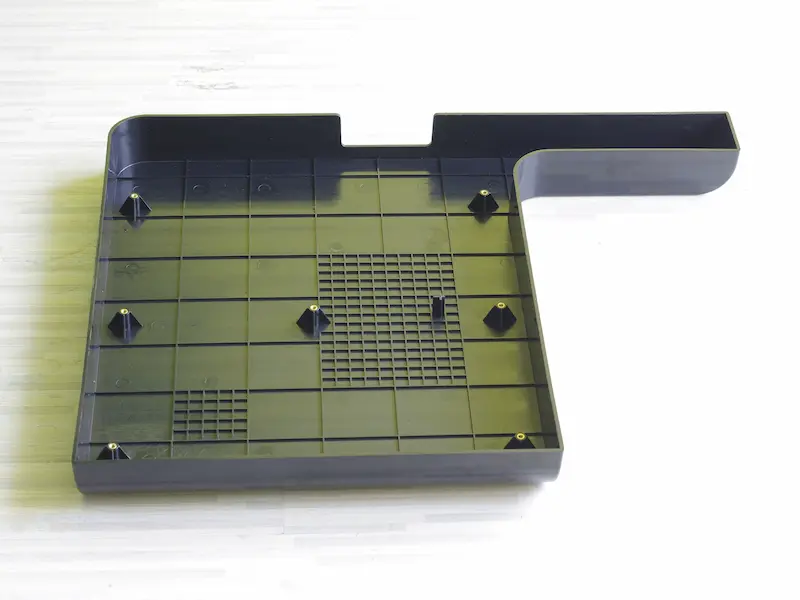
Special attention should be paid to products that include long ribs, hubs, deep core areas, or plug-like features. These structures can create higher holding force during cooling and increase demolding resistance, especially when shrinkage, packing pressure, and draft design are not properly controlled.
Main Causes of Demolding Failure
When the molding shrinkage around a core, plug, or similar structure is too large, the holding force on that feature increases, making the part more likely to stick during demolding. In molding conditions, demolding failure is more likely when the mold temperature is too low and the holding pressure is too high.
For upright product features such as long ribs or hubs, overpacking can also make demolding more difficult. When these areas are filled too tightly, they grip the mold more strongly and become harder to release. This can again be made worse by low mold temperature and excessive holding pressure.
If the draft angle of the cavity is too small, demolding resistance increases significantly. The position of the ejector pin also has a strong influence. Ejector pins should be placed at locations where higher release force is needed. In addition, the surface finish, wear condition, or damage of the cavity surface can affect release resistance and increase the risk of poor demolding.
How Molding Conditions Affect Demolding
During injection molding, if the injection pressure or holding pressure is too high, the part may become overpacked. In that condition, the plastic is forced more tightly into the cavity or around local features, making release more difficult. This may also lead to surface damage, film-like tearing, or stretched marks when the part is removed from the mold.
Barrel temperature also plays an important role. If the barrel temperature is too high, two problems may occur. First, the plastic material may begin to degrade or lose part of its original properties, which can cause cracking, tearing, or surface damage during demolding. Second, the material may cool more slowly after filling the cavity, which increases cycle time and reduces production efficiency. For this reason, the processing temperature should be adjusted according to the material characteristics.
Mold-Related Factors
Mold design is one of the most important factors in solving demolding problems. If the feed system is unbalanced, the molded product may be more likely to experience uneven stress and surface tearing during release. In this case, the mold design should be reviewed and improved.
To reduce demolding resistance, draft angles should be increased where possible, especially around the cavity walls, hubs, ribs, and other release-sensitive areas. If a product structure tends to lock onto the mold, the mold should provide stronger or more direct ejection support.
When higher ejection force is required, ejector pins should be added or repositioned at critical areas. Proper ejection support helps distribute release force more evenly and reduces the risk of sticking, deformation, or surface damage during demolding.
Common Methods to Improve Demolding
- Optimize Draft Angle
Increase draft where possible to reduce release resistance. - Control Holding Pressure
Avoid excessive packing that makes the part grip the mold too tightly. - Adjust Mold Temperature
Use suitable mold temperature to balance shrinkage and release behavior. - Control Barrel Temperature
Prevent material degradation and reduce the risk of tearing during demolding. - Improve Ejector Pin Layout
Place ejector pins at locations that require stronger release force. - Review Feed Balance and Mold Structure
Correct unbalanced feeding or structural issues that increase demolding difficulty. - Improve Cavity Surface Finish
Polish or repair damaged cavity surfaces to reduce sticking.
Why Mold and Process Optimization Must Work Together
Demolding failure is rarely caused by one factor alone. In many cases, the problem results from a combination of product geometry, mold design, pressure settings, temperature control, and shrinkage behavior. For this reason, solving demolding problems requires both process adjustment and mold evaluation.
With practical optimization of draft design, ejection layout, mold surface condition, filling balance, and molding parameters, demolding stability can usually be improved significantly and the risk of surface tearing can be reduced.
Injection Mold Optimization Support from FITMOLD
FITMOLD supports custom injection mold development and plastic part production for projects that require better demolding performance, improved manufacturability, and more stable production quality. For products with sticking, tearing, or release difficulties, we help evaluate mold structure, product geometry, and molding conditions to improve production performance.
If you are looking for a manufacturing partner for custom injection molds and plastic part production, FITMOLD can support your project from design review to tooling and production.
Contact us: sales@fitmold.com