
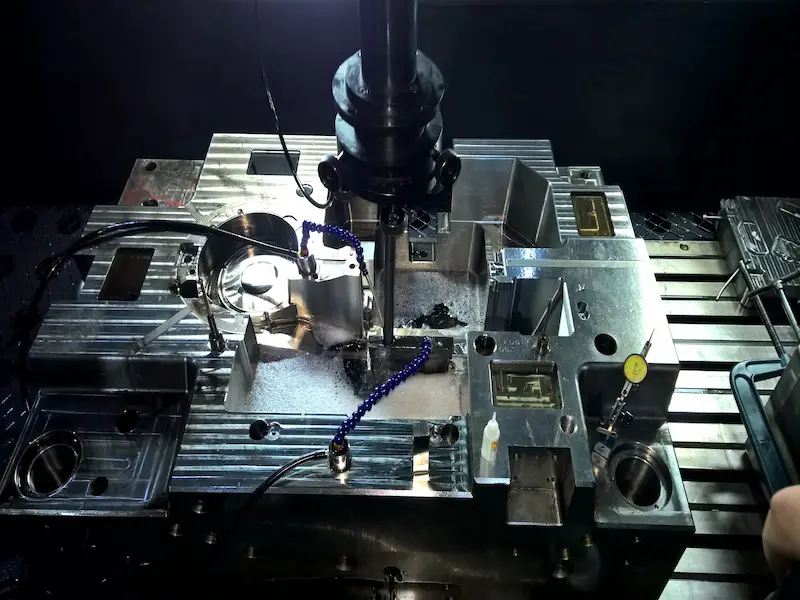
What Is a Prototype Mold and How It Helps Product Development
A prototype mold is a tooling solution used to create sample parts before full production begins. It helps designers, engineers, and manufacturers evaluate the appearance, fit, function, and manufacturability of a product concept before investing in a more expensive production mold.
Why Prototype Molds Are Important
When a new product is being developed, industrial designers and product engineers often go through several stages before the design is finalized. Early concepts may begin as sketches, CAD models, or 3D printed samples, but prototype molds allow companies to create actual molded parts that are much closer to the final production version.
These prototype parts can be used to test assembly, confirm dimensions, evaluate material selection, and identify potential design improvements before mass production begins.
How a Prototype Mold Differs from a Production Mold
A prototype mold is different from a production mold because it is intended for lower quantities, shorter tool life, and faster lead times. Prototype molds are usually made with less expensive materials and simpler mold structures, making them more cost-effective for early-stage development.
Production molds, by comparison, are built for long-term use and high-volume manufacturing. They typically use hardened steel, more complex tooling features, and longer development times in order to support stable production over thousands or even millions of parts.
Main Benefits of Using a Prototype Mold
Using a prototype mold can help reduce product development risk by allowing issues to be identified earlier in the process. It gives manufacturers an opportunity to verify part geometry, wall thickness, draft angle, assembly fit, and surface finish before committing to expensive production tooling.
Prototype molds can also shorten the development timeline because they allow engineers to test real molded parts instead of relying only on drawings or digital models.
Typical Applications for Prototype Molds
Prototype molds are commonly used for plastic housings, covers, brackets, consumer products, automotive components, medical device parts, and other products that need functional testing before launch. They are especially useful when multiple design revisions are expected or when product approval depends on testing physical samples.
Conclusion
A prototype mold is an important step between concept design and mass production. It provides a practical and cost-effective way to create realistic molded samples, validate product performance, and reduce the risk of expensive changes later in the production process.