
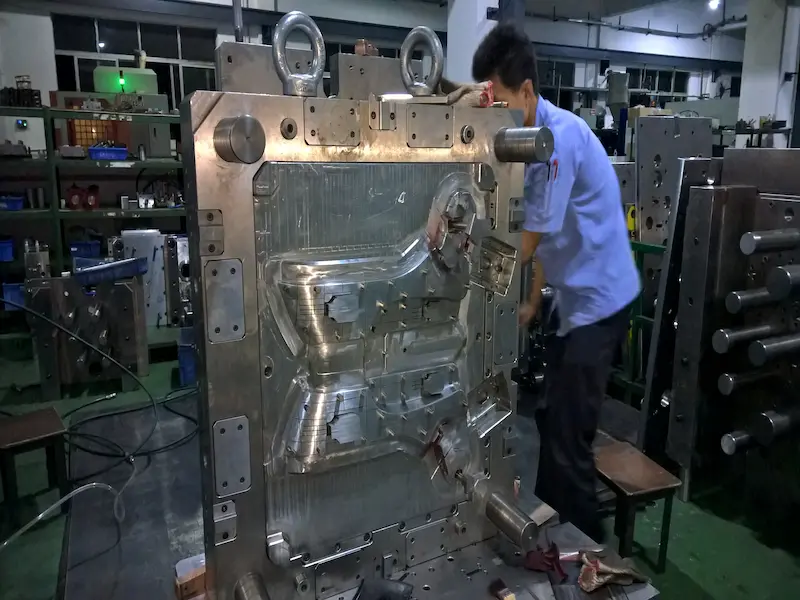
How to Reduce Weld Lines and Hairlines in Injection Molded Parts
Weld lines and hairlines are common appearance defects in injection molded parts. They usually appear where two flow fronts of molten plastic meet but do not fuse perfectly. On finished parts, these defects may look like dark lines, fine streaks, or visible marks on the surface. They are especially noticeable on glossy, dark-colored, transparent, or highly cosmetic plastic components.
Why Weld Lines and Hairlines Are a Problem
These marks can affect both visual quality and mechanical performance. In products that use decorative pigments, especially inorganic effect pigments, weld lines may appear darker than the surrounding material and become more obvious under light. On high-gloss surfaces, even a small weld line can reduce the perceived quality of the finished product.
Main Causes of Weld Lines and Hairlines
Weld lines often form when melt flow is interrupted, when the mold cavity fills unevenly, or when the material temperature is too low at the point where the flow fronts meet. Abrupt wall thickness changes, insufficient venting, narrow runners, or poorly positioned gates can all contribute to these defects. Processing parameters such as low melt temperature, low mold temperature, or unsuitable injection speed may also make the problem worse.
How to Correct Weld Line Problems
One effective approach is to position weld lines in areas where they have less visual or structural impact. This can often be improved through mold design changes such as adjusting gate location, enlarging the runner system, or reviewing machine nozzle size. Improving the flow path helps the molten plastic meet more smoothly and fuse better inside the cavity.
Part design should also avoid sudden wall thickness changes, since uneven filling tends to create unstable flow fronts. Good mold venting is essential as well, because trapped air can weaken the fusion area and make weld lines more visible.
Processing Adjustments That Can Help
Processing optimization is another important step. Increasing melt temperature, adjusting mold surface temperature, and optimizing injection speed can all improve flow front fusion and reduce the visibility of weld lines. In some cases, changing the color formulation or switching between organic and inorganic pigments may also improve the cosmetic result.
Conclusion
Weld lines and hairlines in injection molded parts are often caused by a combination of mold design, part geometry, material behavior, and processing conditions. By improving flow balance, venting, temperature control, and gate design, manufacturers can reduce these defects and achieve better cosmetic and functional part quality.