
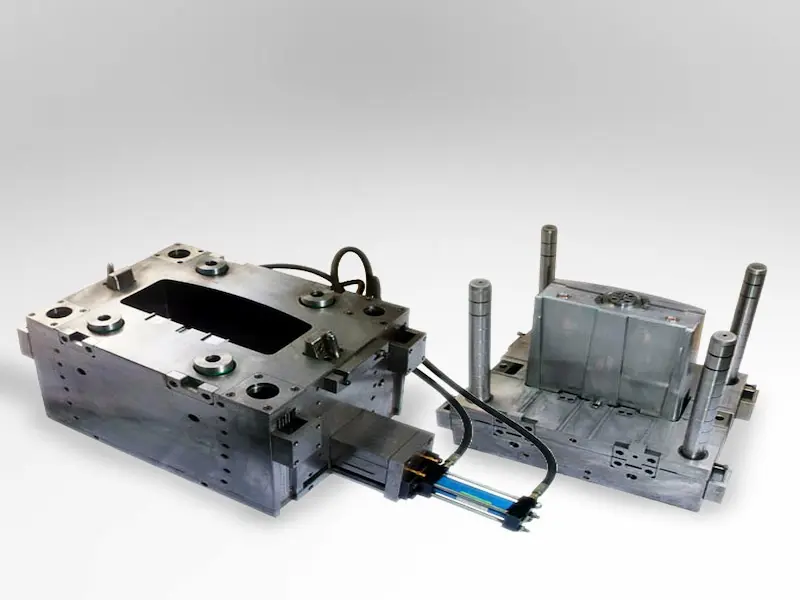
Why Mold Preheating Is Important in Warm Extrusion Production
In warm extrusion production, not only the billet but also the extrusion punch and die must be preheated before forming begins. Mold preheating is typically carried out at 150–300°C, depending on the extrusion process and billet temperature. Proper mold preheating helps improve material flow, reduce thermal shock, and protect the mold from premature damage.
1. Prevent Excessive Cooling of the Extrusion Blank
When a heated extrusion blank is placed into a cold mold, its temperature can drop too quickly. This rapid heat loss reduces material plasticity and increases deformation resistance during extrusion.
By preheating the punch and die, the blank can maintain a more suitable forming temperature during the early stage of extrusion. This helps improve metal flow and reduces the risk of forming defects caused by poor plastic deformation.
2. Reduce Temperature Difference Inside the Blank
Mold preheating also helps reduce the temperature difference between the outer surface and the center of the extrusion blank. If the surface cools too quickly while the inner material remains hotter, deformation may become uneven during the extrusion process.
This uneven temperature distribution can lead to inconsistent material flow, part defects, and increased forming difficulty. A preheated mold helps maintain more uniform deformation conditions throughout the workpiece.
3. Reduce Thermal Shock to the Mold
One important purpose of mold preheating is to reduce the temperature difference between the hot blank and the mold itself. If the mold surface is too cold, contact with the hot billet can cause a rapid temperature increase on the mold surface.
This creates a large internal temperature difference within the mold, which may generate high thermal stress. Repeated thermal shock during production can increase the risk of cracking, damage, and reduced mold life.
4. Improve Mold Life and Production Stability
By reducing sudden heating and lowering internal stress, mold preheating helps protect the punch and die during warm extrusion. This improves mold life, reduces the chance of damage in production, and supports more stable forming quality.
For this reason, mold preheating is a key process step in warm extrusion tooling preparation.
5. Common Mold Preheating Methods
Several methods can be used to preheat extrusion molds before production:
- Using a dedicated electric resistance preheater
- Heating the mold with a torch
- Using heated metal blocks for contact preheating
The selected preheating temperature should be matched to the extrusion blank temperature and the process requirements of the specific forming application.