
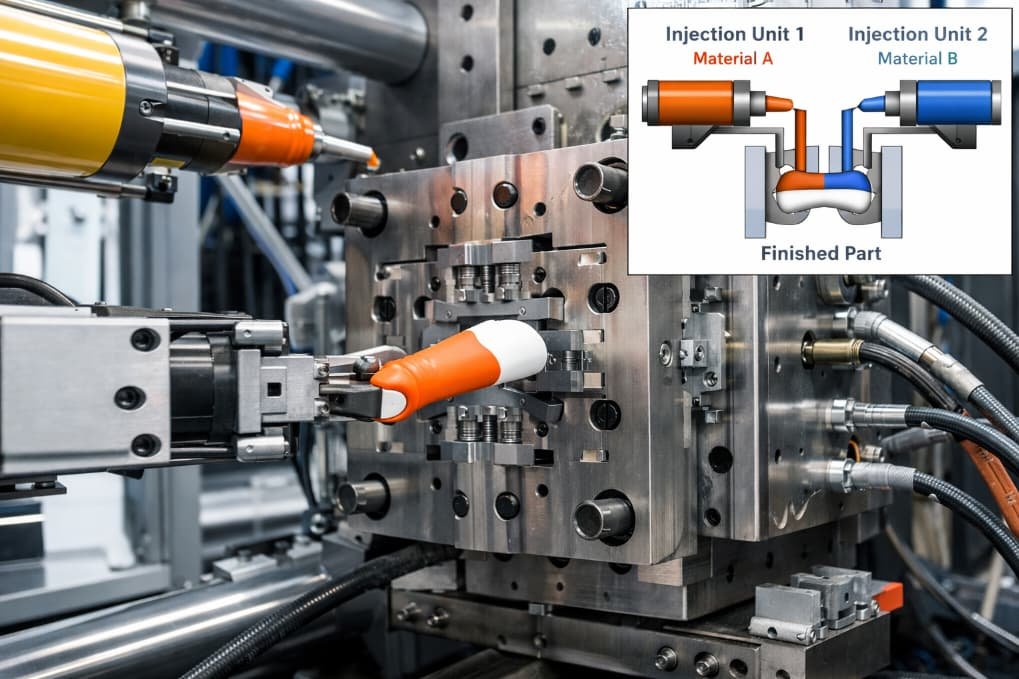
What Is Multi-Component Injection Molding?
Multi-component injection molding is an advanced plastic manufacturing process that combines two or more materials, colors, or material properties into a single molded part. By integrating multiple injection steps within one production cycle, manufacturers can produce finished components without additional assembly or secondary processing.
This highly automated process offers strong production efficiency, consistent repeatability, and excellent design flexibility, making it especially suitable for high-volume manufacturing of functional plastic parts.
How Multi-Component Injection Molding Works
In multi-component injection molding, two or more injection units introduce different materials into the same mold in a controlled sequence. The materials are combined through a specific molding strategy so that the final part is formed directly inside the mold and can often be used immediately after molding.
Depending on the product design and mold structure, the process can combine hard and soft materials, create multi-color parts, or build layered and composite structures that deliver both functional and visual benefits.
Main Advantages of Multi-Component Injection Molding
Multi-component injection molding provides several important benefits for plastic part production:
Reduced assembly requirements: Multiple materials or colors can be integrated into one molded part, eliminating many post-molding assembly steps.
High production efficiency: The process is fully automated and well suited for large production volumes with stable repeatability.
Design flexibility: Manufacturers can produce parts with a combination of properties such as soft-touch and rigid sections, improved sealing performance, or enhanced visual appearance.
Improved part functionality: The finished product can be designed for heat resistance, chemical resistance, pressure resistance, or specific ergonomic and structural requirements.
Common Types of Multi-Component Injection Molding Systems
Multi-component injection molding includes several independent process concepts. These are often classified according to the number of gates used in the mold system.
1. Single-Gate Systems
Single-gate systems typically include processes such as sandwich molding and alternating injection molding. These methods allow different materials to be introduced through one gate in a controlled sequence to create layered or alternating material structures within the same part.
2. Multi-Gate Systems
Multi-gate systems use two or more gates and are commonly combined with mold movement or part transfer methods. These may include core-pulling processes, transfer systems between machines, or specialized multi-component machines with rotating mold sections.
In some setups, the mold or part is repositioned during the cycle to receive the second material. This can be achieved through rotating mold halves, rotating internal mold elements, or vertical-axis rotation systems, depending on the machine and mold design.
Typical Applications
Multi-component injection molding is widely used to produce soft and hard material combinations, multi-color consumer products, composite plastic parts, and other components that require integrated performance and appearance. The process is particularly valuable when reproducibility, functionality, and efficient mass production are critical.
Conclusion
Multi-component injection molding gives manufacturers an efficient way to combine materials, colors, and functions in a single production cycle. By reducing assembly steps and improving part integration, it helps deliver higher-value plastic components for demanding industrial and consumer applications.