
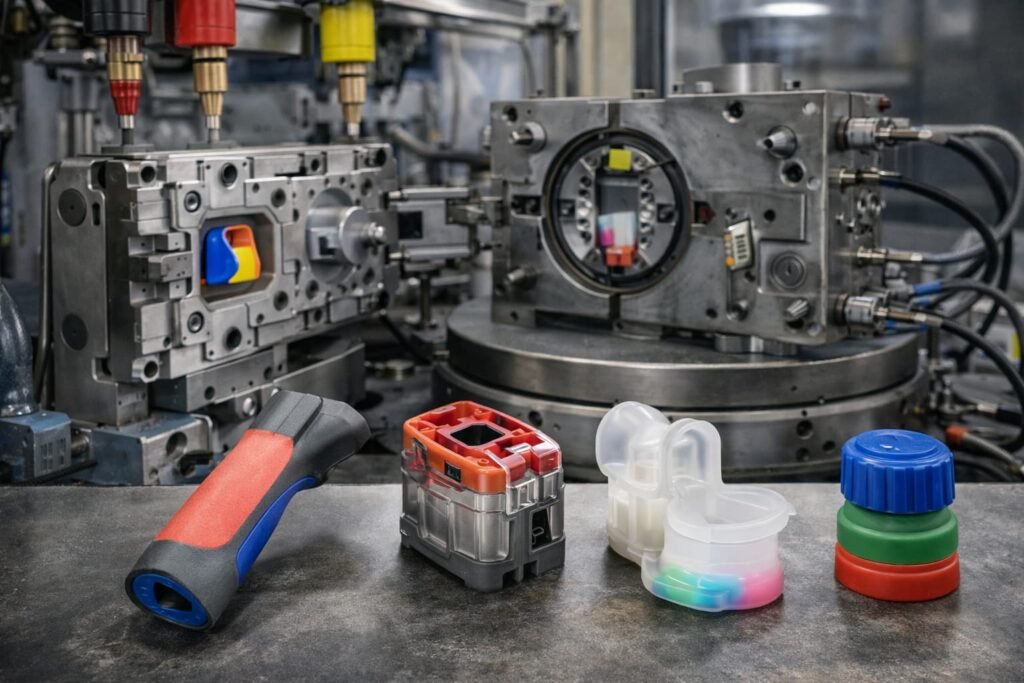
Multi-Color Injection Molding: Processes, Advantages, and Emerging Trends
Multi-color injection molding is a molding process in which two or more plastic materials are combined into a single molded part. Depending on the process method, it can refer to a broad range of technologies, including overmolding, rotary multi-shot molding, sandwich molding, cube mold molding, and liquid silicone rubber multi-material molding.
This process is widely used to improve product appearance, combine different material properties, reduce secondary assembly, and increase production efficiency. As product designs become more complex, multi-color injection molding continues to expand into more specialized and high-value applications.
What Is Multi-Color Injection Molding?
In a broad sense, multi-color injection molding includes overmolding, which can be achieved by using a conventional injection molding machine in multiple steps. In a narrower sense, multi-color injection molding usually refers to the molding of two or more different plastic materials on the same machine by using a dedicated multi-color injection molding system.
A common example is the rotary multi-color injection molding machine, which rotates the mold or part position between injection stages so different materials can be molded into one finished product.
Main Types of Multi-Color Injection Molding
Overmolding
Overmolding is one of the most common forms of multi-material molding. It is often used to combine a rigid substrate with a softer material layer, improve grip, add sealing functions, or enhance product appearance.
Rotary Multi-Color Injection Molding
This process uses a dedicated multi-shot injection molding machine, often with a rotary table or rotating mold structure. It allows multiple materials to be injected in sequence on the same machine with high repeatability and production efficiency.
Sandwich Injection Molding
Sandwich injection molding uses layered material distribution inside the molded part. In some applications, recycled or secondary material can be used in the inner layer while higher-quality virgin material forms the outer layer. This helps reduce material waste and improve resource efficiency.
Cube Mold Technology
Cube mold molding offers strong advantages in production efficiency because multiple molding stages can be integrated into one rotating cube-type mold structure. This technology is particularly suitable for thin-wall products and high-volume production, such as bottle caps and similar packaging components.
Liquid Silicone Rubber Multi-Material Molding
Liquid silicone rubber multi-color or multi-material injection molding has become increasingly attractive in recent years. Because LSR offers excellent resistance to high and low temperatures, corrosion, and environmental exposure, it is well suited for precision parts used in medical, automotive, electronics, and sealing applications.
Advantages of Multi-Color Injection Molding
Multi-color injection molding can combine different materials, colors, and functional properties into a single part. This reduces secondary assembly, improves appearance, and helps create products with better performance and more integrated features.
It can also improve production efficiency in mass manufacturing. In many cases, combining multiple molding steps into one automated cycle reduces labor, lowers handling requirements, and improves consistency.
Some process variants can also support more sustainable manufacturing. For example, sandwich molding can use secondary material in controlled ways, helping reduce waste and lower raw material consumption.
Industry Trends
After years of development, multi-color injection molding is no longer limited to traditional rotary table molding. The technology has expanded into several specialized process branches, with sandwich molding, cube mold systems, and liquid silicone multi-material molding becoming important trends in recent years.
As manufacturers continue to look for higher efficiency, better material utilization, and more advanced product functionality, multi-color injection molding is becoming an increasingly valuable solution in modern plastic product development.
Conclusion
Multi-color injection molding is an advanced process that allows multiple plastics or materials to be combined into one molded part. From overmolding and rotary multi-shot molding to sandwich molding, cube molds, and liquid silicone applications, this technology offers strong advantages in product integration, efficiency, and design flexibility. It is one of those rare industrial ideas where adding complexity can actually make production simpler, assuming the mold designer has not completely lost control of reality.