
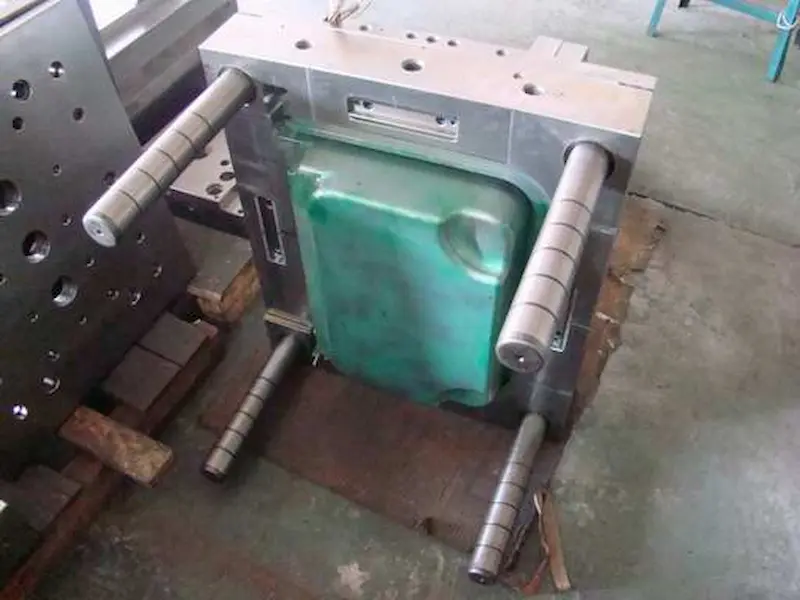
EDM and Wire Cutting in Mold Manufacturing: Precision Machining Methods and Key Control Points
Modern mold manufacturing relies heavily on electrical machining for the production of complex-shaped and high-hardness components. Electrical machining is mainly divided into two types: wire cutting and electrical discharge machining (EDM). Both processes are essential for precision tooling, especially when conventional machining becomes difficult or inefficient.
1. Wire Cutting in Mold Manufacturing
Wire cutting is widely used for processing precision mold parts with complex geometries. In high-precision applications, wire cutting accuracy can reach approximately ±0.003 mm, while surface roughness can achieve around Ra 0.2 μm under suitable processing conditions.
Before machining begins, the machine condition should be checked carefully. Important control items include deionized water quality, water temperature, wire verticality, and wire tension. Stable machine condition is essential for achieving high cutting accuracy and surface quality.
Because wire cutting removes material from a complete workpiece, it can disturb the original internal stress balance and may create stress concentration, especially at sharp corners. For this reason, when the corner radius is smaller than R0.2, particularly in very sharp-angle areas, the part design should be reviewed and improved if possible.
To reduce stress concentration during machining, a practical approach is to leave a machining allowance of about 1 mm before final cutting. The approximate shape can be machined first, followed by heat treatment to release internal machining stress. Final precision cutting is then carried out after the workpiece achieves better thermal stability.
When machining punches, the cutting position and cutting path must be selected carefully. The use of start holes for threading is generally preferred for better cutting results. High-precision wire cutting often uses four cutting passes to ensure part quality and dimensional stability.
For tapered dies, an efficient machining strategy is to rough cut the straight section first, machine the taper in the second pass, and then finish the straight edge afterward. This method helps reduce unnecessary vertical finishing steps and improves both processing efficiency and cost control.
2. EDM in Mold Manufacturing
Electrical discharge machining requires the use of electrodes, and these electrodes are usually divided into roughing electrodes and finishing electrodes. For finishing operations, the electrode must have good shape conformity with the final cavity or feature, and CNC machining is generally preferred for producing precision electrodes.
Electrode material selection is also important. Copper electrodes are commonly used for general steel processing. Cu-W alloy electrodes offer better overall performance, especially because their wear rate during machining is much lower than that of standard copper electrodes.
With sufficient flushing fluid, Cu-W alloy electrodes are especially suitable for machining difficult materials and for finishing complex cavity shapes where dimensional accuracy and electrode stability are critical.
When manufacturing electrodes, the electrode gap and the required number of electrodes must be calculated in advance. Proper planning helps improve machining accuracy and reduce rework during EDM operations.
For large-area machining or when using heavy electrodes, both the workpiece and the electrode must be clamped firmly to ensure sufficient rigidity and to prevent loosening during processing. In deep-rib or deep-step EDM machining, attention must be paid to electrode wear at different locations and to the risk of arc discharge caused by poor debris removal or insufficient flushing.
Conclusion
Wire cutting and EDM are essential precision machining methods in modern mold manufacturing. Wire cutting is highly effective for precision contour machining and difficult geometries, while EDM is indispensable for deep cavities, sharp details, and high-hardness materials.
By controlling machine condition, reducing stress concentration, optimizing cutting paths, selecting suitable electrode materials, and ensuring proper flushing and clamping, manufacturers can improve machining quality, reduce defects, and extend mold performance.