
Modular Plastic Parts in Automotive Manufacturing for Lightweight and Cost Reduction
In addition to material development and production technology, modularization of plastic parts is becoming an important future direction in automotive manufacturing. Compared with traditional steel structures, modular plastic components can significantly reduce part count, simplify assembly, lower tooling requirements, and support vehicle lightweighting.
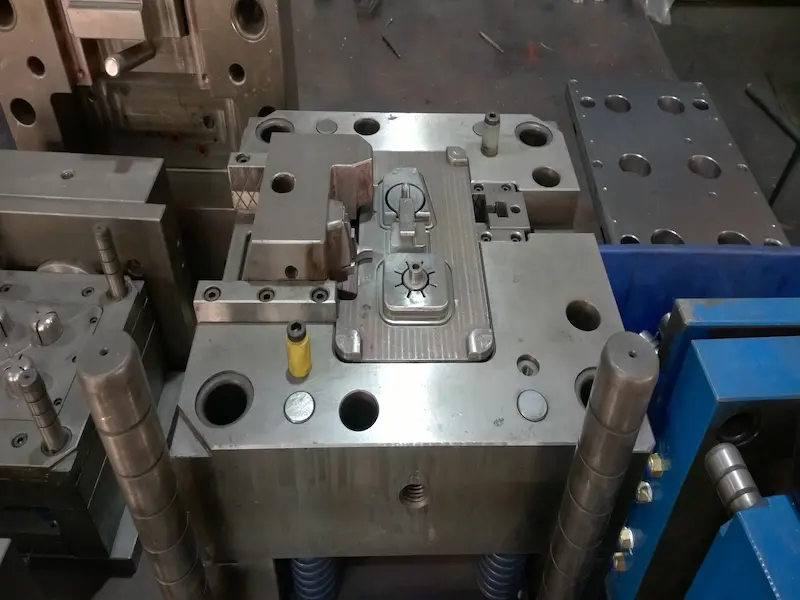
A traditional front-end automotive module may require nearly 20 steel stampings to be welded together. To produce these components, manufacturers may need to develop more than 50 sets of stamping tools. In contrast, long glass fiber reinforced thermoplastic polypropylene can be used with compression molding technology to integrate more than 20 individual metal parts into one molded plastic module. In many cases, only one mold is needed to complete the entire part in a single molding cycle.
1. Why Modular Plastic Parts Matter
Modular plastic parts provide several major advantages over conventional multi-piece metal assemblies. By integrating multiple components into one molded structure, manufacturers can reduce assembly steps, simplify logistics, and improve production efficiency.
This approach not only helps achieve lightweight design goals, but also reduces manufacturing complexity and overall cost.
2. Front-End Modules as a Key Application
One of the most important applications of modular plastic design is the front-end module. Instead of welding many separate steel stampings, manufacturers can use reinforced thermoplastic materials to mold a more integrated front-end structure.
Long glass fiber reinforced thermoplastic polypropylene is especially suitable for this type of application because it offers a good balance of strength, weight reduction, and moldability.
By replacing dozens of metal parts with one integrated molded structure, the front-end module can become lighter, simpler, and more efficient to manufacture.
3. Reducing Tooling Complexity and Production Cost
Traditional metal module production often requires many separate stamping dies, welding steps, and assembly operations. Modular plastic molding can greatly reduce the number of molds required, which lowers tooling investment and shortens production flow.
Using one mold to form a complete module in a single process can also reduce labor cost, improve consistency, and simplify downstream assembly.
4. Current Focus of Automotive Plastic Modularization
At present, modular plastic development is mainly focused on front-end modules and door modules. These applications have already shown clear benefits in weight reduction, component integration, and manufacturing efficiency.
However, the development potential of modular plastic parts in automobiles goes beyond these areas.
5. Future Expansion of Modular Plastic Applications
There is still significant room to expand modular plastic design into other vehicle systems, including:
- Instrument panels and dashboard structures
- Front bumper assemblies
- Rear bumper assemblies
- Seat structures and support components
- Chassis parts
- Powertrain modules
For example, while many dashboards are still based on steel structures, some premium vehicles have already begun to use modular plastic dashboard skeletons. This shows the growing potential of plastics in larger and more structurally demanding automotive modules.
6. A Key Direction for Future Automotive Manufacturing
As the automotive industry continues to focus on lightweighting, cost reduction, and manufacturing efficiency, modular plastic parts will become increasingly important. With the support of reinforced thermoplastics and advanced molding technologies, more vehicle assemblies can be integrated into fewer parts with lower weight and lower production complexity.
Modularization is therefore not only a material trend, but also a structural and manufacturing strategy that will continue to shape the future of automotive plastic parts.