
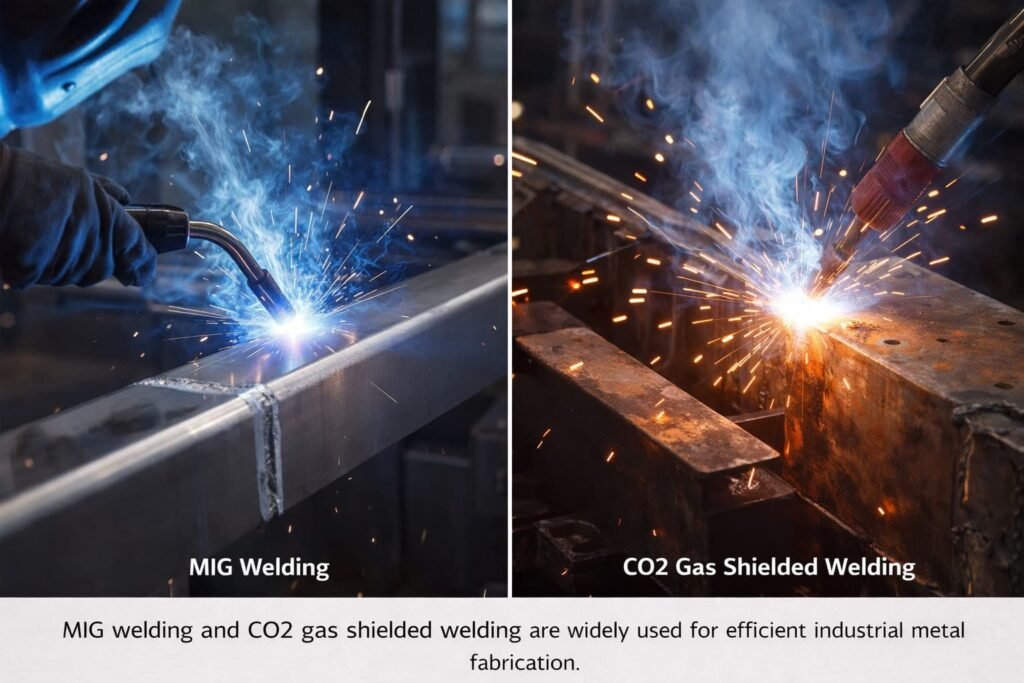
Characteristics of MIG Welding and CO2 Gas Shielded Welding
MIG welding and CO2 gas shielded welding are both widely used in metal fabrication because they offer high productivity, stable welding performance, and good suitability for mechanized production. Although the two processes have different shielding methods and application advantages, both are important welding solutions in industrial manufacturing.
1. Characteristics of MIG Welding
(1) Similar to TIG welding, MIG welding can be used to weld a wide range of metals. It is especially suitable for aluminum, aluminum alloys, copper alloys, and stainless steel.
(2) Because the filler wire is used as the electrode, the current density is relatively high. This provides deeper penetration and allows the filler metal to be deposited more quickly. When welding thicker aluminum, copper, and other non-ferrous metals, MIG welding offers higher productivity than TIG welding and can also help reduce weld deformation.
(3) DC reverse polarity is commonly used. When welding aluminum and aluminum alloys, this setup provides a good cleaning effect on the oxide film, helping improve weld quality.
2. Characteristics of CO2 Gas Shielded Welding
(1) High productivity;
(2) Low welding cost;
(3) Low energy consumption;
(4) Wide application range;
(5) Good tolerance to rust and surface contamination on the workpiece;
(6) The arc produces no slag, and the molten pool is easy to observe and control, which makes the process suitable for mechanization and automation.
3. Conclusion
MIG welding is especially suitable for non-ferrous metals such as aluminum and copper alloys, while CO2 gas shielded welding is widely used for steel structures and general fabrication because of its low cost and high efficiency. Selecting the right welding process depends on the material type, weld quality requirements, production efficiency, and overall manufacturing cost.