
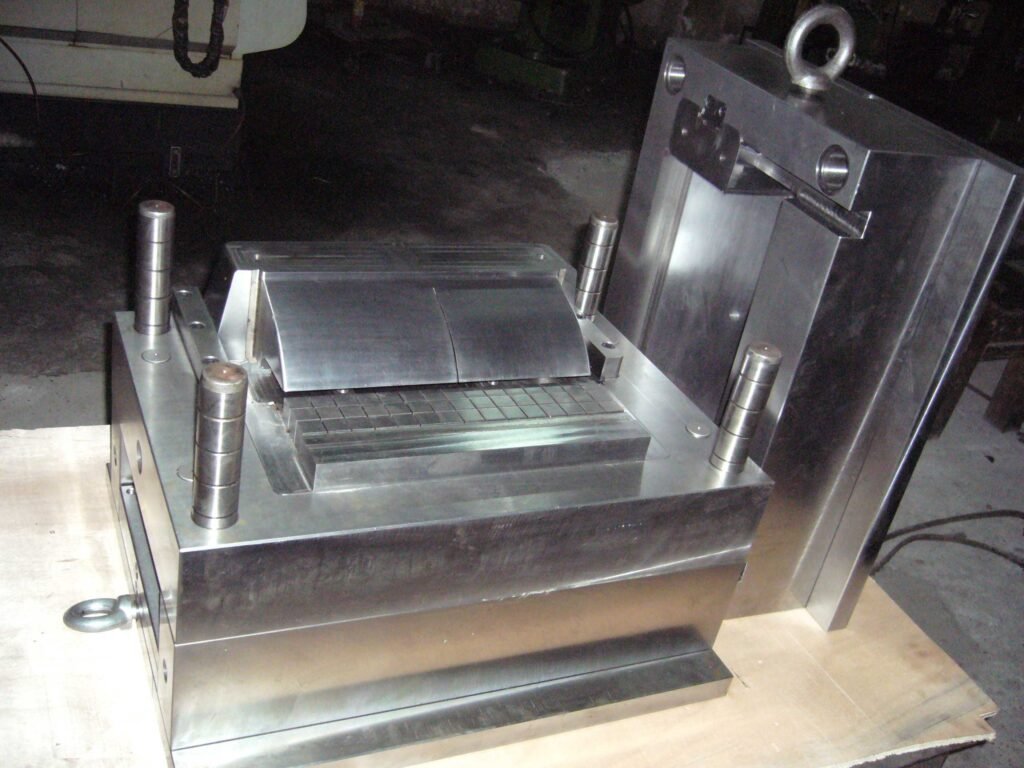
Factors That Affect Mold Steel Polishing Performance
Mold polishing quality is influenced by several factors, including the quality of the tool steel, the heat treatment process, the steel hardness, and the polishing method used. For molds that require a high-gloss surface finish, such as transparent plastic part molds, polishing performance is especially important.
1. Tool Steel Quality
The quality of the mold steel has a direct influence on polishing performance. If the steel has uneven hardness or inconsistent surface properties, it can become more difficult to achieve a uniform polished finish.
Inclusions, pores, and other internal defects in the steel can also affect the final surface appearance. These imperfections may remain visible after polishing and reduce the overall quality of the mold surface.
2. Heat Treatment Process
Heat treatment can significantly affect polishing results. Surface hardening, carburizing, or decarburization may create hardness differences between the surface and the core of the steel, making the polishing process more difficult.
Oxide particles formed during heat treatment may also increase grinding difficulty and reduce surface finish quality. To achieve a high polishing standard, the heat treatment process should be carefully controlled to maintain consistent hardness and surface condition.
3. Influence of Different Steel Grades
Different mold steels respond differently during polishing. Stainless steel molds often require a finer grinding process before polishing because of their high surface finish requirements.
For these molds, grinding should continue to the finest abrasive grade before final polishing begins. Once the last visible polishing scratch is removed, polishing should stop immediately to avoid over-polishing and surface defects.
4. Influence of Hardness on Polishing
Higher hardness generally increases the difficulty of grinding and polishing. However, harder steels can often achieve a better final surface finish after polishing.
Because of the increased hardness, more polishing time may be required to achieve a mirror-like surface. At the same time, higher hardness can reduce the risk of over-polishing because the steel surface is less likely to deform during the process.
Conclusion
Achieving a high-quality polished mold surface depends on proper steel selection, stable heat treatment, suitable hardness, and correct polishing methods. By controlling these factors, manufacturers can improve mold appearance, reduce polishing defects, and achieve better surface quality for precision molded products.