
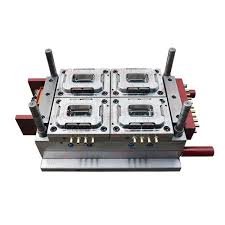
Thin-Wall Injection Molding Materials, Cooling Time, and Design Basics
Thin-walled plastic products are widely used in packaging, medical devices, electronics, and other high-volume applications. As product designs continue to become lighter and more compact, thin-wall injection molding has become an important manufacturing method for reducing material usage, shortening cycle time, and lowering part cost.
In many plastic products, raw material cost accounts for a large share of total production cost. Thin-wall design helps reduce product weight, decrease material consumption, and support more efficient large-scale manufacturing.
1. What Is Thin-Wall Injection Molding?
In the plastics industry, parts with a wall thickness below 1 mm are often considered thin-walled products. In injection molding, thin-wall design is also closely related to the flow length-to-wall thickness ratio. When the flow length-to-thickness ratio is high, the molding process becomes more demanding and requires faster filling, better mold design, and more suitable materials.
Because molten plastic cools quickly inside thin sections, thin-wall injection molding typically requires high-speed injection, stable pressure control, and efficient mold cooling to achieve consistent part quality.
2. Benefits of Thin-Wall Manufacturing
Thin-wall injection molding offers several practical advantages. It helps reduce product weight and external dimensions, supports integrated product design, shortens production cycles, saves raw material, and lowers overall manufacturing cost.
These benefits make thin-wall molding especially suitable for disposable food containers, medical consumables, lightweight electronic housings, and other products that require high-volume production with controlled material cost.
3. Material Requirements for Thin-Wall Injection Molding
Materials used for thin-wall injection molding must have good flowability so the cavity can be filled before the melt freezes. They should also provide sufficient impact strength, dimensional stability, heat resistance, and overall mechanical performance for the intended application.
Common materials for thin-wall injection molding include PC, ABS, and PC/ABS blends. If the selected resin does not flow well enough, processors may need to improve filling performance by adjusting melt temperature, increasing injection speed and pressure, or using hot runner systems and mold temperature control to support better flow behavior.
4. Cooling Time Is a Critical Factor
Cooling time is one of the most important factors in thin-wall injection molding because it has a major influence on the total molding cycle. In many cases, cooling accounts for the largest portion of the overall injection molding cycle.
The cooling time of a plastic part is affected by material type, wall thickness, injection temperature, and mold temperature. Accurately estimating cooling time is essential for calculating production cycle time and maintaining stable part quality in mass production.
5. Process Control for Better Thin-Wall Molding Results
To achieve reliable thin-wall molding, manufacturers need to control material selection, wall thickness design, flow length, injection speed, pressure, and cooling conditions together. A part may look simple, but thin-wall molding places high demands on the injection machine, mold design, and process setup.
When these factors are properly balanced, thin-wall injection molding can deliver lightweight, precise, and cost-effective plastic parts for demanding industrial applications.
Conclusion
Thin-wall injection molding has become an increasingly important process for modern plastic product manufacturing. With the right material, proper flow design, and accurate cooling control, manufacturers can reduce cost, improve cycle efficiency, and produce lightweight parts with stable quality.