
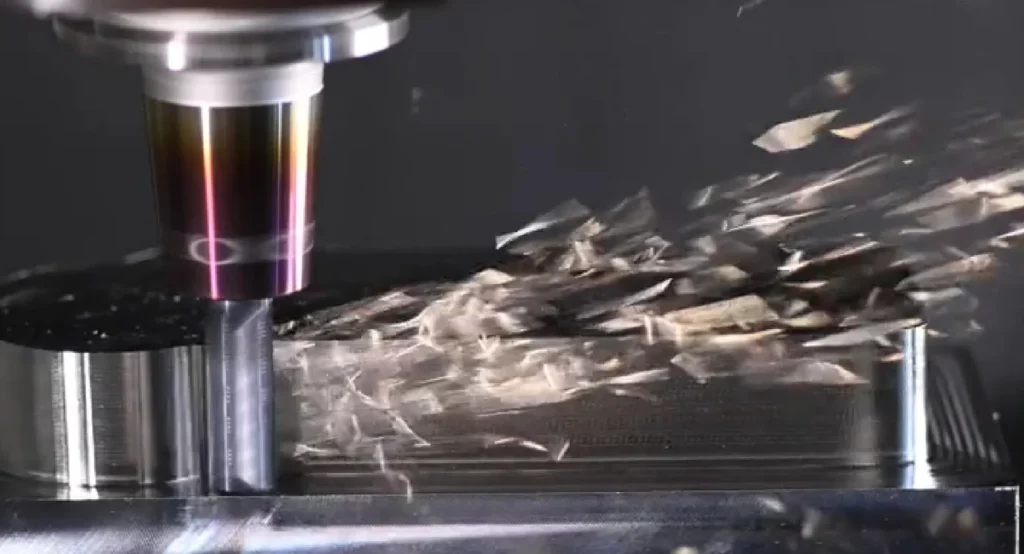
CNC Special Processing Technology in Mold Manufacturing
CNC special processing technology plays an important role in modern mold manufacturing. It combines computer technology, measurement systems, mechanical manufacturing, automation control, and microelectronics to improve machining accuracy, production consistency, and overall efficiency. Compared with traditional manual processing, CNC-based manufacturing provides better control over complex mold structures and helps manufacturers meet higher precision requirements.
1. Select the Right CNC Machine Tool
Choosing the correct CNC machine tool is one of the most important steps in mold manufacturing. CNC equipment integrates hardware and software to carry out positioning, interpolation, motion control, and machining operations with high precision and stability.
Different mold structures require different machining methods. Rotational parts and cylindrical components are typically processed on CNC lathes. Complex mold cavities and contour surfaces are usually produced through CNC milling, EDM, or other precision machining methods. For internal cavities, drilling features, and fine mold details, electrical discharge machining can also provide excellent results. For molds with demanding surface and profile accuracy, CNC grinding may be used as a finishing process.
2. Improve Production Efficiency Through Program Optimization
In CNC mold machining, production efficiency is closely related to programming quality. Errors may come from machine tool manufacturing tolerances, installation issues, fixture inaccuracy, component wear, thermal deformation, or force-induced deformation during machining.
Because of this, CNC programming must be planned carefully to reduce dimensional errors and improve machining consistency. Programmers should optimize machining time, control tool paths, and reduce non-cutting time wherever possible. For example, rapid positioning, start-stop transfer, and unnecessary idle movement should be minimized to improve overall production efficiency.
3. Improve Machining Accuracy Through Better Process Control
Under competitive manufacturing conditions, CNC special processing technology must continue to improve along with mold design and production requirements. Better process control helps improve mold quality, dimensional stability, and repeatability.
Several factors directly affect CNC machining accuracy, including machine installation condition, spindle stability, turret positioning accuracy, screw connection tightness, and the maintenance condition of moving components. Regular inspection, cleaning, and preventive maintenance are essential for keeping CNC machines in stable operating condition.
4. Control Tooling, Clamping, and Cutting Conditions
To improve machining precision, manufacturers should select suitable cutting tools and tool materials based on the workpiece material and machining requirements. Cutting parameters, tool geometry, and cooling lubrication conditions should also be optimized to reduce wear and maintain stable machining quality.
Proper workpiece clamping is equally important. If the clamping force is not controlled correctly, the workpiece may deform during machining, which affects dimensional accuracy. In precision mold manufacturing, both rigidity and clamping stability must be considered to avoid shape deviation.
5. Strengthen Dimensional Control and Inspection
For CNC shaft parts and other precision components used in molds, dimensional control must focus on both length and diameter. Rough machining tools and finishing tools should be set consistently, and suitable positioning references should be established for mass production.
To ensure dimensional accuracy, manufacturers should also follow a disciplined inspection process. First-piece inspection, in-process inspection, and final inspection are all important for controlling product quality. This inspection workflow helps identify errors early and prevents dimensional problems from continuing through later machining stages.
Conclusion
CNC special processing technology has become an essential part of modern mold manufacturing. By selecting the right machine tools, optimizing CNC programs, improving machining processes, controlling tool wear and clamping conditions, and strengthening dimensional inspection, manufacturers can improve mold precision, reduce production errors, and achieve more efficient and stable manufacturing performance.