
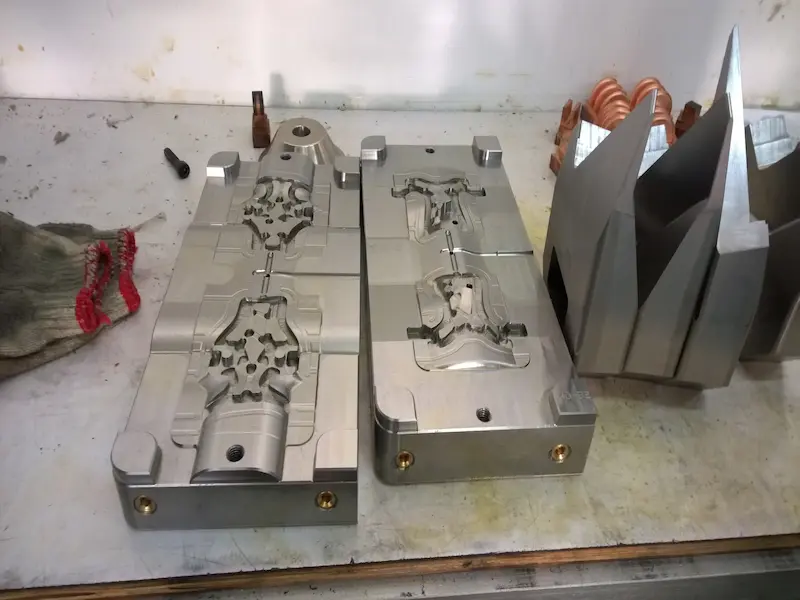
9 Common Causes of Stamping Die Failure in Production
Stamping die failure can lead to dimensional instability, premature wear, unexpected downtime, and higher production costs. In sheet metal stamping operations, mold durability depends not only on material quality, but also on die design, heat treatment, machining accuracy, equipment selection, assembly quality, and shop-floor handling.
Below are nine common causes of stamping die failure that manufacturers should pay attention to during die making and production.
1. Unsuitable Mold Material
If the die material does not provide sufficient toughness or wear resistance, it may crack, chip, or deform during later processing and repeated production cycles. Selecting the right mold steel is essential for maintaining structural stability and service life.
2. Improper Heat Treatment
Incorrect quenching and tempering processes can result in internal stress, distortion, or excessive brittleness. Poor heat treatment directly affects die hardness, toughness, and dimensional accuracy.
3. Insufficient Flatness of the Mold
If the mold or die plate is not flat enough, bending or flexural deformation may occur during operation. This can reduce stamping precision and increase the risk of uneven wear or localized damage.
4. Unreasonable Die Design
Weak die strength, overly narrow knife-edge spacing, poor structural planning, or an insufficient number of support blocks can all reduce die reliability. A well-engineered die structure is necessary to handle stamping loads consistently.
5. Improper Wire Cutting
Errors during wire EDM machining, such as incorrect clearance, broken wire paths, or failure to create proper corner relief, can negatively affect die accuracy and increase the likelihood of cracking or premature damage.
6. Incorrect Selection of Punching Equipment
If the punching tonnage is insufficient or the punch force does not match the die requirements, excessive stress may be placed on the mold. Dies that are too deep for the selected equipment are also more prone to failure.
7. Poor Material Removal and Cleaning
Failure to demagnetize the mold before production or remove metal debris properly can lead to contamination inside the die. Broken pins, fragments, and trapped particles may damage the die surface or interfere with normal operation.
8. Unsatisfactory Blanking and Assembly Conditions
Improper assembly, poor material release, material rollover, or blockage at the foot block area can all create abnormal stress during stamping. These problems may accelerate wear and shorten die life.
9. Poor Production Practices
Improper laminated stamping, inaccurate positioning, failure to use air blow cleaning, or continued production after template cracking can seriously damage the die. Good production discipline is critical for protecting tooling performance.
How to Reduce Stamping Die Failure
To improve die life and production reliability, manufacturers should combine proper mold material selection, controlled heat treatment, accurate machining, optimized die design, suitable press matching, and disciplined production management. Preventive maintenance and routine inspection also play an important role in reducing unexpected failures.
For sheet metal stamping projects, stable die performance is essential for consistent part quality, lower scrap rates, and long-term manufacturing efficiency.