
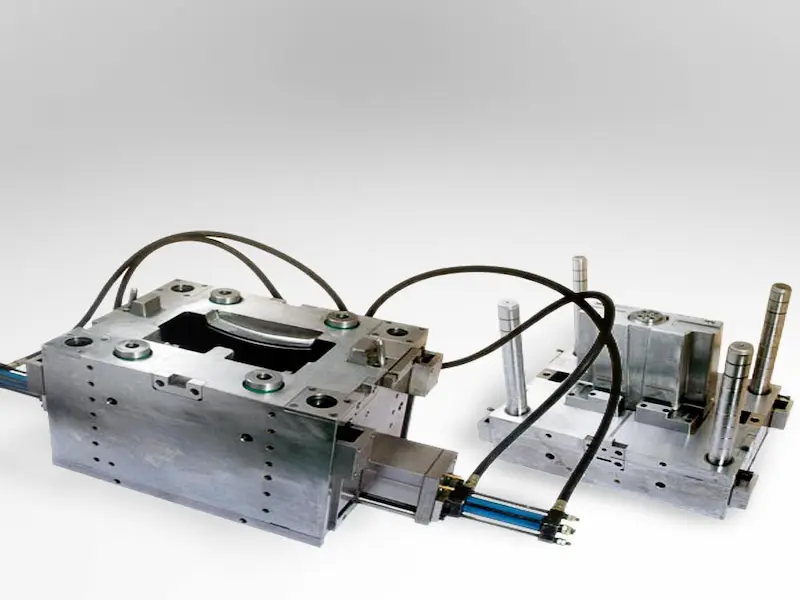
Causes of Stamping Die Jamming and How to Prevent Mold Sticking
During metal stamping production, if the die becomes difficult to close, moves abnormally, or gets stuck completely, production should be stopped immediately. Die jamming is a serious problem that can quickly expand into a larger fault and cause damage to the mold, punch, stripper plate, or press equipment if not handled in time.
1. Why Die Jamming Must Be Addressed Immediately
Once mold clamping becomes inflexible or the die starts sticking during operation, continued production can worsen the interference and increase the risk of mold damage. Early troubleshooting is essential to protect both the tooling and the press.
2. Poor Mold Guiding or Misalignment
One of the main causes of die jamming is poor guiding between the upper and lower mold sections. If the guide system is inaccurate, worn, or tilted, the mold may not close smoothly, which can lead to interference or sticking during stamping.
Incorrect installation position of the die can also cause poor alignment between upper and lower die components. When positioning accuracy is insufficient, the mold may experience side loading, abnormal wear, or direct interference.
3. Foreign Matter Between Mold Plates
Foreign material trapped between the mold plates or templates can prevent the die from closing flat. Even a small amount of debris can disturb parallelism and create local interference, resulting in difficult clamping or die sticking.
Keeping the mold and press area clean is important for preventing this type of fault.
4. Insufficient Mold Strength or Uneven Force
If the mold structure does not have sufficient strength, or if force is distributed unevenly during stamping, the mold may deform and cause jamming.
For example, if the die holder or plate thickness is too small, the mold may deform more easily under external load. This deformation can affect alignment and lead to sticking between the working parts of the die.
5. Poor Press Accuracy or Installation Error
If the press itself has poor accuracy, the die may be subjected to unwanted interference during operation. Inaccurate machine motion, combined with incorrect die installation, can create misalignment between the tooling components and increase the risk of jamming.
Proper die mounting and regular press accuracy checks are essential for stable stamping performance.
6. Insufficient Punch Strength
Insufficient punch strength is another common cause of die problems. If the punch is too weak or its dimensions are too close to critical clearance limits, lateral force may become unbalanced during stamping.
In this case, the punch may deflect or interfere with other die components, which can lead to die sticking or poor movement.
To reduce this risk, punch strength should be increased where necessary, and the stripper plate should provide proper guiding and protection during operation.
7. How to Prevent Stamping Die Jamming
To prevent die jamming in stamping production, manufacturers should improve mold guiding accuracy, ensure correct die installation, maintain press precision, remove foreign matter regularly, and design the mold structure with sufficient rigidity. Punch strength and stripper plate guidance should also be reviewed carefully to maintain balanced force during operation.
By identifying these problems early and correcting them promptly, stamping operations can reduce downtime, protect tooling life, and improve production reliability.