
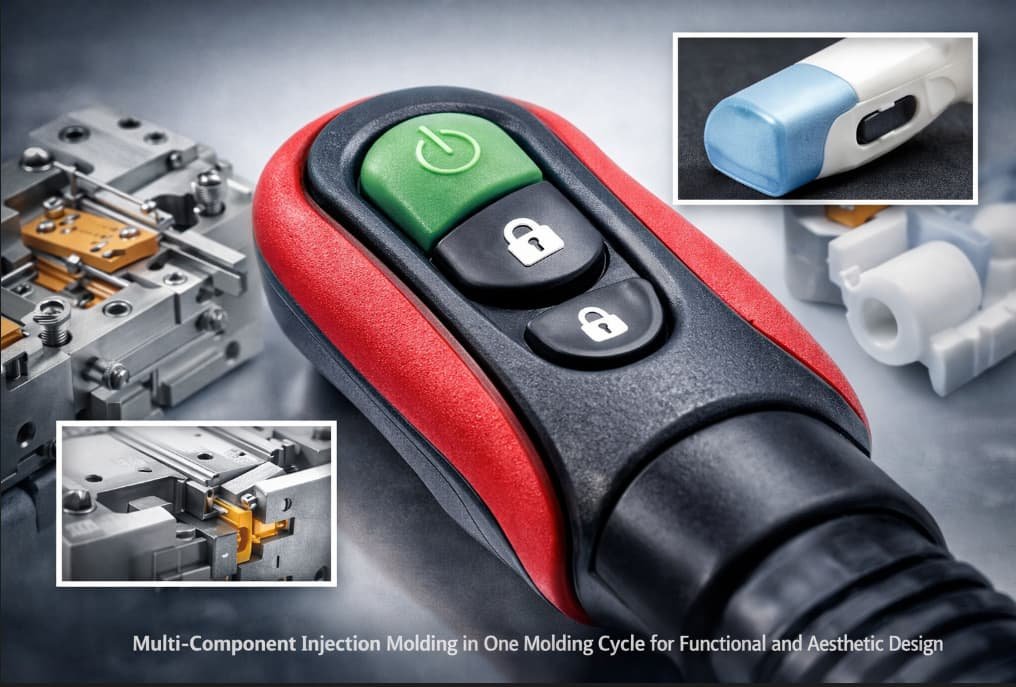
Multi-Component Injection Molding for Functional and Aesthetic Plastic Parts
Multi-component injection molding is a manufacturing process used to produce plastic parts that combine two or more materials or colors in a single molding cycle. In these parts, each component remains clearly defined and visible on the surface, allowing the final product to deliver both functional performance and visual appeal.
This process is commonly used for products such as keyboard buttons, labeled switches, and handles with soft-touch grip areas. By combining different materials in one operation, manufacturers can create parts that are more comfortable, durable, and visually refined without requiring additional assembly steps.
Advantages of Multi-Component Injection Molding
One of the main advantages of multi-component injection molding is the ability to produce multi-color or multi-material parts in a single process. This reduces the need for post-processing, secondary assembly, and additional manufacturing operations. As molding technology continues to improve, this process is becoming an increasingly efficient solution for producing high-value plastic components.
With the right material combination and strong bonding performance, multi-component molded parts can achieve excellent resistance to external influences such as mechanical stress, heat, and chemical exposure. This makes the process suitable for a wide range of consumer, industrial, and technical applications.
Bonding Mechanisms Between Materials
The adhesion between two bonded materials in multi-component injection molding can be achieved through chemical bonding or mechanical interlocking. When chemically compatible materials are selected, permanent molecular bonding can be created through a melting or welding effect during the molding process.
Mechanical interlocking can also be used to improve adhesion. This may include textured surfaces, glass fiber reinforcement, holes, undercuts, or other solid connecting features designed into the part geometry. The right bonding method depends on the material combination, part design, and functional requirements of the final product.
Process Flexibility in Multi-Component Molding
Modern injection molding systems offer a wide range of processing options for multi-component applications. These include soft and hard composite parts made with TPE or LSR, sandwich structures, composite parts, and repeatable surface color designs produced with alternating injection molding processes.
This flexibility allows manufacturers to develop parts with improved ergonomics, better sealing performance, enhanced appearance, or integrated functional zones, all while maintaining production efficiency.
Why Multi-Component Injection Molding Matters
Multi-component injection molding is a valuable solution for producing plastic parts that require a combination of aesthetics, function, and material performance. By integrating multiple materials or colors into a single molded component, manufacturers can simplify production, improve product quality, and reduce assembly costs.
For applications where appearance, durability, and user experience all matter, multi-component injection molding provides a reliable path to more advanced and competitive product design.