
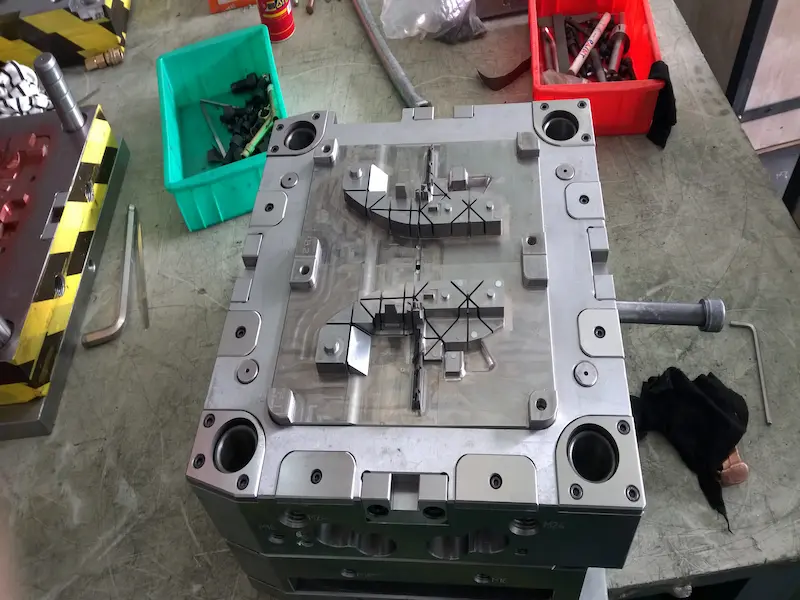
How to Improve Mold Stability in Stamping Production
Mold stability is one of the key factors that affects production efficiency, product quality, and manufacturing cost in stamping operations. An unstable mold can lead to production interruptions, inconsistent product dimensions, excessive wear, and repeated mold modifications.
For mold manufacturers and stamping companies, improving mold stability has become an important challenge. Even after a mold is designed and tested, some molds still develop problems once they enter mass production, causing line stoppages and unstable product quality. Humans do enjoy spending months building a mold only to discover it behaves differently the moment someone turns on the production line.
Process Stability and Production Stability
Mold stability can generally be divided into two categories:
- Process stability: The ability of the process plan to consistently produce qualified products.
- Production stability: The ability to maintain stable production capacity and output during long-term manufacturing.
Both are important because a mold that works well during testing may still fail to maintain consistent performance during actual production.
Main Factors That Affect Mold Stability
Several factors can influence the stability of a stamping mold and the overall production process:
- Selection and use of mold materials
- Strength of the mold structure
- Consistency of stamping material properties
- Variation in material thickness
- Changes in material dimensions
- Variation in blank holder force
- Selection of lubricants
Because these variables interact with each other, mold stability depends not only on mold design, but also on process control and material consistency.
Importance of Mold Material Selection
Choosing the right mold material is one of the most important steps in mold design. Different mold components have different functions, so the material requirements for each section of the mold may vary.
When selecting mold materials, designers should consider:
- High strength
- Good wear resistance
- Sufficient toughness
- Compatibility with the material being processed
- Expected production volume and service life
Proper material selection helps reduce wear, prevent cracking, and improve long-term mold stability.
How to Improve Mold Stability
1. Improve Process Planning
During the process planning stage, the product structure should be analyzed carefully to predict possible manufacturing defects. This helps engineers create a more stable production plan before the mold is built.
2. Standardize Production Processes
Standardized process settings and production methods can reduce unnecessary variation and improve consistency. Stable production conditions make it easier to control mold performance over time.
3. Build a Process Database
Creating a database of production experience, mold issues, and successful solutions can help manufacturers continuously improve future mold designs. Instead of solving the same problem every six months like it is a fresh scientific mystery, a proper database gives the factory an actual memory.
4. Use CAE Analysis Software
CAE analysis software can be used to simulate forming conditions, predict defects, optimize mold structure, and improve process parameters before manufacturing begins.
Simulation tools are valuable because they reduce trial-and-error during mold development and help achieve a more stable production process.
Conclusion
Mold stability is essential for achieving consistent quality and reliable production in stamping operations. By improving material selection, strengthening process control, standardizing production methods, and using CAE simulation tools, manufacturers can reduce downtime, improve mold life, and maintain stable mass production.