Skip to content
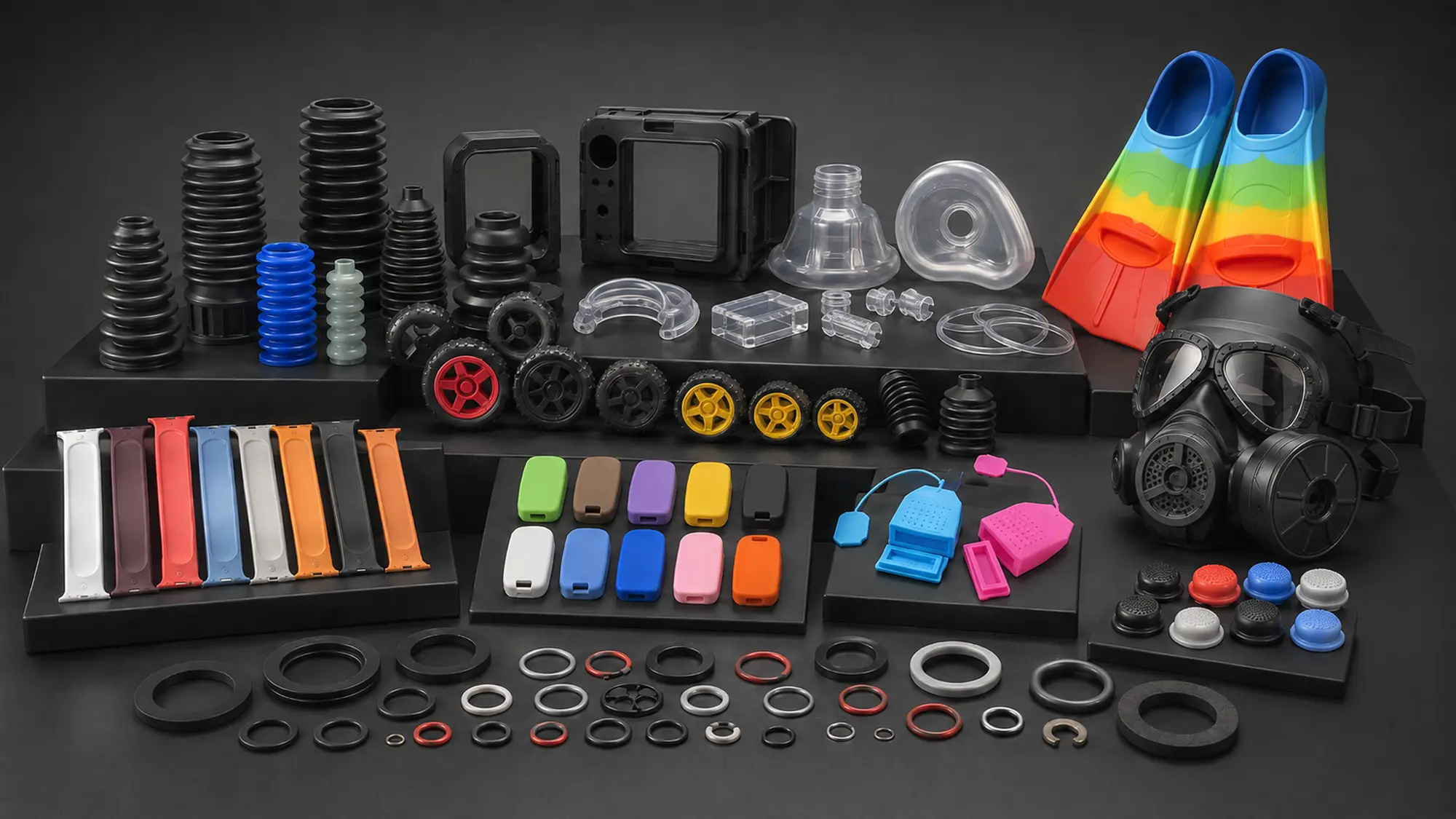
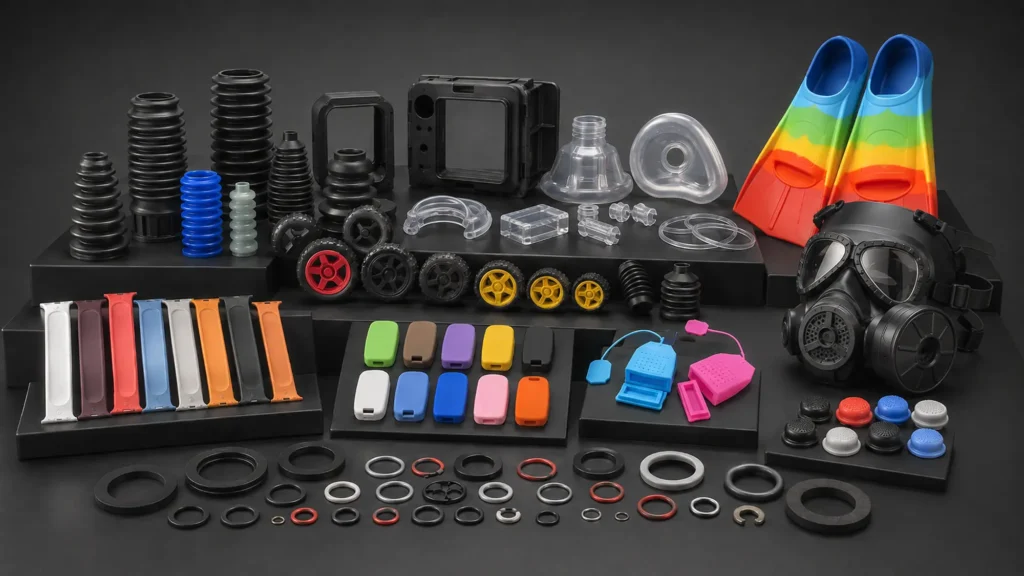
Fitmold supports custom rubber and silicone products ranging from kitchen utensils, brushes, swim fins, remote-control covers, and protective sleeves to industrial seals, joystick boots, protective bellows, rubber bushings, vibration isolators, equipment grips, fluid-line protection components, and rubber-to-metal or rubber-to-plastic overmolded parts.
We review product function, material, Shore A hardness, temperature, oil and weather resistance, compression requirements, color, surface, insert structure, and expected quantity before selecting compression molding, High Consistency Rubber injection molding, or Liquid Silicone Rubber injection molding. Tooling, molding, deflashing, inspection, bonding, overmolding, and assembly can be coordinated according to the project.
Rubber and silicone molding supports both complete consumer products and functional components used inside larger assemblies. Typical consumer applications include silicone spatulas and scrapers, basting brushes, kitchen utensils, baking molds, heat-resistant pads, cleaning and personal-care brushes, swim fins, diving-mask seals, remote-control covers, protective sleeves, keypads, button membranes, soft-touch handles, and flexible straps.
Industrial and automotive applications include custom seals and gaskets, rubber boots, protective bellows, joystick boots, cable and hose grommets, connector seals, valve and pump diaphragms, rubber bushings, vibration isolators, machine mounts, rubber buffers, bump stops, equipment grips, dust covers, hose protection sleeves, and rubber-to-metal bonded components. Each project is reviewed according to its sealing, cushioning, protection, grip, flexibility, durability, and assembly requirements.
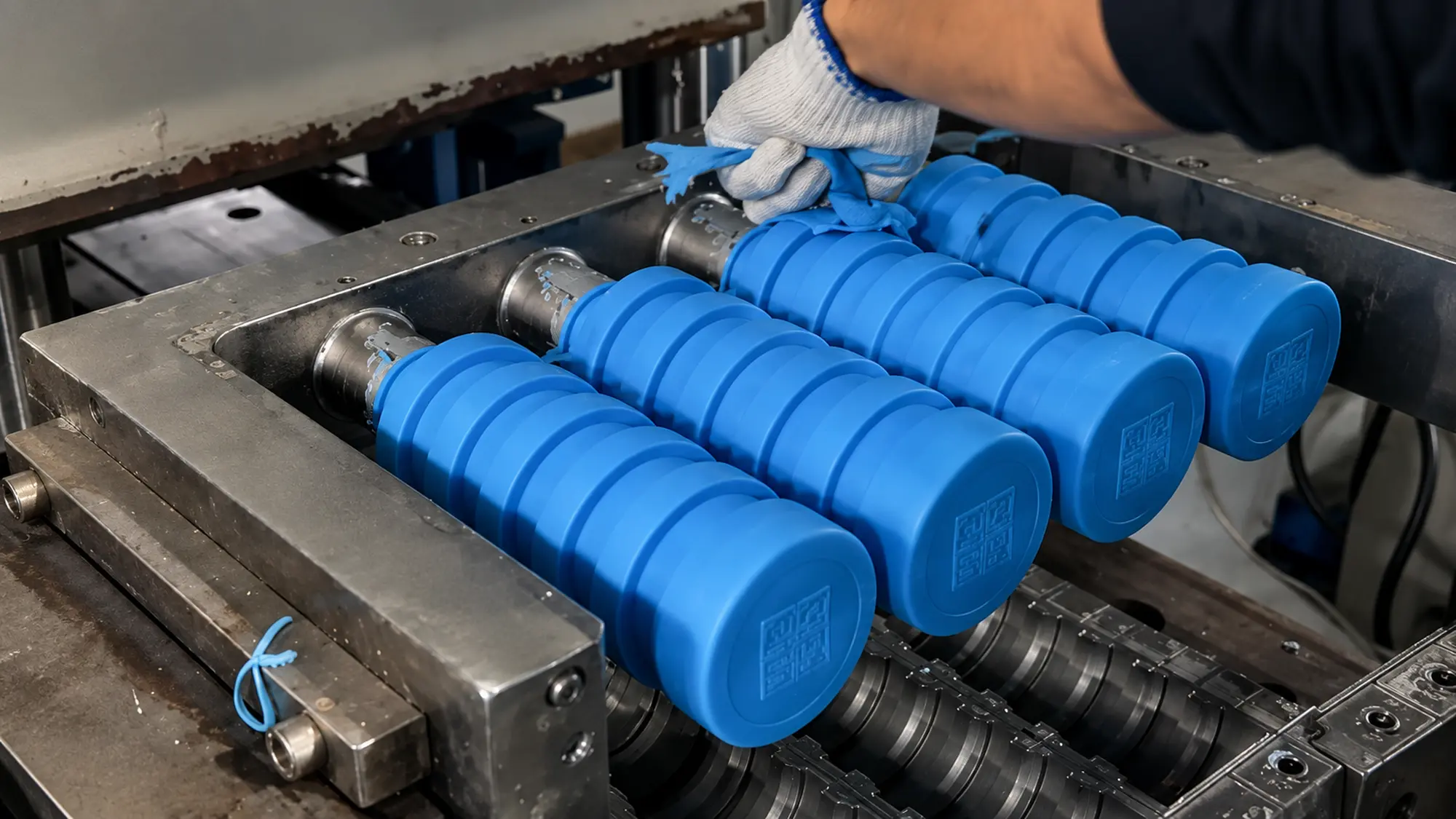
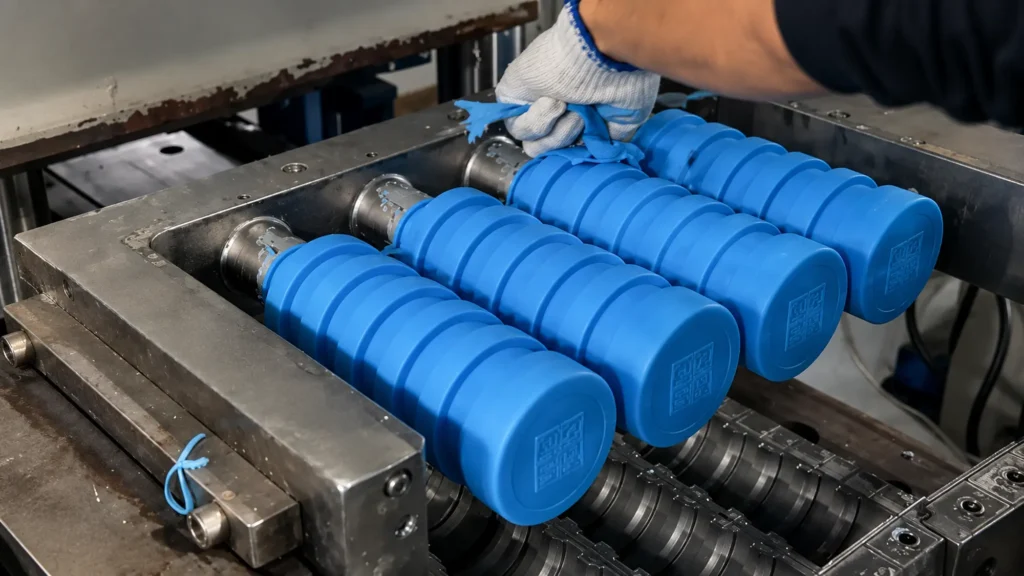
Compression molding is a practical option for rubber and silicone parts with larger dimensions, thicker sections, relatively simple geometry, or production quantities that do not justify a highly automated injection mold. Typical products include swim fins, silicone spatulas, baking molds, heat-resistant pads, thick protective covers, gaskets, rubber boots, bellows, anti-vibration pads, bump stops, equipment feet, and rubber-to-metal bonded components.
Preformed rubber or silicone material is placed into a heated mold and cured under pressure. Tooling can be developed for prototypes, lower-volume production, or multi-cavity repeat manufacturing. Material type, preform weight, curing conditions, parting-line location, flash, shrinkage, inserts, surface texture, color, and Shore A hardness are controlled according to the product requirements. This process can provide a cost-effective manufacturing route when flexibility and tooling investment are more important than maximum production speed.
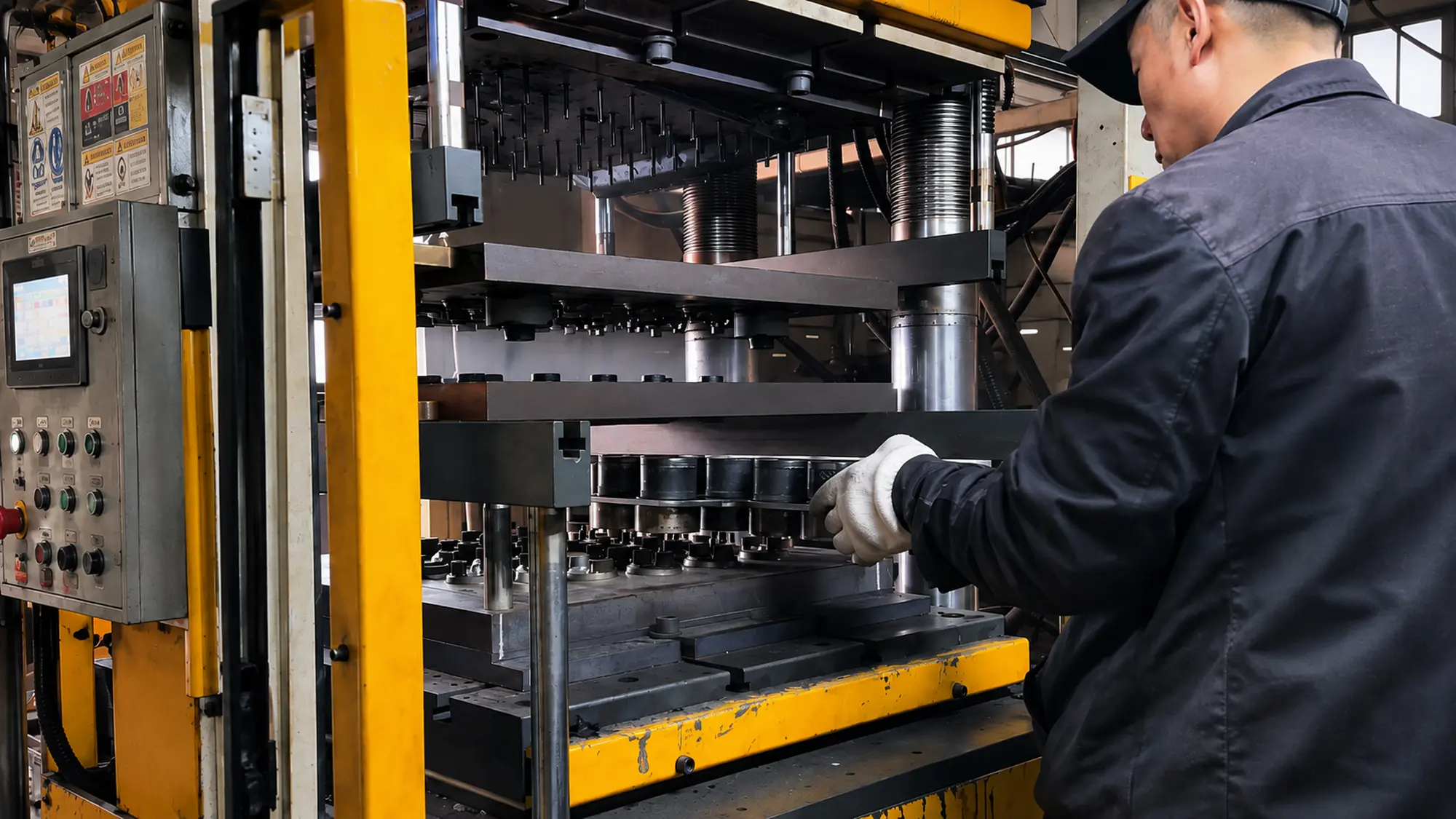
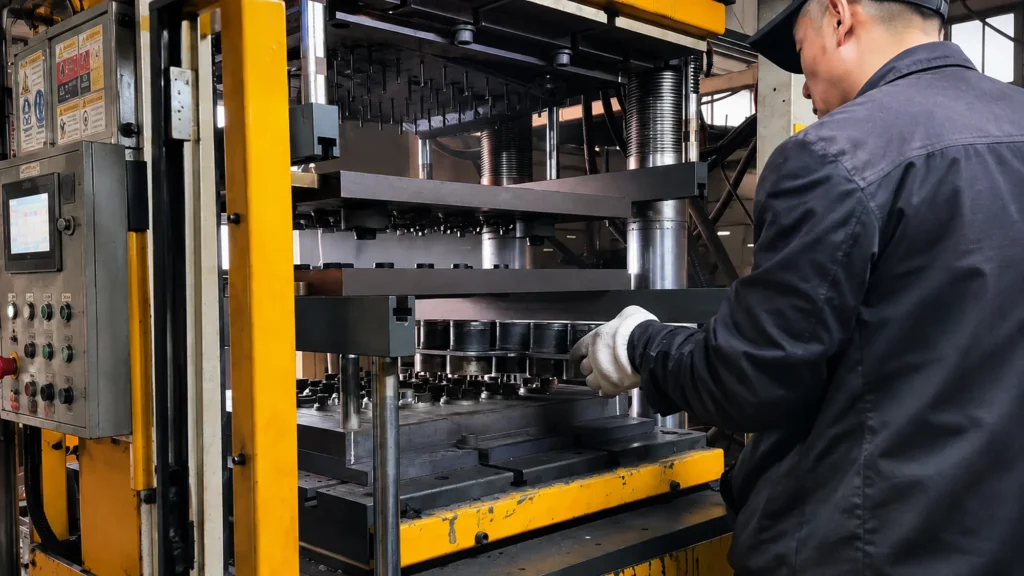
High Consistency Rubber (HCR) injection molding is suitable for repeat orders that require better automation, controlled material feeding, and consistent production cycles. It can be used for silicone kitchen utensils, spatulas, scrapers, brush components, industrial grips, overmolded handles, protective covers, seals, flexible structural parts, automotive rubber components, and other products made from high-consistency silicone or selected solid rubber compounds.
The material is automatically fed, plasticized, measured, and injected into the heated mold, reducing variation associated with manually placing individual preforms. For suitable products, HCR injection molding can support multi-cavity tooling, insert molding, more consistent material distribution, stable curing cycles, and improved production efficiency. Mold filling, venting, parting lines, flash control, shrinkage, demolding, and surface requirements are reviewed during tooling development and trial production.
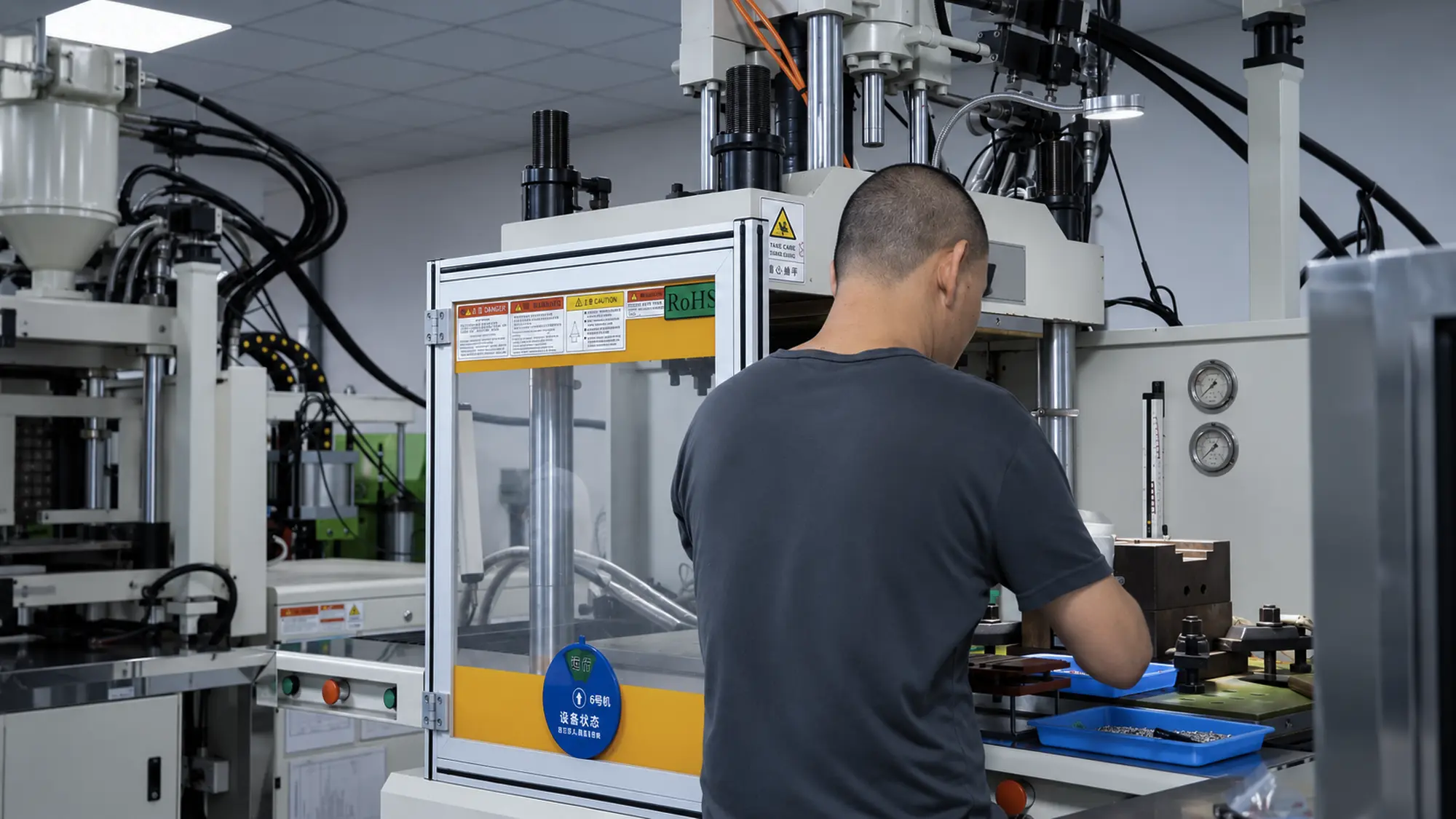
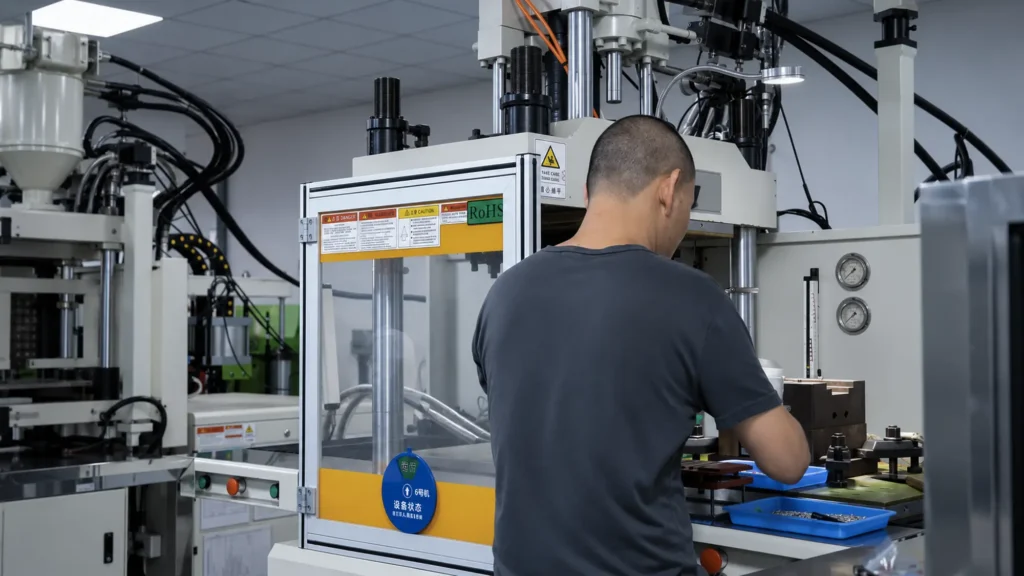
Liquid Silicone Rubber (LSR) injection molding is used for small, detailed, thin-wall, and precision silicone components that benefit from automated material metering and repeatable mold filling. Typical products include precision seals, connector seals, cable grommets, silicone keypads, button membranes, remote-control components, protective sleeves, valve diaphragms, waterproof electronic components, soft-touch overmolded parts, and other complex silicone components.
Two-component liquid silicone is automatically measured, mixed, and injected into a heated mold, supporting detailed geometry, flexible thin sections, stable material distribution, and efficient repeat production. Depending on the product, LSR can also be molded around plastic or metal inserts. Material grade, hardness, color, surface appearance, flash, dimensional requirements, sealing performance, and any food-contact or other regulatory requirements must be confirmed for each project before production.
Rubber and silicone molding supports both complete consumer products and functional components used inside larger assemblies. Typical consumer applications include silicone spatulas and scrapers, basting brushes, kitchen utensils, baking molds, heat-resistant pads, cleaning and personal-care brushes, swim fins, diving-mask seals, remote-control covers, protective sleeves, keypads, button membranes, soft-touch handles, and flexible straps.
Industrial and automotive applications include custom seals and gaskets, rubber boots, protective bellows, joystick boots, cable and hose grommets, connector seals, valve and pump diaphragms, rubber bushings, vibration isolators, machine mounts, rubber buffers, bump stops, equipment grips, dust covers, hose protection sleeves, and rubber-to-metal bonded components. Each project is reviewed according to its sealing, cushioning, protection, grip, flexibility, durability, and assembly requirements.
Compression molding is a practical option for rubber and silicone parts with larger dimensions, thicker sections, relatively simple geometry, or production quantities that do not justify a highly automated injection mold. Typical products include swim fins, silicone spatulas, baking molds, heat-resistant pads, thick protective covers, gaskets, rubber boots, bellows, anti-vibration pads, bump stops, equipment feet, and rubber-to-metal bonded components.
Preformed rubber or silicone material is placed into a heated mold and cured under pressure. Tooling can be developed for prototypes, lower-volume production, or multi-cavity repeat manufacturing. Material type, preform weight, curing conditions, parting-line location, flash, shrinkage, inserts, surface texture, color, and Shore A hardness are controlled according to the product requirements. This process can provide a cost-effective manufacturing route when flexibility and tooling investment are more important than maximum production speed.
High Consistency Rubber (HCR) injection molding is suitable for repeat orders that require better automation, controlled material feeding, and consistent production cycles. It can be used for silicone kitchen utensils, spatulas, scrapers, brush components, industrial grips, overmolded handles, protective covers, seals, flexible structural parts, automotive rubber components, and other products made from high-consistency silicone or selected solid rubber compounds.
The material is automatically fed, plasticized, measured, and injected into the heated mold, reducing variation associated with manually placing individual preforms. For suitable products, HCR injection molding can support multi-cavity tooling, insert molding, more consistent material distribution, stable curing cycles, and improved production efficiency. Mold filling, venting, parting lines, flash control, shrinkage, demolding, and surface requirements are reviewed during tooling development and trial production.
Liquid Silicone Rubber (LSR) injection molding is used for small, detailed, thin-wall, and precision silicone components that benefit from automated material metering and repeatable mold filling. Typical products include precision seals, connector seals, cable grommets, silicone keypads, button membranes, remote-control components, protective sleeves, valve diaphragms, waterproof electronic components, soft-touch overmolded parts, and other complex silicone components.
Two-component liquid silicone is automatically measured, mixed, and injected into a heated mold, supporting detailed geometry, flexible thin sections, stable material distribution, and efficient repeat production. Depending on the product, LSR can also be molded around plastic or metal inserts. Material grade, hardness, color, surface appearance, flash, dimensional requirements, sealing performance, and any food-contact or other regulatory requirements must be confirmed for each project before production.
Send us your 3D files, 2D drawings, material requirements, Shore A hardness, color, surface expectations, insert details, expected quantity, and intended application. Information about operating temperature, oil or chemical exposure, outdoor use, sealing pressure, compression, movement, and assembly conditions will also help us evaluate the product.
We can review whether compression molding, HCR injection molding, or Liquid Silicone Rubber injection molding is the most practical route and coordinate tooling, molding, deflashing, bonding, overmolding, dimensional inspection, functional testing, and assembly as required.