Skip to content

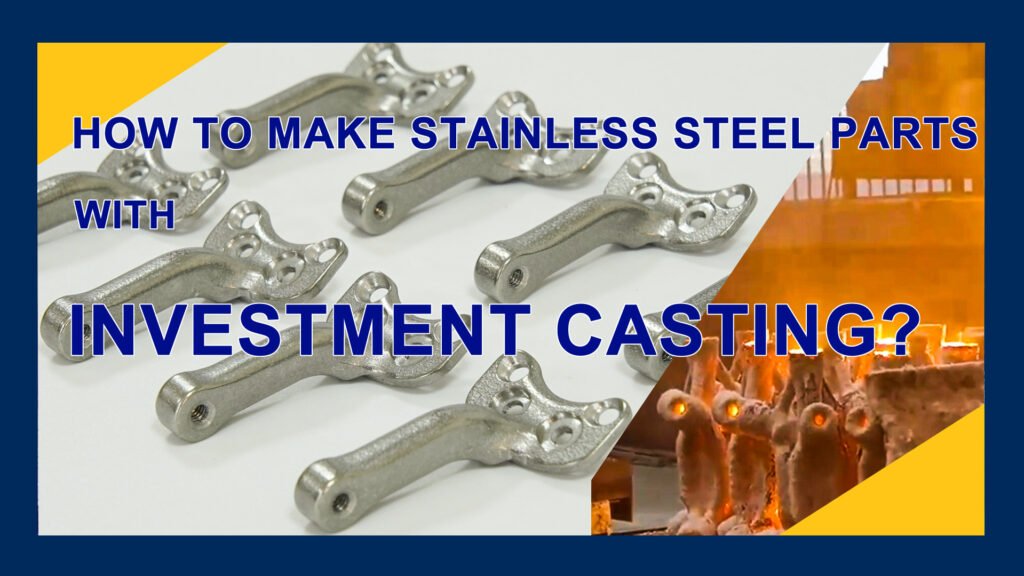
Stainless steel casting, as the name suggests, is the casting process used for stainless steel alloys. Common cast stainless steel grades include 304, 316, 410, 416, and 17-4 PH.
Investment casting, also known as lost wax casting, is one of the most precise casting methods for manufacturing stainless steel parts, especially those with irregular or complex structures. The overall process typically includes mold making, wax pattern production, tree assembly, shell building, dewaxing, pouring, cutting, machining, surface finishing, and inspection.
Step 1: Mold Design and Mold Making
This is the first step in stainless steel investment casting. Based on the product design, a mold is developed for producing wax patterns. Steel is more commonly used for this tooling because aluminum is softer and more easily deformed after long-term use.
Step 2: Wax Pattern Making
After the mold is ready, wax is injected into the mold cavity to form the wax pattern. Once cooled, the wax pattern is removed and inspected. Any visible defects, such as surface marks, injection points, or flow traces, are repaired as needed.
Step 3: Assembly
After inspection, the wax patterns are attached one by one to the casting system to form a complete assembly. Because the structure resembles a tree, this stage is also known as tree assembly.
Step 4: Shell Building
Shell building is typically based on a silica sol process. The wax assembly is dipped into a colloidal silica slurry and then coated with refractory sand. After drying and hardening, the process is repeated several times until a shell with sufficient strength and heat resistance is formed.
Step 5: Dewaxing
The completed shell is placed into a high-temperature furnace. The wax inside melts and drains out, leaving a hollow cavity for metal pouring. This process is known as dewaxing.
Step 6: Cutting and Grinding
After casting, the stainless steel blanks are separated from the runner system. Gates and excess material are removed by cutting and grinding.
Step 7: Machining
If the part requires additional features such as drilling, tapping, or tighter tolerances, secondary machining is carried out after casting.
Step 8: Surface Finishing
The surface can be improved through different finishing methods, such as shot blasting, sandblasting, electropolishing, or mirror polishing, depending on the product requirements.
Step 9: Inspection
After production is complete, inspection is arranged before delivery. This usually includes dimensional inspection, defect inspection, and material verification. Only qualified products are approved for shipment.
Fitmold’s mature casting process helps us provide reliable one-stop support for stainless steel casting projects. If you have any stainless steel investment casting requirements, please feel free to contact us.