Skip to content
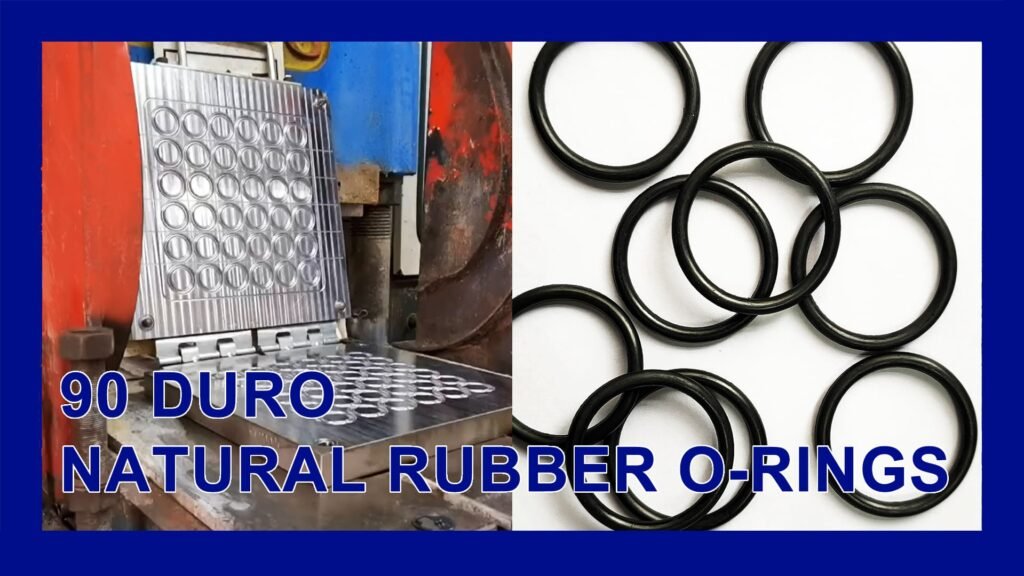
O-rings are widely used in many industries to create reliable seals in pipes, tubes, and other components used in hydraulic and pneumatic systems. Because of the wide range of applications, there are also many material options available for O-ring production. Common materials include Nitrile (Buna), Neoprene, EPDM rubber, Silicone, Fluorocarbon (Viton), and PTFE.
This video shows how an O-ring is produced using 90 duro natural rubber.
As we know, O-ring durometer has a direct impact on sealing performance depending on the application conditions. Softer sealing materials with lower hardness can flow more easily into microfine grooves and surface imperfections of the mating parts, such as the gland, bore, rod, or seal flange. This is especially important in low-pressure sealing applications, where the seal is not strongly activated by fluid pressure.
On the other hand, harder materials provide better resistance to extrusion. Choosing the right hardness is therefore an important part of O-ring design and production.
In actual manufacturing, rubber that is too soft or too hard is not easy to form, which can lead to a longer molding cycle time. For example, the 90 duro natural rubber O-ring shown in this video requires a cycle time of about 10 minutes.
Fitmold specializes in producing custom O-rings and silicone or rubber parts in a variety of materials and hardness ranges. If you are looking for customized rubber sealing components, please feel free to contact us.