Skip to content

Causes of Die Casting Soldering and Sticking on Mold Surfaces
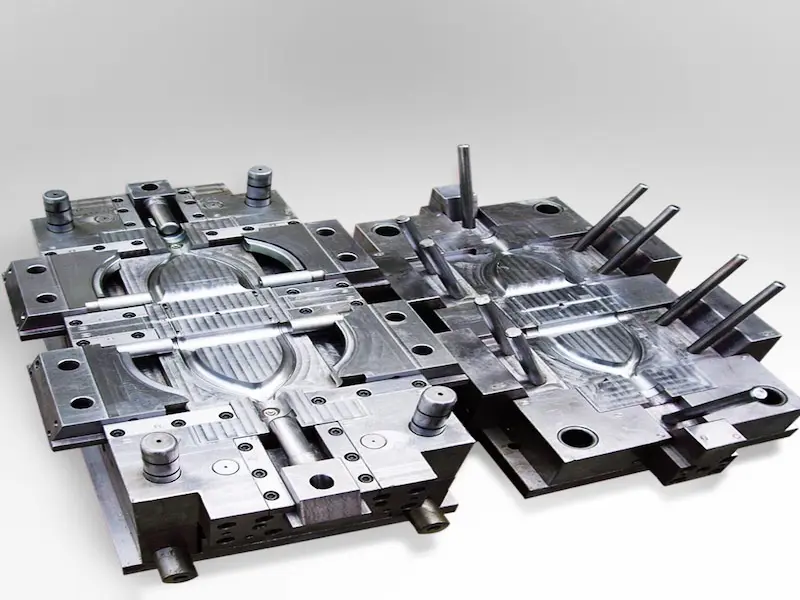
In die casting production, sticking or soldering occurs when the molten alloy bonds to the surface of the die cavity or core. This defect increases release resistance during ejection and can damage both the casting and the mold surface. It is especially common when casting aluminum alloys under high temperature and high filling speed conditions.
1. What Die Casting Sticking Looks Like
When sticking occurs, the casting may show surface roughness, peeling, missing material, or torn areas after ejection. In severe cases, the casting may be partially torn apart during demolding.
At the same time, a visible layer of die casting alloy may remain attached to the mold cavity surface, often appearing as a whitish adhered layer. This type of defect should be distinguished from carbon buildup or ordinary surface deposits.
2. Affinity Between Alloy and Die Steel
The greater the affinity between the die casting alloy and the mold steel, the easier it is for the two materials to fuse and bond together. Once the molten alloy adheres to the cavity wall, the demolding resistance increases sharply, which can cause tearing or pulling defects on the casting surface.
This problem becomes more serious when the local mold surface temperature rises and promotes melt-welding between the alloy and the die steel.
3. Effect of Molten Metal Temperature and Mold Temperature
After molten alloy is sprayed or forced through the cavity at high speed, the wall and core temperature of the mold increases. When the surface temperature becomes too high, the molten alloy is more likely to weld to the mold steel.
The risk of sticking increases under the following conditions:
- Higher molten alloy temperature
- Higher injection speed
- Higher mold temperature
- Lower mold surface hardness
These conditions increase the tendency of the molten metal to adhere to the cavity or core surface, especially in localized hot spots.
4. Influence of Runner Design and High-Speed Impact
The higher the filling speed of the molten metal in the runner system, the more violently the metal impacts the cavity wall or core. This impact converts kinetic energy into heat, which raises the local temperature of both the alloy and the mold surface.
As a result, the areas of the mold exposed to direct high-speed metal impact are the most likely to suffer from soldering and sticking. Runner and gate locations with poor flow direction control are often the first areas where adhesion appears.
If the impact is concentrated on one side of the fixed mold, the casting may also grip that side more tightly, increasing ejection resistance further.
5. Influence of Mold Hardness and Structural Stability
If the hardness of the mold is insufficient, the mold surface may deform under the thermal and mechanical load of die casting. In some cases, the core may also bend or deform slightly. These changes increase release resistance and make sticking defects more severe.
A mold with inadequate hardness or poor structural rigidity is more vulnerable to surface damage, soldering, and repeated demolding problems.
6. Effect of Mold Material Selection
Improper mold material selection can also increase the risk of sticking. When the mold material does not have sufficient hot hardness, thermal fatigue resistance, or anti-soldering performance, the die casting alloy can more easily adhere to the mold surface under high-temperature operating conditions.
Choosing suitable die steel, applying proper heat treatment, and maintaining adequate surface hardness are important measures for reducing soldering defects in die casting molds.
7. How to Reduce Die Casting Sticking
To reduce sticking and soldering defects in die casting production, manufacturers should optimize alloy temperature, injection speed, mold temperature control, runner design, and mold material selection. Improving mold hardness and reducing direct high-speed metal impact on critical surfaces can significantly improve release performance and casting quality.