Skip to content

Causes of Low Gloss on Injection Molded Plastic Parts
Low gloss on injection molded plastic parts refers to a dull, dark, or cloudy surface appearance that reduces product quality and visual appeal. Transparent parts may also show poor transparency when gloss is low. Surface gloss problems can result from mold defects, improper molding conditions, or unsuitable raw materials.
1. Mold-Related Causes of Low Gloss
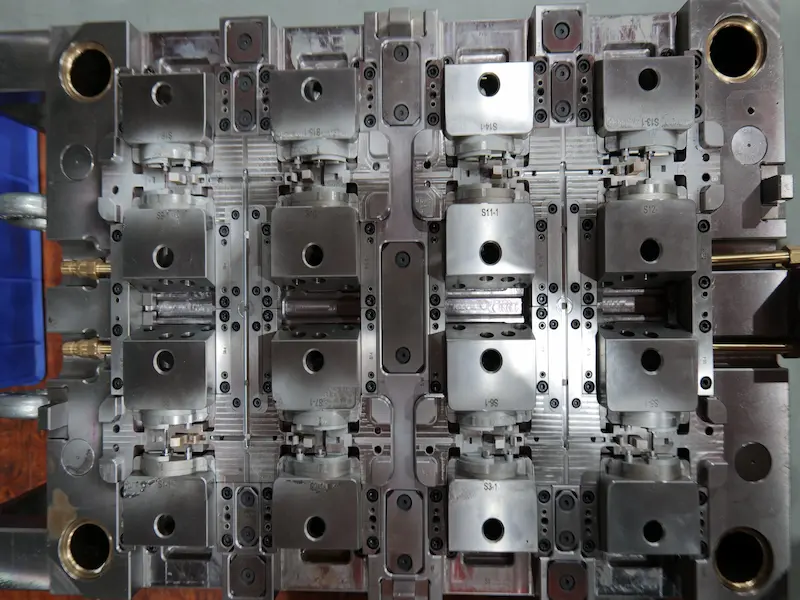
The surface finish of a plastic part is directly affected by the surface condition of the mold cavity. If the mold cavity contains scratches, corrosion, micropores, oil, moisture, or contamination, these defects may be transferred directly onto the molded part and reduce gloss.
To improve gloss, the mold cavity should have a high-quality finish, ideally with polished or chrome-plated surfaces. Mold surfaces should be kept clean and free from oil, water, or excessive release agent residue.
Mold temperature also plays an important role in part appearance. If the mold temperature is too low, the melt may solidify too quickly when it contacts the cavity surface, reducing the ability of the plastic to reproduce the mold finish. Increasing the mold temperature can often improve gloss and reduce residual stress.
However, excessive mold temperature may also cause dark surfaces or surface degradation. In addition, mold design issues such as insufficient draft angle, sudden wall thickness changes, overly thick ribs, small gates, narrow runners, excessive shear, turbulent flow, and poor venting can all contribute to low surface gloss.
2. Improper Molding Conditions
Poor molding conditions are another common cause of low gloss. If the injection speed is too fast or too slow, the injection pressure is too low, the holding time is too short, or the nozzle temperature is too low, the melt may not fill the cavity properly or may not form a dense and smooth surface.
For fiber-filled plastics, poor filler distribution or exposed filler materials can also make the surface appear dull. In some cases, the cylinder temperature may be too low, causing poor melt plasticization and insufficient material flow.
If a dark area appears near the gate or around a changing wall section, the issue may be improved by reducing injection speed, increasing gate size, changing gate position, or adding smoother transitions between wall thicknesses.
If the surface shows a milky white or cloudy appearance, lowering the injection speed may help. When poor filler dispersion causes low gloss, using a resin with better flowability or improving screw mixing performance can improve surface quality.
3. Raw Material Problems
Raw material quality has a major influence on part gloss. If the material contains excessive moisture or volatile substances, vapor may condense on the mold cavity surface during molding and cause poor gloss. Proper material drying before molding is essential.
Discoloration of the resin or colorant may also reduce surface gloss, especially when the material does not have sufficient heat resistance for the molding process.
If the resin flowability is poor, the plastic surface may not become dense and smooth enough during molding. This can often be improved by selecting a resin with better flow characteristics, adding suitable lubricants, or increasing processing temperature.
Foreign materials, incompatible resins, or uneven raw material particle size may also reduce gloss. In these cases, the contaminated or unsuitable material should be replaced.
Crystalline plastics may experience poor gloss because of uneven cooling. Thick-wall parts are especially sensitive because insufficient cooling can create a rough or dull surface appearance. In some cases, molded parts can be removed from the mold and immediately cooled in water to improve surface finish.
In addition, using too much recycled material may affect melt uniformity and reduce gloss. The percentage of recycled resin should be controlled carefully.
How to Improve Gloss on Injection Molded Parts
- Polish and maintain the mold cavity surface
- Control mold temperature and processing temperature carefully
- Optimize gate design, venting, and runner dimensions
- Adjust injection speed, pressure, and holding time
- Use properly dried and high-quality raw materials
- Reduce contamination and excessive recycled material content
- Improve filler dispersion and melt plasticization
Conclusion
Low gloss on injection molded parts can be caused by mold surface defects, poor molding conditions, or unsuitable raw materials. By optimizing mold design, improving processing conditions, and controlling material quality, manufacturers can significantly improve surface gloss and produce higher-quality plastic parts.