Skip to content

9 Key Factors That Affect Stamping Die Life
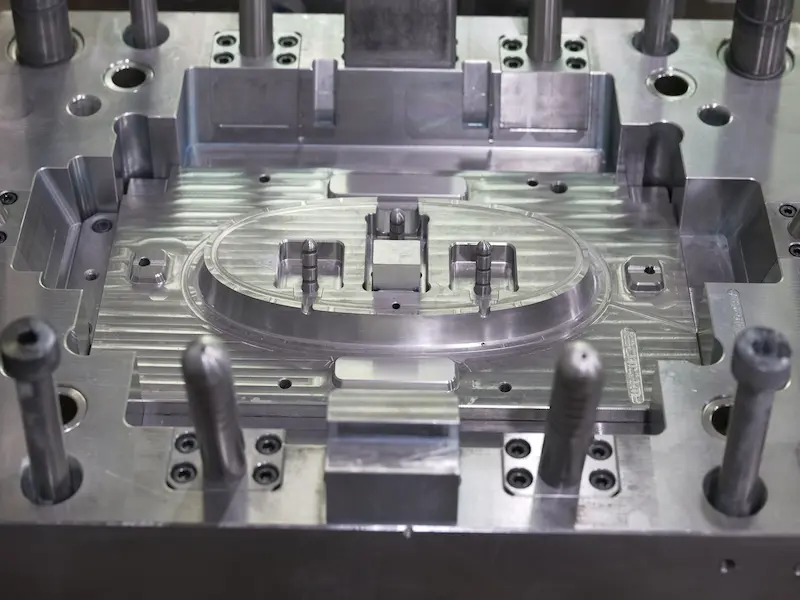
Stamping die life directly affects production efficiency, part quality, maintenance costs, and overall manufacturing stability. A well-designed and properly maintained die can achieve longer service life, while poor equipment selection, weak mold design, or improper heat treatment can significantly shorten die performance.
The following are nine major factors that influence the service life of stamping dies in sheet metal production.
1. Stamping Equipment
The accuracy and rigidity of stamping equipment, such as presses, have a major impact on die life. High-precision and high-rigidity presses help improve die performance and reduce wear. Small-clearance dies, carbide dies, and precision dies especially require presses with excellent rigidity and accuracy.
2. Mold Design
Precision of the Guiding Mechanism
The guiding mechanism of the mold must be selected correctly according to the stamping process and required part precision. A well-designed guiding system improves alignment, reduces wear, and increases die life.
Geometric Parameters of the Die Edge
The shape of the punch and die, clearance values, and corner radii all affect both stamping quality and die wear. Small clearance values are suitable for high-precision parts, while slightly larger clearances can improve die durability in general applications.
3. Stamping Process
Raw Materials for Stamped Parts
Material grade, thickness, and surface quality should be carefully inspected before stamping. Surface rust, scale, and contaminants should be removed when necessary. Proper lubrication and surface treatment can also help reduce friction and improve die life.
Layout and Edge Design
Improper material layout, feed direction, or edge distance may cause severe die wear or damage to the punch and die edges. Reasonable blank layout and sufficient edge values are important for stable production.
4. Mold Material
The mold material should provide high hardness, high strength, strong wear resistance, and sufficient toughness. In most applications, mold hardness is typically controlled within the range of 58–64 HRC. The material should also have low heat treatment deformation and good thermal stability.
5. Hot Processing Quality
Forging Process
The forging process has a major influence on the internal structure and final properties of mold parts. Forging temperature, heating method, cooling process, and annealing treatment must be carefully controlled.
Preparatory Heat Treatment
Annealing, normalizing, and quenching-tempering treatments can help eliminate structural defects, refine the material structure, and improve machinability before final processing.
Quenching and Tempering
Quenching and tempering are critical steps in mold heat treatment. Oxidation and decarburization should be avoided during heat treatment. Vacuum heat treatment may be used for high-precision molds.
Stress Relief Annealing
For precision molds, stress relief treatment after grinding or EDM processing can improve dimensional stability and extend service life.
6. Control of the Wire EDM Recast Layer
Wire EDM processing creates a recast layer on the mold surface due to heat and electrolysis. This layer may contain microcracks and reduced hardness, leading to early wear and edge chipping. Proper EDM parameters should be selected to minimize the thickness of the recast layer.
7. Surface Processing Quality
Grinding burns, machining marks, cracks, interlayers, and impact defects can all reduce die life. Surface finishing processes such as grinding, polishing, and lapping should be carefully controlled to achieve low surface roughness and avoid stress concentration points.
8. Surface Strengthening Treatment
Various surface treatment methods can improve mold wear resistance and service life. Common strengthening processes include nitriding, carbonitriding, boronizing, vanadium treatment, CVD coating, PVD coating, and TD carbide treatment.
9. Proper Use and Maintenance
Correct mold usage and regular maintenance are essential for extending die life. Manufacturers should follow a “three-check” system, including inspection before use, during use, and after use. Routine maintenance helps reduce unexpected failures and improves production reliability.
By optimizing equipment selection, die design, material quality, heat treatment, machining, and maintenance procedures, manufacturers can significantly improve stamping die life and reduce tooling costs.