Skip to content
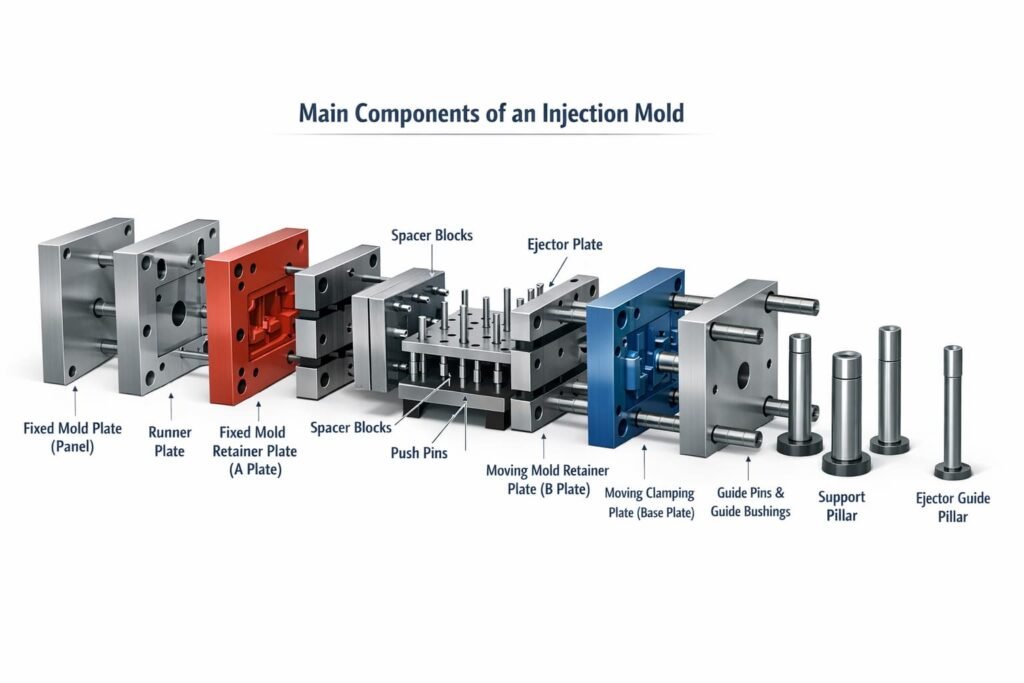
Main Components of an Injection Mold and Their Functions
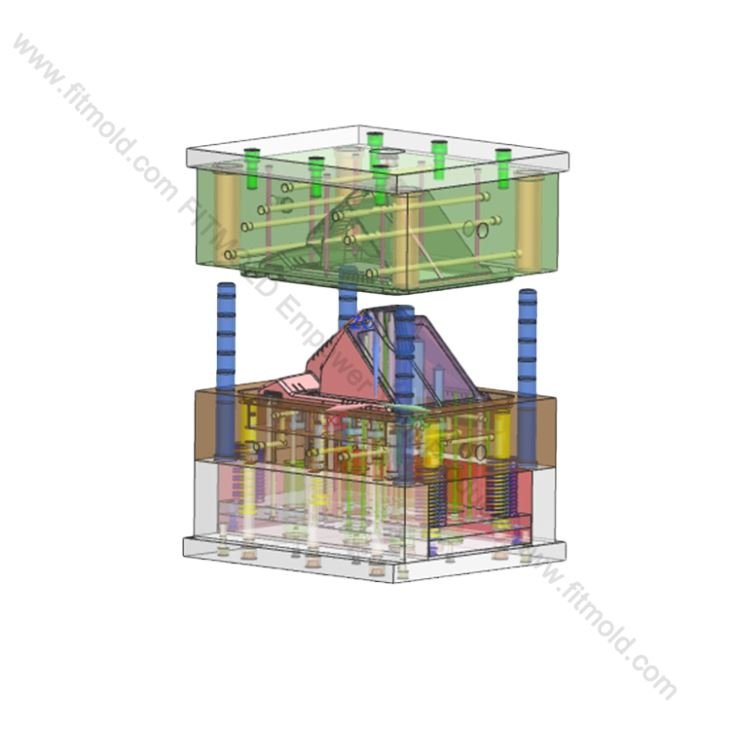
An injection mold is made up of several structural components that work together to form, guide, support, and eject the molded product. Understanding the function of each mold part is essential for mold design, manufacturing, maintenance, and troubleshooting during production.
1. Fixed Mold Plate
The fixed mold plate, also called the clamping plate or front plate, is used to mount the front half of the mold onto the injection molding machine. It provides a stable connection between the mold and the fixed platen of the machine.
2. Runner Plate
The runner plate, sometimes used in a three-plate mold, helps separate the runner system and remove the sprue or runner waste automatically when the mold opens. This makes the molding process more efficient and supports automatic part release.
3. Fixed Mold Retainer Plate (A Plate)
The fixed mold retainer plate, commonly called the A plate, holds the cavity side of the mold. It forms the front portion of the molded product and supports the cavity insert or machining features on the fixed side.
4. Moving Mold Retainer Plate (B Plate)
The moving mold retainer plate, or B plate, forms the core side of the mold. It is responsible for shaping the rear portion of the molded product and is mounted on the moving side of the mold assembly.
5. Spacer Block
The spacer block, also called the mold foot, creates enough internal space for the ejection system to move. It supports the mold structure and allows the ejector plate assembly to operate correctly during part ejection.
6. Ejector Plate
The ejector plate is used to push the molded product out of the mold after opening. It drives the ejector pins, ejector blocks, and lifters or angled ejector mechanisms so the part can be released smoothly from the core side.
7. Moving Clamping Plate
The moving clamping plate, also called the base plate or rear clamping plate, is used to mount the rear half of the mold onto the moving platen of the injection molding machine. It provides structural support and machine connection for the moving side.
8. Guide Pins and Guide Bushings
Guide pins and guide bushings provide guidance and positioning when the mold opens and closes. They help align the front and rear mold halves accurately, reduce misalignment, and support stable mold operation during repeated production cycles.
9. Support Pillar
The support pillar, sometimes called a support column, is used to strengthen the B plate area. Its main function is to prevent deformation of the moving-side plate under long-term molding pressure, especially in larger molds or high-production applications.
10. Ejector Guide Pillar
The ejector guide pillar is used to guide and position the ejector plate assembly. It helps ensure that the ejection movement remains smooth, stable, and accurate, reducing wear and preventing sticking or uneven ejection.
Conclusion
Each component of an injection mold plays a specific role in molding, positioning, supporting, or ejecting the part. A clear understanding of these main mold components helps improve mold design quality, production stability, and maintenance efficiency in plastic injection molding.